Buy a Licensed Company
  Explore VASP Data
  Talk to an Expert

 Atis Shala
Atis is a senior analyst and community lead with four years of experience in crypto. He has a bachelor from the Rochester Institute of Technology.
Atis Shala
Atis is a senior analyst and community lead with four years of experience in crypto. He has a bachelor from the Rochester Institute of Technology.
How to Mine Bitcoin Gold (BTG): A Complete Educational Guide
Bitcoin Gold (BTG) represents a fascinating chapter in the evolution of decentralized finance. Launched in late 2017, this project emerged as a “hard fork” from the original Bitcoin blockchain. While it shares the name and history of its predecessor, Bitcoin Gold carries a distinct mission. Its creators sought to solve a growing problem in the Bitcoin ecosystem: the centralizing power of industrial mining farms. By changing the rules of the network, they aimed to return the ability to secure the blockchain to everyday individuals using consumer-grade hardware.
The core philosophy of Bitcoin Gold centers on ASIC resistance. In the original Bitcoin network, specialized machines called ASICs (Application-Specific Integrated Circuits) dominate the landscape, making it impossible for home users to participate profitably. Bitcoin Gold changed the underlying algorithm to Equihash, a memory-intensive system that favors Graphics Processing Units (GPUs) found in gaming PCs. This shift ensures that as long as people have access to standard computer parts, they can help secure the network and earn rewards.
What is Bitcoin Gold’s Proof-of-Work Algorithm?
Proof of Work (PoW) is the digital consensus mechanism that keeps blockchains honest and immutable. At its heart, mining is a race to solve a complex mathematical puzzle. The first person to find the solution earns the right to add a new block of transactions to the ledger and receives a reward in return. This process is essential because it prevents “double-spending” and ensures that no single entity can rewrite the history of the network without controlling more than half of the total computing power. For Bitcoin Gold, this competitive process is what keeps the network decentralized and secure from hackers.

Bitcoin Gold utilizes a specific version of the Equihash algorithm, often referred to as Zhash or Equihash (144,5). Unlike Bitcoin’s SHA-256 algorithm, which relies on raw processing speed, Equihash is “memory-hard.” This means the puzzle requires a significant amount of high-speed Random Access Memory (RAM) to solve.
Because ASICs are built to do one thing very fast, they struggle with tasks that require flexible memory allocation. GPUs, however, are designed with massive amounts of Video RAM (VRAM) to render graphics, making them the perfect tool for Equihash. While Bitcoin (BTC) mining is a battle of brute force, Bitcoin Gold mining is a battle of memory efficiency.
Bitcoin Gold has not been static. The project has undergone several network upgrades to maintain its ASIC-resistant status. When manufacturers developed specialized Equihash ASICs in the past, the Bitcoin Gold community voted to modify the algorithm’s parameters (moving from the original (90,9) to (144,5). This “algorithm fork” rendered the existing ASIC machines useless for mining BTG, effectively resetting the playing field for GPU miners. This proactive stance is a cornerstone of the BTG identity.
Bitcoin Gold Mining Rewards and Economics
Bitcoin Gold follows a similar emission schedule to Bitcoin. It has a total supply cap of 21 million coins. To manage inflation, the network undergoes a “halving” event approximately every four years. As of early 2026, the network is in its third reward epoch. The current block reward is 3.125 BTG. Every ten minutes, a new block is found, and these rewards are distributed to the successful miner (or pool). This steady reduction in supply is designed to increase scarcity over time, assuming demand for the network continues to grow.
Transaction Fees and Miner Income
In addition to the block reward, miners receive the transaction fees paid by users on the network. When the network is busy, these fees can represent a significant portion of a miner’s daily income. In 2026, as layer-2 solutions and smart contract bridges expand on the Bitcoin Gold ecosystem, the volume of these fees plays a larger role in the “miner’s bread” than in previous cycles.
Network Difficulty and Hashrate
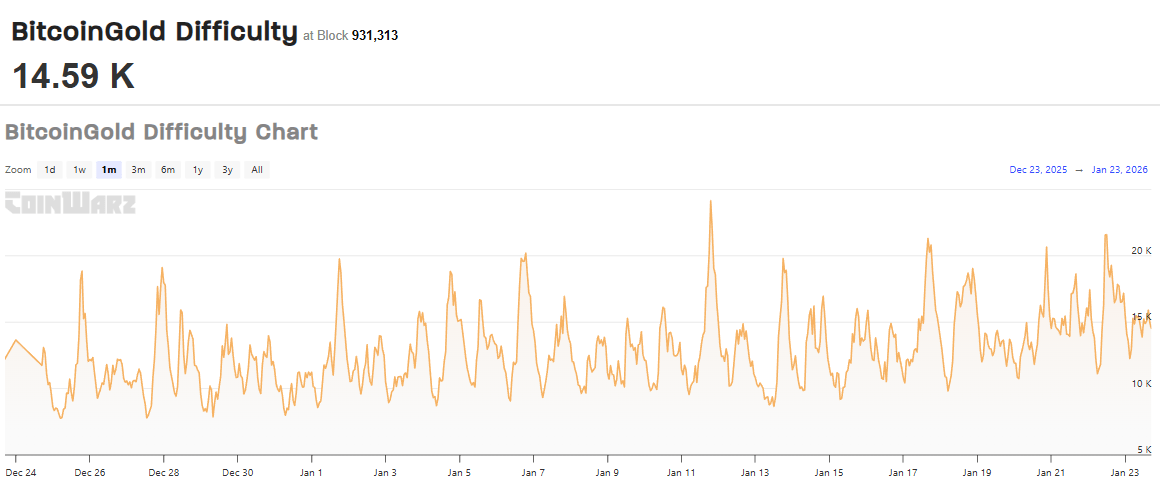
The network difficulty is a self-adjusting mechanism that ensures blocks are found every ten minutes. If thousands of new miners join the network, the puzzles become harder. If miners leave, the puzzles become easier. This “Difficulty Adjustment” occurs every block on the Bitcoin Gold network, making it highly responsive to changes in total hashrate. This protects the network from sudden swings in computing power.
Is Bitcoin Gold Mining Profitable?
Mining is an industrial business, even when done from a home office. Your success depends on five main variables. First is your hashrate, the speed at which your hardware can guess solutions. Second is power consumption, the amount of electricity your rig draws from the wall. Third is the cost of that electricity, measured in dollars per kilowatt-hour (kWh). Fourth is the network difficulty, and finally, the current market price of BTG. If the price of BTG is high and your power costs are low, you are in the “green zone” for profit.
Mining vs. Buying BTG
For some, simply buying BTG on an exchange is more efficient than mining. If your electricity costs more than $0.15/kWh, you might spend more on power than you earn in coins. However, mining offers “no-KYC” (Know Your Customer) accumulation and provides you with hardware assets (GPUs) that retain resale value. Many miners choose to mine during market lows, viewing their electricity bills as a way to buy the coin at a discount for the future.
Profitability Calculators for Bitcoin Gold Mining
To get an accurate picture, use tools like WhatToMine or the Profitability Calculator on the official Bitcoin Gold website. You must input your exact GPU model and electricity rate. Be wary of “daily profit” estimates, as they change every hour based on price volatility. Always look at your “break-even” point, which is the amount of time it will take for the rewards to pay for the cost of your hardware.
Hardware Requirements for Mining Bitcoin Gold
GPU Mining Overview
Since Bitcoin Gold uses the memory-intensive Equihash (144,5) algorithm, the amount of VRAM on your card is crucial. While the algorithm can technically run on 2GB cards, for efficient mining in 2026, you should aim for cards with at least 6GB to 8GB of VRAM. Modern cards with GDDR6 or GDDR7 memory offer much better performance per watt.
Recommended GPUs for Bitcoin Gold Mining
NVIDIA remains the dominant force for Equihash mining. Their architecture is historically better suited for the specific memory patterns required by Bitcoin Gold. The RTX 30 and 40 series are excellent, but the newer RTX 50-series (Blackwell) cards are the efficiency kings of 2026. AMD cards are also viable, particularly the RX 7000 series, though they may require more fine-tuning in the software to match NVIDIA’s efficiency.
| GPU Model | Average Hashrate (Sol/s) | Power Usage (W) | Efficiency (Sol/W) | Notes |
| NVIDIA RTX 5090 | 220 – 240 | 350 | 0.65+ | The 2026 Performance King |
| NVIDIA RTX 4070 Ti | 110 – 125 | 200 | 0.58 | Excellent efficiency/price |
| AMD RX 7900 XTX | 100 – 115 | 280 | 0.39 | Strong but power-hungry |
| NVIDIA RTX 3060 Ti | 55 – 65 | 130 | 0.46 | Great entry-level card |
Supporting Hardware to Mine Bitcoin Gold
You do not need an expensive CPU for mining. A basic dual-core processor is sufficient. However, you do need a motherboard with enough PCIe slots to hold your GPUs. For system RAM, 8GB is the recommended minimum to keep the operating system stable. The most important component besides the GPU is the Power Supply Unit (PSU). You should never “cheap out” here. Look for an 80-Plus Gold or Platinum rating and ensure the PSU can handle 120% of your total expected power draw to ensure longevity and safety.
Cooling and Physical Setup
Mining generates significant heat. In an enclosed PC case, multiple GPUs will quickly reach dangerous temperatures. Most serious miners use an open-air frame. This allows for maximum airflow and easier maintenance. If you are mining at home, consider the noise levels of high-speed fans. Safety is also paramount; ensure your electrical circuits can handle the load and avoid using cheap SATA-to-PCIe power adapters, which are notorious fire hazards.
Software Requirements
Windows as a software is the easiest starting point for most users. It provides familiar tools and easy access to overclocking software like MSI Afterburner. However, for rigs with more than two GPUs, dedicated Linux-based distributions like HiveOS or RaveOS are far superior. These operating systems run from a USB drive and allow you to monitor your temperatures and hashrates from a web dashboard on your phone.
Bitcoin Gold Wallets
You need a secure place to receive your mining payouts. The BTG Core wallet is the most secure but requires you to download the entire blockchain. For most users, the Zelcore or Coinomi wallets provide an excellent balance of security and convenience. Never mine directly to an exchange address. Exchanges often change their deposit addresses or have high minimum deposit limits, which could lead to your hard-earned rewards being lost in the void.
Mining Software for Bitcoin Gold
There are several reputable miners for the Equihash(144,5) algorithm.
- Gminer: Widely considered the most stable and efficient for both NVIDIA and AMD.
- lolMiner: Excellent for mixed rigs and known for its low developer fees.
- MiniZ: A specialized NVIDIA miner that often squeezes out the highest hashrates for Equihash.
Most mining software includes a “Developer Fee” of 1% to 2%. This means the software mines for the creator for about one minute out of every hundred. This is a standard industry practice to support the ongoing development of the tools.
Choosing a Bitcoin Gold Mining Pool
Solo Mining vs. Pool Mining
Solo mining is the act of trying to find a block by yourself. While you would keep the entire 3.125 BTG reward, the statistical probability for a small miner is very low. You might go months without a payout. Pool mining is the preferred method for 99% of miners. By joining a pool, you combine your hashrate with thousands of others. When the pool finds a block, the reward is split among everyone based on how much work they contributed. This ensures a steady, daily stream of income.
Pool Fees and Payout Systems for BTG
Most pools charge a fee of 1%. They use different systems to pay you:
- PPLNS (Pay Per Last N Shares): Rewards you based on how much you mined right before a block was found. This is best for 24/7 miners.
- PPS (Pay Per Share): You get paid a flat rate for every valid share you submit. This is more predictable but often has slightly higher fees.
Pool Selection Criteria to Mine Bitcoin Gold
Don’t just pick the biggest pool. If one pool controls more than 50% of the network hashrate, it endangers the decentralization of Bitcoin Gold. Look for a pool with a server located geographically close to you (e.g., North America, Europe, Asia) to reduce “stale shares” caused by network lag. Reliable pools for BTG in 2026 include HeroMiners, 2Miners, and MiningPoolHub.
What to Look for in a Mining Pool
- Low and transparent fees (1% or less).
- A low minimum payout threshold (e.g., 0.1 BTG).
- A clear, real-time statistics dashboard.
- High uptime and a good reputation in the community.
Step-by-Step Guide: How to Mine Bitcoin Gold
Step 1: Create a Bitcoin Gold Wallet
Download and install a wallet like Zelcore. When you create your new Bitcoin Gold wallet, the software will provide a “Seed Phrase” (usually 12 or 24 words). Write this down on physical paper and store it in a safe. Do not take a photo of it. Once the wallet is ready, click “Receive” and copy your BTG address. It will look like a long string of numbers and letters starting with “G” or “A.”
Step 2: Install GPU Drivers
Ensure your graphics card drivers are up to date. For NVIDIA, go to the official website and download the latest “Game Ready” or “Studio” drivers. For AMD, use the “Adrenalin” software. If you are using an older GPU, you may need to use a specific driver version that is known for stability in mining; check the BTG Discord or Telegram groups for current 2026 recommendations.
Step 3: Download and Configure Mining Software
Download Gminer from its official GitHub repository. Create a folder on your desktop called “Miner.” Your antivirus will likely flag the file as a threat; this is because some malware uses mining software to steal resources. You must add an “Exclusion” to your antivirus settings for this folder.
Inside the folder, find the file named mine_btg.bat. Right-click it and select “Edit.” You will see a line of code. Replace the example wallet address with your own address. It should look something like this:
miner.exe –algo 144_5 –pers BgoldPoW –server btg.herominers.com:1180 –user YOUR_WALLET_ADDRESS.WORKER_NAME
Step 4: Start Mining Bitcoin Gold
Save the .bat file and double-click it. A black command-prompt window will open. If everything is configured correctly, the software will detect your GPU and start “Hashing.” You will see messages like “Share Accepted.” This means your computer successfully solved a piece of the puzzle and the pool has registered your work.
Step 5: Monitor and Optimize
Wait about 30 minutes, then go to your mining pool’s website. Paste your wallet address into the search bar. You will see a dashboard showing your current hashrate and your “Unpaid Balance.” Once this balance reaches the pool’s payout limit, the coins will be automatically sent to your wallet.
Optimization and Efficiency Tips
Overclocking and undervolting is a good way to optimize your BTG mining. Running your GPU at factory settings is inefficient for mining. For Equihash, you should usually increase the Memory Clock and slightly decrease the Core Clock. The most important step is Undervolting (lowering the Power Limit). By reducing the power limit to 60% or 70%, you can often maintain 95% of your hashrate while cutting your electricity bill by 30%. Use MSI Afterburner to find the stable limit for your specific card.
Another efficiency tip would be monitoring the electricity usage. If your utility company offers “Time of Use” billing, consider mining only during off-peak hours when electricity is cheapest. Some miners also use the heat generated by their rigs to warm their homes in the winter, effectively offsetting their heating bills with mining rewards.
Last but not least, always make sure to maintain your hardware. Mining puts a constant, flat load on your hardware. This is actually better for a GPU than the fluctuating loads of gaming, provided you keep the temperatures low. Aim to keep your GPU core below 65°C and your memory junction below 90°C. Clean your rig with compressed air every few months to prevent dust buildup, which can cause fans to fail and temperatures to spike.
Security, Risks, and Common Mistakes
The most common way people lose money in crypto is not through market crashes, but through poor security. If you lose your seed phrase, you lose your coins. If someone steals your seed phrase, they steal your coins. Consider using a hardware wallet like a Ledger or Trezor for your long-term “Cold Storage,” and only keep a small amount of BTG in your mobile or desktop wallet.
Moreover, scammers often target people who are new to mining. They upload fake versions of popular mining software to unofficial websites. These “fakes” contain Trojans that can steal your passwords or redirect your mining rewards to the scammer’s wallet. Always download software directly from the developer’s official GitHub or the official Bitcoin Gold website.
Some other common mistakes include:
- Mining to an Exchange: Many exchanges have “minimum deposit” rules. If you mine 0.05 BTG but the exchange requires 0.1 BTG, your coins will never show up.
- Ignoring the Bill: Always track your electricity usage. If you are mining at a loss, it is cheaper to just buy the coins.
- Poor Airflow: Keeping a mining rig in a closet without ventilation will lead to hardware failure within months.
Bitcoin Gold Mining and Decentralization
The ultimate goal of Bitcoin Gold is to maintain a healthy, distributed network. When you mine at home, you are a part of a global community that prevents any single government or corporation from controlling the money supply. While ASICs offer massive hashrate, they lead to a “rich-get-richer” scenario. GPU mining, despite being slower, is the “people’s mining.” Every small miner contributes to the resilience of the network against 51% attacks and censorship.
As we move through 2026, the Bitcoin Gold roadmap focuses on interoperability. With the rise of cross-chain bridges, BTG is becoming more useful as a low-fee alternative for decentralized applications. While the competition in the GPU mining space is fierce, BTG’s long history and dedicated developer team give it a level of “Lindyness” that many newer coins lack. The hashrate has remained stable even through market downturns, proving that there is a committed base of miners who believe in the project’s long-term value.
Final Thoughts: Should You Mine Bitcoin Gold?
Mining Bitcoin Gold is an excellent way to enter the world of cryptocurrency. It offers a tangible connection to the blockchain and allows you to put your gaming hardware to work. While it is no longer a “get rich quick” scheme, it remains a viable way to accumulate a decentralized asset while supporting a network that stays true to the original vision of Satoshi Nakamoto: one CPU (or in this case, one GPU) one vote. Start small, focus on your efficiency, and enjoy being a part of the decentralized revolution.
Frequently Asked Questions (FAQ)
Is Bitcoin Gold still mineable with GPUs?
Yes. Bitcoin Gold is specifically designed to be mined with GPUs. In fact, it is one of the most stable and popular choices for GPU miners in 2026 because its Equihash algorithm effectively blocks the specialized ASIC machines that dominate Bitcoin.
What is the minimum GPU memory required?
While you can technically start with 4GB, the modern recommendation is 6GB to 8GB of VRAM. As the network matures and software becomes more complex, cards with more memory tend to be more efficient and stable.
Can I mine Bitcoin Gold on a laptop?
You can, but it is not recommended for long periods. Laptops have limited cooling capacity, and the intense heat of mining can cause “thermal throttling” or even permanent damage to your internal components. If you do try it, ensure you use a cooling pad and monitor temperatures closely.
How long does it take to receive mining rewards?
This depends on your hashrate and your pool’s payout limit. Most small miners using a single modern GPU will reach a typical payout threshold of 0.1 BTG every few days.
Is Bitcoin Gold mining legal in my country?
In most countries, mining is perfectly legal. However, some jurisdictions have specific regulations regarding electricity usage or cryptocurrency in general. Always check your local laws.
Is Bitcoin Gold resistant to ASIC miners?
Yes. The Bitcoin Gold team has a history of changing the algorithm (forking) whenever ASICs appear on the network. This commitment to “ASIC resistance” is a core pillar of the project.
Should I mine Bitcoin Gold or another Equihash coin?
Bitcoin Gold is often one of the most profitable Equihash coins due to its high trading volume and liquidity. However, you should always check a mining calculator to see which coin offers the best return for your specific hardware on any given day.