


 Buy a Licensed Company
  Explore VASP Data
  Talk to an Expert

 Atis Shala
Atis is a senior analyst and community lead with four years of experience in crypto. He has a bachelor from the Rochester Institute of Technology.
Atis Shala
Atis is a senior analyst and community lead with four years of experience in crypto. He has a bachelor from the Rochester Institute of Technology.
Corporate Crypto Treasury: How Companies Report Bitcoin on Balance Sheets

Bitcoin has moved far beyond the fringes of finance. What began as an experimental digital currency now sits on the balance sheets of publicly traded companies, private firms, and institutional vehicles. This shift forces a serious question into boardrooms and accounting departments alike. How should companies report Bitcoin in a way that reflects reality, complies with accounting rules, and makes sense to investors?
A corporate crypto treasury is no longer a novelty. It is a financial strategy that carries accounting consequences, disclosure obligations, and reputational risk. Executives may view Bitcoin as a long-term store of value or a hedge against monetary debasement, but regulators and auditors view it through a different lens. They focus on classification, valuation, and transparency. Those perspectives often collide.
The challenge sits at the intersection of finance and accounting. Bitcoin does not behave like cash, equity, or traditional commodities. Accounting standards were not built with decentralized digital assets in mind. As a result, companies that hold Bitcoin often report figures that feel disconnected from market reality, especially during periods of high volatility.

What Is a Corporate Crypto Treasury?

A corporate crypto treasury refers to the portion of a company’s balance sheet that includes cryptocurrency holdings, most commonly Bitcoin, alongside or instead of traditional reserve assets. In simple terms, it means a company deliberately choosing to store part of its excess capital in digital assets rather than keeping everything in cash or short-term instruments.
Traditional treasury assets usually include bank deposits, money market funds, government bonds, and sometimes gold. These instruments prioritize capital preservation, liquidity, and predictable accounting treatment. Crypto treasuries challenge that model. Bitcoin does not behave like cash or bonds, and it does not fit neatly into legacy accounting categories. Companies that adopt it usually do so for strategic reasons rather than yield or short-term liquidity.
Bitcoin dominates corporate crypto allocations for a few clear reasons. It has the longest track record, the deepest liquidity, and the clearest regulatory and market recognition. Most boards view Bitcoin as a digital commodity or long-term store of value, not as a speculative token. Other cryptocurrencies rarely meet the same internal risk or governance thresholds.
It also helps to separate holding, transacting, and operational use. Holding Bitcoin as a treasury reserve is different from accepting crypto payments, settling invoices on-chain, or using tokens inside a product. Treasury strategy focuses on balance sheet exposure, accounting treatment, and disclosure, not day-to-day crypto activity.
Why Do Companies Add Bitcoin to Their Balance Sheets?
When companies decide to hold Bitcoin, they rarely do it for a single reason. The decision usually sits at the intersection of risk management, long-term strategy, and market positioning.
The inflation hedge narrative often comes first. In theory, a scarce asset with a fixed supply should protect purchasing power when fiat currencies lose value. In practice, Bitcoin has not behaved like a short-term hedge. Its price volatility can overwhelm inflation trends over months or even years. Most corporate treasuries that adopt Bitcoin understand this trade-off and accept that inflation protection, if it materializes, works over long time horizons rather than quarterly reporting cycles.
Diversification plays a more concrete role. Corporate treasuries typically concentrate assets in cash, short-dated bonds, and money market instruments. These assets share similar macro sensitivities, particularly to interest rates and monetary policy. Bitcoin introduces a fundamentally different risk profile. It does not depend on central bank issuance, sovereign credit, or corporate debt markets. For some finance teams, that difference alone justifies a small allocation.
The long-term store of value thesis underpins most serious corporate allocations. Companies that hold Bitcoin usually view it as a multi-year or even multi-decade asset. They accept volatility as the cost of accessing an asset class with asymmetric upside and no dilution risk. This framing explains why most corporate treasuries do not actively trade their Bitcoin holdings. There is also a signaling effect.
Michael Saylor’s Strategy: Bitcoin Accumulation
Strategy, formerly known as MicroStrategy, illustrates this clearly. The company made Bitcoin the centerpiece of its treasury strategy, explicitly tying its corporate identity to long-term Bitcoin accumulation. That decision reshaped how markets evaluate the firm, for better and for worse.
Green Dots ₿eget Orange Dots. pic.twitter.com/aLdvPe4YuG
— Michael Saylor (@saylor) December 21, 2025
Executives who approve Bitcoin allocations accept real risks. Price volatility can distort earnings. Accounting treatment can create paper losses during drawdowns. Custody introduces operational and security challenges. Regulatory clarity still varies by jurisdiction. Corporate adoption does not remove these risks. It formalizes them, documents them, and places them directly on the balance sheet.
How is Bitcoin Classified on Corporate Balance Sheets?
Once a company decides to hold Bitcoin, the harder question follows. How does it actually show up on the balance sheet?
A corporate balance sheet lists what a company owns, what it owes, and the residual value left for shareholders. Assets usually fall into familiar buckets: cash and cash equivalents, financial instruments like stocks or bonds, inventory, property, and intangible assets such as trademarks or software. Where Bitcoin fits inside this structure has been one of the most debated accounting questions of the past decade.
Under current U.S. GAAP rules, companies classify Bitcoin as an intangible asset with an indefinite life. That puts it in the same broad category as brand value or intellectual property, not alongside cash or marketable securities. This treatment applies even if the company views Bitcoin as a long-term treasury reserve rather than a speculative investment.
Bitcoin: The Intangible Asset Within Corporate Balance Sheets
The reasoning is technical but important. Bitcoin does not meet the definition of cash because it is not legal tender in the United States and companies cannot use it to settle obligations at a fixed, predictable value. It also fails the test for a financial instrument since it does not represent a contractual claim on another party. There is no issuer, no promise of repayment, and no yield attached to holding it.
As an intangible asset, Bitcoin sits on the balance sheet at its acquisition cost. If the market value drops below that level, the company must recognize an impairment loss. If the price later recovers or rises well above the purchase price, accounting rules do not allow the company to mark the asset back up. Gains only appear when Bitcoin is sold.
This classification has real-world consequences. Balance sheets can look conservative or even misleading during volatile markets, especially for companies with large Bitcoin positions. Earnings may show losses during downturns that do not reflect the long-term economics of the holding. At the same time, rising Bitcoin prices do not boost reported asset values, which can understate a firm’s financial strength.
Bitcoin Accounting Rules Under U.S. GAAP
Once Bitcoin sits on a company’s balance sheet, accounting rules start to matter more than narratives. This is where many readers lose the thread, so it helps to slow down and follow the mechanics step by step.
Under U.S. GAAP, companies record Bitcoin at cost on day one. Cost includes the purchase price plus any directly attributable fees. If a company buys Bitcoin at $40,000, that is the number that initially appears on the balance sheet. There is no adjustment for market price at acquisition beyond that point.
From there, Bitcoin falls under the indefinite-lived intangible asset model. This triggers ongoing impairment testing. At each reporting period, the company must assess whether the fair value of its Bitcoin has fallen below the carrying value at any point during that period. If it has, the company records an impairment loss.
How Does Bitcoin Price Movement Affect Balance Sheets?
Here is the key detail that causes confusion. Impairment works in only one direction. If Bitcoin drops to $30,000, the company writes the asset down to that lower value and records a loss on the income statement. If Bitcoin later rebounds to $45,000, GAAP does not allow the company to reverse the impairment or mark the asset back up. The balance sheet stays anchored to the lowest impaired value until the Bitcoin is sold.
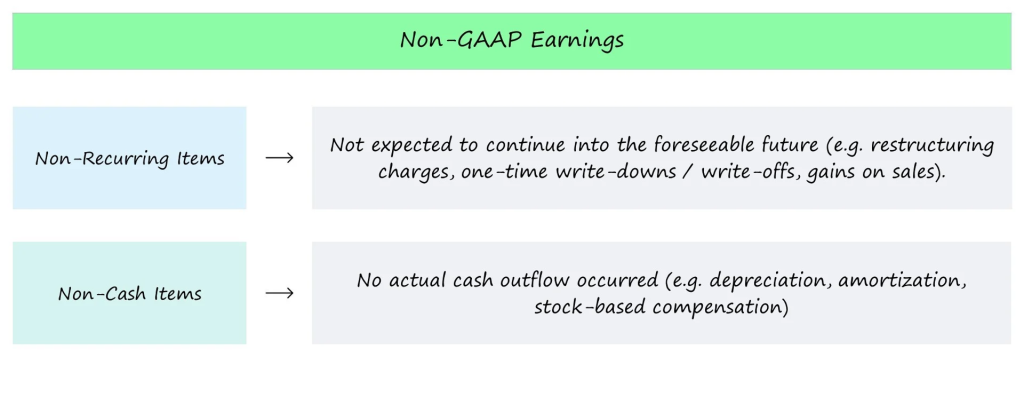
This one-way treatment creates a timing mismatch between economic reality and reported results. During volatile periods, especially bull markets, companies can appear to hold Bitcoin at values far below current market prices. The balance sheet understates asset value, while the income statement absorbs impairment losses that may already be obsolete by the time they are reported.
These impairments flow directly through earnings. They reduce net income even though no cash leaves the business. For operating companies, this can distort profitability metrics and complicate comparisons across quarters. For treasury-heavy Bitcoin holders, impairment charges can dominate earnings calls despite no change in long-term strategy.
The result is a set of financial statements that lag market conditions. In rising markets, reported asset values trail reality. In falling markets, losses hit quickly. This asymmetry explains why many executives criticize current rules and why investors increasingly look beyond headline accounting numbers when evaluating Bitcoin-heavy balance sheets.
IFRS Treatment of Bitcoin Compared to U.S. GAAP
Bitcoin sits and behaves on balance sheets under U.S. GAAP is one thing, how the rest of the world treats it is another… and no, not every jurisdiction treats it the same, although the gap is narrower than many expect.
Under IFRS, which applies across much of Europe and other international markets, Bitcoin also does not qualify as cash or cash equivalents. It fails the same basic tests. It is not legal tender, and it does not represent a contractual right to receive cash from another party. As a result, companies usually classify Bitcoin as an intangible asset under IAS 38, similar to GAAP in concept. The key difference appears after classification.
IFRS allows two measurement models for intangible assets: the cost model and the revaluation model. Most companies default to the cost model, which looks similar to GAAP. Assets stay on the balance sheet at purchase cost, minus any impairment losses. However, IFRS introduces an option that GAAP does not allow. If an active market exists, companies may apply the revaluation model and periodically adjust the asset to fair value, with increases recognized in other comprehensive income rather than the income statement.
In theory, this gives companies a way to reflect rising Bitcoin prices on their balance sheets. In practice, very few take this route. Regulators apply a high bar for what qualifies as an active market, and auditors remain cautious about volatility, liquidity differences across exchanges, and custody risks.
For multinational companies, this split creates real complexity. A firm reporting under both GAAP and IFRS may show very different balance sheet outcomes for the same Bitcoin holdings. The asset stays economically identical, but the accounting lens changes the story investors see.
Bitcoin’s Impact on Financial Statements
On the balance sheet, Bitcoin increases total assets, but it does so under the intangible asset line. That matters. Because impairments flow through retained earnings, repeated write-downs can reduce equity even if the company never sells a single coin. During long bull markets, the balance sheet can understate economic reality. The Bitcoin may be worth far more than the reported value, but accounting rules freeze it at the lowest impaired cost.
The income statement feels the impact more directly. Impairment losses run through operating expenses or other expenses, depending on company policy. These charges reduce net income, sometimes sharply, even when the core business performs well. This effect explains why companies with large Bitcoin positions can report losses in strong market environments. Investors who focus only on GAAP earnings often miss the underlying operating performance.
Cash flow statements tell a calmer story. Bitcoin purchases show up as investing cash outflows. Impairments do not affect cash flow at all. Selling Bitcoin creates investing inflows, with any realized gain or loss reflected separately in earnings. For analysts, cash flow often provides the cleanest view of what is actually happening.
In practice, markets learn to adjust. Analysts commonly back out impairment charges when valuing companies with material Bitcoin exposure. Equity research models often treat Bitcoin holdings as a separate asset, closer to a long-term investment than an operating input.
Strategy serves as another clear example. Its reported earnings frequently swing due to impairment losses, while investors focus instead on Bitcoin per share, leverage, and long-term accumulation strategy. The financial statements remain GAAP-compliant, but interpretation requires context.
Corporate Disclosure Requirements
Public companies holding Bitcoin face disclosure standards that look closer to traditional financial reporting than crypto marketing. Regulators and auditors expect clear explanations of how Bitcoin is acquired, stored, valued, and risk-managed, with enough detail for investors to assess financial exposure. These disclosures live mostly outside the balance sheet itself, but they play a decisive role in how markets interpret a company’s crypto strategy.
At a minimum, companies must disclose their Bitcoin holdings in the notes to the financial statements. This usually includes the amount held, the cost basis, cumulative impairment losses, and the accounting policy applied. If impairment charges occurred during the period, firms must explain when they triggered and how management determined fair value at the time of write-down.
Risk disclosures matter just as much. Public companies typically outline price volatility, liquidity risks, regulatory uncertainty, and potential custody or cybersecurity threats. Auditors expect these disclosures to align with the company’s actual exposure, not generic boilerplate language. Firms that self-custody Bitcoin often explain internal controls, key management procedures, and segregation of duties. Companies using third-party custodians must describe counterparty risk and custody arrangements.
Regulators also expect consistency. Messaging in earnings calls, investor decks, and filings must align. If a company frames Bitcoin as a long-term treasury asset, disclosures should reflect that intent rather than short-term trading behavior.
Operational Considerations Before Adding Bitcoin to Your Corporate Treasury
Once a company moves beyond the initial purchase, day-to-day controls, documentation, and governance matter as much as price exposure. Auditors, regulators, and boards expect crypto holdings to follow the same rigor as any other material corporate asset.
Custody and Control Structure
Most companies choose between qualified third-party custodians and self-custody models with institutional tooling. Custodians reduce internal complexity but introduce counterparty and jurisdictional risk. Self-custody gives direct control but requires robust internal processes, segregated duties, and documented access policies. Either approach must clearly define who can authorize transactions and under what conditions.
Security and Private Key Management
Private keys sit at the center of operational risk. Loss, theft, or unauthorized access usually results in irreversible loss. Companies rely on hardware security modules, multisignature setups, or key sharding to reduce single-point failures. Executives also formalize incident response plans to address breaches, employee turnover, or key compromise scenarios.
Treasury Policy and Governance
A written crypto treasury policy sets boundaries before volatility tests discipline. These policies cover allocation limits, holding periods, rebalancing rules, approval thresholds, and permitted counterparties. Boards increasingly require clear justification for Bitcoin exposure, along with predefined triggers for reassessment rather than ad-hoc decisions during market stress.
Audit Readiness and Documentation
Auditors expect a full paper trail. Transaction records, wallet addresses, custody agreements, valuation methods, impairment calculations, and access logs must remain current and verifiable. Companies that treat documentation as an afterthought often face delays, qualified opinions, or expanded audit scope.
Common Mistakes Companies Make With Bitcoin Reporting
- Misunderstanding impairment rules: many companies assume Bitcoin accounting works like marketable securities. Under U.S. GAAP, impairment only moves one way. Firms that expect to reverse losses when prices recover often misjudge earnings impact and investor reactions.
- Using vague or promotional disclosure language: some filings describe Bitcoin holdings in broad or aspirational terms. Auditors and regulators expect precise language that explains purpose, risks, accounting treatment, and controls. Marketing tone raises red flags.
- Weak custody and control frameworks: holding Bitcoin without clearly documented custody arrangements, segregation of duties, and key management procedures creates audit and security risks. Treasury-grade assets require treasury-grade controls.
- Overstating strategic intent: labeling a small or experimental Bitcoin position as a “core treasury strategy” can mislead investors. Analysts compare disclosures with actual exposure size, risk tolerance, and capital allocation discipline.
- Inconsistent treatment across statements: errors often appear when balance sheet treatment, income statement impact, and risk disclosures fail to align. Consistency across filings matters more than enthusiasm for the asset.
Frequently Asked Questions (FAQs)
What is a crypto treasury company?
A crypto treasury company holds cryptocurrency, usually Bitcoin, as a strategic reserve asset on its balance sheet. The goal is capital preservation, diversification, or long-term value storage, not short-term trading or operational payments.
Who owns 90% of Bitcoin today?
No single group owns 90% of Bitcoin. Ownership is widely distributed, though concentrated among exchanges, custodians, institutions, and long-term holders. Wallet concentration does not equal individual ownership due to pooled and custodial accounts.
How do crypto treasury companies make money?
Crypto treasury companies do not earn yield by default. They aim to benefit from long-term price appreciation, balance sheet strength, and capital efficiency. Any gains are realized only when assets are sold.
What is bitcoin treasury?
A Bitcoin treasury is a corporate strategy where a company allocates part of its excess capital to Bitcoin instead of holding only cash or short-term financial instruments. It focuses on long-term balance sheet positioning.
Which bitcoin treasury is best?
There is no universally “best” Bitcoin treasury. Effectiveness depends on governance, risk controls, accounting discipline, and transparency. Strong execution matters more than allocation size or public visibility.