


 Buy a Licensed Company
  Explore VASP Data
  Talk to an Expert

 Atis Shala
Atis is a senior analyst and community lead with four years of experience in crypto. He has a bachelor from the Rochester Institute of Technology.
Atis Shala
Atis is a senior analyst and community lead with four years of experience in crypto. He has a bachelor from the Rochester Institute of Technology.
How to Stake XRP in 2026
- XRP cannot be staked natively: the XRP Ledger uses a validator consensus model, not proof-of-stake, so there are no protocol staking rewards.
- Any product advertised as “XRP staking” is actually lending, liquidity provision, or a custodial yield program, not network staking.
- Exchange yield programs are the simplest route, typically paying 1% to 5% APY, but they carry custodial risk.
- DeFi yield uses wrapped XRP (wXRP) on chains like Ethereum or BNB Chain and can pay more, with added smart-contract, bridge, and impermanent-loss risk.
- The XRPL now has a native AMM live, and a native lending protocol has advanced through governance, giving holders on-ledger yield options without wrapping.
- Always send XRP with the correct destination tag, since a missing tag can mean lost funds.
- Yields are taxable income in most countries when received, and selling later can trigger a separate capital-gains event.
Staking has become one of the defining features of modern crypto investing. For proof-of-stake blockchains like Ethereum, Solana, or Cardano, staking gives coin or token holders a way to participate in network security while earning passive income. Instead of mining, these systems reward users who lock up their assets to support validators.
The concept appeals to both OGs and normies because it combines utility with yield. In a market where long-term holding is common, staking offers a way to make idle tokens that you want to hodl productive. This blend of financial incentive and network participation explains its rapid adoption across the industry.
Staking XRP is a bit different, though. Unlike many proof-of-stake blockchains, the XRP Ledger (XRPL) does not rely on validators funded by staked tokens. Its consensus model is unique, which creates confusion for holders who want to know if staking XRP is even possible. Many exchanges advertise “XRP staking,” but the mechanics are not the same as staking Ethereum or Solana. What looks like staking is often lending, liquidity provision, or yield farming in disguise. This distinction matters. Without clarity, newcomers risk misunderstanding how their assets are being used, what kind of returns they should expect, and what risks they are assuming

What Is Staking in Crypto?
At its core, staking is the process of committing cryptocurrency to support the operations of a blockchain network. In proof-of-stake systems, participants lock up tokens to help secure the chain, validate transactions, and maintain consensus. Instead of consuming energy through mining, staking leverages coin or token ownership as a mechanism of trust. The act of staking not only keeps the network running but also entitles users to rewards, usually distributed as newly minted tokens or transaction fees.
Over time, staking has grown beyond pure network security into a broader financial concept. Today, the term also refers to depositing tokens into pools, smart contracts, or exchange programs that generate yield in different ways. While the underlying mechanics may differ, the idea remains the same: users commit assets for a period of time in exchange for passive income.
Types of Staking
Proof-of-Stake (PoS) Staking
In proof-of-stake blockchains like Ethereum, Solana, and Cardano, staking secures the network. Coin holders delegate their coins to validators, who process transactions and propose new blocks. Validators are rewarded for honest participation and penalized for malicious actions through mechanisms like slashing. This system aligns incentives between coin holders and validators. Stakers receive rewards proportional to their stake, often ranging from 3% to 12% annually. PoS staking is considered the “true” form of staking because it directly supports blockchain security and governance. However, not all blockchains use this model, which is why the definition of staking varies across ecosystems.
Liquidity Staking
Liquidity staking, sometimes called liquidity mining, allows users to provide tokens to decentralized exchanges (DEXs) or automated market makers (AMMs). Instead of securing a network, these tokens support liquidity for traders. In return, liquidity providers earn a share of transaction fees and often receive additional incentive tokens. While this can deliver higher returns than PoS staking, it comes with risks such as impermanent loss, where coin value shifts reduce earnings. Liquidity staking became especially popular during the DeFi boom of 2020, when platforms like Uniswap and Curve offered attractive yields to users who supplied liquidity.
Centralized Staking Programs
Exchanges and custodians often run their own staking or yield programs. In this model, users deposit assets with a platform, which then stakes, lends, or deploys them in liquidity pools. The platform shares a portion of the rewards with users. Centralized staking is simple and beginner-friendly, as it eliminates the need to manage wallets or interact with DeFi protocols. However, users must trust the custodian with their funds. Risks include hacks, insolvency, or sudden changes in terms. For many retail investors, this is the easiest way to earn yield, but it comes with trade-offs in transparency and control.
Why Do People Stake Crypto?
People stake crypto for two main reasons: rewards and participation. Rewards are the obvious draw. Instead of letting tokens sit idle in a wallet, staking allows holders to earn income, often in the range of 3% to 20% annually depending on the method. For long-term investors, these rewards can compound significantly. Participation is the second reason. In proof-of-stake systems, staking is not just financial; it gives coin holders influence over governance and protocol direction. Even in liquidity and centralized staking, participants play a role in deepening markets and strengthening ecosystems. Staking is seen as a way to align personal profit with network health. However, the type of staking available depends heavily on the blockchain. While Ethereum and Solana rely on PoS, others like XRP use different consensus models, making staking far less straightforward. Understanding these distinctions is essential before committing any assets.
How Does the XRP Ledger Work?
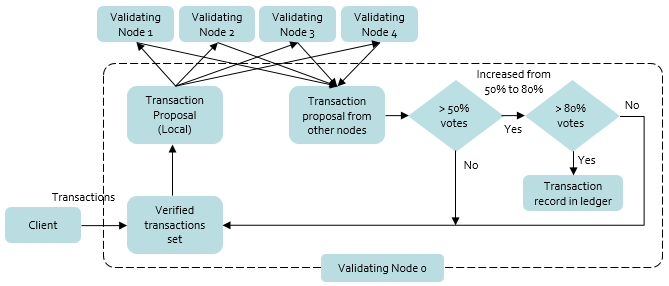
The XRP Ledger operates on a consensus protocol called the Ripple Protocol Consensus Algorithm (RPCA). Unlike proof-of-work, which relies on mining, or proof-of-stake, which depends on coin delegation, RPCA uses a system of trusted validators to agree on the state of the network. Validators are independent servers that verify transactions and maintain a shared ledger. Every few seconds, these validators communicate and vote on which transactions are valid. If at least 80 percent agree, the ledger advances to the next version. This rapid consensus mechanism makes XRPL extremely fast, finalizing transactions in three to five seconds.
Validators do not receive block rewards or transaction fees as in other networks. Their incentive is reputation, reliability, and participation in shaping the XRPL ecosystem. Because there is no mining or staking involved, XRP transactions stay cheap and efficient. This design prioritizes speed and scalability over token-based validation. For holders, it also means they cannot directly “stake” XRP to secure the network, since XRPL does not require economic security deposits to function.
Differences from PoS and PoW
To understand XRP’s unique position, it helps to compare it to other consensus models. In proof-of-work, like Bitcoin, miners compete to solve cryptographic puzzles. This process consumes energy but provides robust security. In proof-of-stake, like Ethereum, validators are selected based on how many tokens they lock up, and their stake is at risk if they act dishonestly. Both PoW and PoS rely on economic incentives tied to the native coin to ensure honest behavior.
The XRP Ledger takes another path. Instead of tying consensus to financial stakes, it uses trust and validator agreement. Validators are not chosen based on wealth or computing power but on whether other participants recognize them as reliable. The system is lightweight, energy efficient, and capable of high throughput. However, this also means that coin holders have no direct role in securing the network. Ownership of XRP does not translate into voting power for consensus, staking rewards, or validator selection. This makes XRPL fundamentally different from the blockchains most people think of when they hear “staking.”
Why Native Staking Is Not Possible
Because the XRP Ledger does not use proof-of-stake, there is no mechanism for delegating tokens to validators or earning rewards for helping secure the network. Validators are not rewarded with XRP, so locking tokens brings no benefit to the ledger itself. For this reason, native staking is not possible. Any platform that advertises “staking XRP” is offering yield through other financial mechanisms such as lending, liquidity provision, or wrapped assets in DeFi. Understanding this distinction is critical for investors, as staking XRP does not function like staking on Ethereum, Solana, or other PoS blockchains.
Common Misconceptions About Staking XRP
The most common misconception is that staking XRP directly supports the XRP Ledger. In reality, staking products labeled for XRP are built on top of it, not within it. Another misconception is that validators earn XRP rewards like miners or stakers on other chains. Validators receive no financial compensation from the protocol itself. A third misconception is that all staking products are the same. In truth, XRP staking often means lending to exchanges, providing liquidity in DeFi, or locking funds in custodial programs. These distinctions matter because the risks and rewards differ greatly from native staking models.
Can You Stake XRP?
The short answer: you cannot stake XRP in the same way you stake Ethereum or Solana. The XRP Ledger does not use proof-of-stake, so it has no delegation mechanism, no staking rewards, and no validator incentives tied to coin ownership. This means you cannot lock up your XRP to secure the network or earn protocol-level rewards.
What you can do is participate in yield programs built around XRP. Exchanges, custodians, and decentralized finance protocols have created financial products that mimic staking by offering interest or yield on deposited XRP. These products do not secure the XRP Ledger but give holders a way to earn passive income. The key difference is that the rewards come from lending markets, liquidity pools, or third-party incentives rather than the XRP network itself. Understanding this distinction prevents confusion and helps investors evaluate risks accurately.
Staking Alternatives
Exchange Staking Products
Most centralized exchanges offer “XRP staking” products, but these are essentially lending or savings accounts. Users deposit XRP, and the exchange lends it out or deploys it in liquidity pools. The exchange then pays users a share of the yield. These products are easy to use, often offering flexible or fixed-term options with predictable returns. However, the risk lies in custodianship: if the exchange freezes withdrawals or suffers financial issues, user funds may be at risk. Rewards usually range from 1% to 4% annually.
Wrapped XRP in DeFi
DeFi platforms allow users to earn yield on XRP through wrapped versions such as wXRP. These tokens exist on blockchains like Ethereum or Binance Smart Chain and can interact with smart contracts. Holders can lend wXRP on protocols like Aave or supply liquidity on automated market makers. Returns are often higher than on exchanges, especially when platforms offer additional incentive tokens. Risks, however, include smart contract bugs, impermanent loss in liquidity pools, and bridge risks when wrapping or unwrapping XRP.
Custodial Yield Programs
Some wallet providers and custodians integrate yield products directly into their platforms. These programs resemble exchange staking but are often marketed as wallet-based solutions for convenience. Users deposit XRP, and the custodian manages the deployment of assets into lending or liquidity strategies. While this gives investors passive returns without technical complexity, it comes with the same custodial risks as exchanges. Transparency is also limited, since users rarely know how their XRP is being deployed. Rewards vary but typically fall within the low-to-mid single-digit range annually.
How to Stake XRP on Exchanges: Step by Step Guide
Step 1: Choose a Trusted Platform
The first step in staking XRP through an exchange is selecting a reliable platform. Not all exchanges offer XRP yield products, so availability is the first filter. Among those that do, reputation and security matter most. Look for exchanges with a history of honoring withdrawals, strong regulatory compliance, and transparent staking terms. Binance, Bybit, and KuCoin are examples of exchanges that have offered XRP staking products in the past. Always confirm current availability, as programs can change or pause. Choosing the right platform reduces the risk of entrusting assets to an unstable or unregulated service.
Step 2: Transfer XRP with Correct Destination Tag
Once you’ve chosen an exchange, you need to transfer XRP from your wallet or another platform. XRP transactions are unique in that they often require a destination tag, a numeric identifier that directs deposits to the correct user account. Forgetting or mis-entering this tag can result in lost funds, so double-check it before sending. Most exchanges clearly display the destination tag alongside the deposit address. After initiating the transfer, transactions usually clear within seconds thanks to the XRP Ledger’s speed. Once your XRP lands in your exchange wallet, you’re ready to allocate it to staking products.
Step 3: Select a Staking Product
With XRP deposited, navigate to the staking or earn section of the exchange. Here you’ll see the available products. Exchanges typically offer two categories: flexible staking and fixed-term staking. Flexible staking allows you to withdraw anytime but pays lower interest, while fixed-term staking locks your XRP for 30, 60, or 90 days in exchange for higher yields. Review the terms carefully: pay attention to APY, payout frequency, and withdrawal restrictions. This step determines how accessible your funds will be and how much yield you can expect. Choosing the right product depends on your liquidity needs and risk tolerance.
Step 4: Confirm and Monitor Rewards
Once you’ve chosen a product, confirm the amount of XRP you want to stake and review the agreement. Exchanges often provide a projected yield calculator showing potential earnings over time. After confirming, your XRP will move into the staking pool. Rewards typically accrue daily or weekly, and you can monitor them through your account dashboard. Keep an eye on updates from the exchange, as staking terms can change. Monitoring also helps ensure you’re comfortable with liquidity constraints and overall performance. While the process is simple, vigilance is essential, especially in volatile markets where conditions can shift quickly.
Types of Exchange Staking
Flexible Staking
Flexible staking is the most convenient option for users who value liquidity. You can withdraw your XRP at any time, making it similar to a savings account. Rewards are modest, usually between 1% and 2% APY, depending on the platform. The advantage is that you retain full control over your funds and can exit quickly if market conditions change. This option suits traders who may need to access XRP for spot or futures trading but still want to earn some yield while holding. The trade-off is lower returns compared to fixed-term staking.
Fixed-Term Staking
Fixed-term staking locks your XRP for a set period, often 30, 60, or 90 days. Because funds are locked, exchanges can commit them to longer-term strategies, which usually results in higher APY, often between 3% and 5%. The downside is reduced liquidity: you cannot withdraw early without penalties or forfeiting rewards. Fixed-term staking suits investors who plan to hold XRP for the long haul and prefer higher returns. It’s best for those with a stable risk profile and no immediate need for funds. The key consideration is whether you can afford to lock up your XRP for weeks or months.
Pros and Cons of Exchange Staking
| Pros | Cons |
| Exchange staking is beginner-friendly. You don’t need to manage private keys, set up validators, or interact with complex DeFi protocols. | You must trust the exchange with your XRP. Hacks, insolvency, or regulatory crackdowns could put funds at risk. |
| Most major exchanges allow staking directly from the account dashboard, making it seamless. | Unlike true staking, this does not strengthen the XRP Ledger. Rewards are generated off-chain. |
| Yields are published in advance, giving investors clarity on expected earnings. | Fixed-term staking limits your ability to access funds quickly. In a volatile market, this can be costly. |
In short, exchange staking is easy and reliable for many users, but it comes with trade-offs in control and transparency. Investors must weigh the convenience against the risks of centralized custody.
How to Stake XRP in DeFi
To stake XRP in DeFi, you usually need Wrapped XRP (wXRP). Wrapped XRP is a tokenized version of XRP that exists on other blockchains such as Ethereum or Binance Smart Chain. Each unit of wXRP is backed 1:1 by real XRP held in custody or locked in a smart contract. The main purpose of wrapping is to allow XRP to interact with ecosystems that support smart contracts. The native XRP Ledger does not support decentralized finance protocols in the same way Ethereum does, so wrapping bridges that gap. With wXRP, holders can lend, borrow, and provide liquidity on DeFi platforms, unlocking yield opportunities. The wrapping and unwrapping process usually involves a bridge, which is a mechanism that ensures tokens can move between blockchains while keeping their supply balanced. Wrapped XRP expands the utility of the asset but introduces new risks that investors must understand before participating.
Platforms That Support wXRP
Several platforms support wrapped XRP. On Ethereum, wXRP is available as an ERC-20 token and can be used across lending markets like Aave or liquidity pools on Uniswap. On Binance Smart Chain, it exists as a BEP-20 token, tradable and usable in protocols like PancakeSwap and Venus. Some cross-chain DeFi protocols also integrate wXRP into yield aggregators, vaults, and liquidity strategies. Custodial bridges like BitGo and decentralized bridges like Multichain have supported wXRP issuance. While liquidity is not as deep as major assets like USDC or ETH, wXRP provides meaningful opportunities for XRP holders who want to earn yield without relying on centralized exchanges. When exploring platforms, liquidity depth and trust in the bridge provider are critical considerations, as these factors determine both safety and efficiency of participation in DeFi with wrapped XRP.
DeFi Staking Options
Staking XRP Through Lending Pools
In lending protocols such as Aave or Venus, users can deposit wXRP into pools that supply liquidity for borrowers. In return, lenders earn interest based on borrowing demand. The APY fluctuates with market conditions: higher borrowing activity drives higher returns. Lending pools are relatively straightforward and carry lower risks than some other DeFi strategies, but they are not risk-free. Smart contract vulnerabilities or insolvency of the protocol can result in losses. The main advantage of lending is that returns are more predictable compared to liquidity provision. For XRP holders who want steady yield with limited complexity, lending pools are often the starting point.
Liquidity Pools for XRP Staking
Automated market makers like Uniswap or PancakeSwap allow users to provide liquidity by pairing wXRP with another token, often ETH, USDC, or BNB. Liquidity providers earn a share of trading fees generated whenever swaps occur in the pool. On top of that, many protocols offer incentive tokens to boost yields. Returns can be higher than lending, sometimes reaching double digits, but risks are also greater. The main issue is impermanent loss, which occurs when the relative price of tokens in the pair changes significantly. This can reduce or even outweigh earned fees. Liquidity pools require careful monitoring and should be used by investors comfortable with volatility.
XRP Yield Aggregators
Yield aggregators such as Yearn Finance or Autofarm optimize returns by automatically moving assets between strategies. Users deposit wXRP or LP tokens, and the aggregator deploys them into the most profitable protocols. The aggregator handles compounding rewards and reallocating assets as opportunities change. This simplifies the DeFi experience for users who want exposure without constant management. Yields vary depending on the underlying pools and incentives, but they can be competitive with manual strategies. Risks include smart contract failures not just in the aggregator itself, but in every protocol it interacts with. Yield aggregators are best for those seeking convenience and efficiency.
Risks in DeFi Staking
The main risk when staking through DeFi protocols is a smart contract exploit. All DeFi protocols rely on smart contracts. If a contract contains vulnerabilities, hackers can exploit them to drain funds. Even well-audited projects are not immune. Using trusted platforms with strong security records is essential, but risks can never be fully eliminated in decentralized finance.
Next, another risk is impermanent loss. Liquidity providers face impermanent loss when coin prices diverge from their initial ratio in the pool. Even if prices recover, opportunity costs may reduce overall returns. This risk makes liquidity pools less predictable than lending. Investors should weigh potential fee rewards against possible losses from price shifts.
Lastly, bridging risks also remain a common way to lose your XRP. Since wXRP exists on other chains, bridges play a key role. Bridges have historically been targets for major hacks, with billions lost in recent years. Custodial bridges also add trust risks, as users rely on third parties to secure collateral. Bridge security is one of the biggest concerns when staking XRP in DeFi.
Exchange vs DeFi XRP Staking: A Comparison
Exchange staking and DeFi staking are two different ways to earn yield on XRP, and each comes with unique advantages and trade-offs. Exchanges offer simplicity, predictable returns, and minimal setup, which makes them attractive for beginners. DeFi staking, on the other hand, unlocks higher yields, greater flexibility, and self-custody control but demands technical knowledge and tolerance for additional risks. The choice depends on an investor’s comfort level with managing assets, understanding protocols, and handling risks like smart contract exploits. To decide which option works best, it helps to compare them side by side across key dimensions such as ease of use, yields, risks, and liquidity.
| Exchange Staking | DeFi Staking | |
| Ease of Use | Very beginner-friendly. Access through account dashboard with minimal steps. | Requires wallets, bridges, and interacting with smart contracts. More technical. |
| Control | Custodial. Exchange holds private keys. | Non-custodial. Users hold their own keys and interact directly. |
| Yields | Moderate, typically 1%-5% APY depending on terms. | Higher potential yields, from 3% up to double digits in liquidity pools. |
| Transparency | Limited. Users rarely know how the exchange deploys assets. | Transparent on-chain activity, but requires technical knowledge to interpret. |
| Liquidity | Flexible options available. Fixed terms restrict access. | Usually flexible, though liquidity depends on protocol and pool depth. |
| Risks | Custodial risk, exchange insolvency, regulatory shutdowns. | Smart contract exploits, bridge hacks, impermanent loss. |
| Best Suited For | Normies, passive holders, those seeking predictable income. | UGs, yield optimizers, those who value decentralization. |
This comparison highlights that while both paths provide yield, they serve different types of investors. Exchanges package convenience at the cost of control, while DeFi offers freedom with greater complexity and exposure to technical risks.
Which Staking Method Should You Use?
If you are a beginner or someone who prefers simplicity and predictability, exchange staking is the practical choice. You can deposit XRP and start earning without managing wallets or worrying about technical errors. However, if you value decentralization, want to maximize yields, and have the skills to navigate wallets, bridges, and protocols safely, DeFi staking is the stronger option. Some investors diversify, using exchanges for a base layer of yield while experimenting with DeFi for higher returns. Ultimately, the right method depends on balancing convenience, control, and risk tolerance.
How Much Can You Earn Staking XRP?
Centralized exchanges typically offer modest yields for XRP staking products. Flexible options average between 1% and 2% APY, while fixed-term programs with 30-90 day lockups can reach 3% to 5%. These returns are stable but relatively low compared to high-yield DeFi strategies. They resemble interest-bearing accounts more than traditional staking. The upside is predictability and ease of access. Investors know what to expect and can plan accordingly. The trade-off is custodial risk, as earnings depend entirely on the exchange’s financial health and its ability to manage underlying lending or liquidity programs.
Earning XRP Through DeFi Yields
In DeFi, yields on wrapped XRP can be higher, though they fluctuate more. Lending pools typically pay between 2% and 6% APY depending on borrowing demand. Liquidity pools can generate 5% to 20% APY when trading volume and incentives are strong. Yield aggregators may amplify returns by compounding rewards, but they also add another layer of smart contract risk. Unlike exchange staking, DeFi returns are never guaranteed, and they change with market activity. High yields may be attractive, but they require a careful evaluation of risks such as impermanent loss, bridge security, and the reliability of the protocol.
Why XRP Yields Differ from PoS Staking Rewards
Unlike Ethereum or Solana, where staking rewards come directly from the protocol through block rewards and transaction fees, XRP yields do not originate from the XRP Ledger. Instead, returns come from lending markets, trading activity in liquidity pools, or incentives provided by platforms. This distinction matters. XRP staking is not about securing the network; it is about generating financial yield through secondary systems. As a result, rewards are less stable and often depend on third-party economics rather than the ledger itself. Investors must keep in mind that yields reflect market dynamics, not guaranteed blockchain-level rewards.
Tax and Legal Considerations
Staking rewards, even when earned through XRP yield programs, are generally treated as taxable income in most jurisdictions. The key principle is that any increase in assets you control, whether interest, rewards, or tokens from liquidity incentives can be subject to tax at the moment you receive it. Even though XRP staking is not native to the ledger, regulators often classify the yield as ordinary income, similar to bank interest. Rates depend on your local tax system and may align with personal income brackets. Some countries apply crypto-specific rules, while others treat it under general asset taxation. Failing to declare rewards can lead to penalties, so understanding local laws is essential. Always assume that if you are earning yield, authorities may view it as a taxable event.
Income vs Capital Gains Differences
Taxation of staking rewards differs from capital gains. Income tax applies when you receive rewards, while capital gains tax applies when you sell or dispose of the XRP. For example, if you earn 50 XRP as staking rewards, their market value at the time of receipt may be taxed as income. Later, if you sell those XRP for a higher price, the profit above the initial valuation is subject to capital gains tax. This creates two taxable events: one when rewards are distributed, and another when they are sold. Tracking both is necessary for accurate tax reporting.
Record-Keeping Importance
Accurate records make compliance much easier. Keep track of how much XRP you earn, the date received, and its value at that time. Document transactions, lock-up terms, and sales. Using crypto tax software can simplify this process. Proper records protect against errors and reduce stress during tax filing.
Tips on Keeping Your XRP Safe
Diversification of Platforms
Never commit all your XRP to one platform or strategy. Spreading assets across exchanges, custodial programs, and DeFi protocols reduces exposure to single points of failure. If one service experiences a hack, insolvency, or regulatory freeze, diversification prevents total loss. Even within DeFi, splitting across multiple pools or protocols helps manage risk. While diversification cannot eliminate risk entirely, it ensures no single event wipes out your holdings. Responsible investors treat yield opportunities as complementary, not as an all-in strategy.
Self-Custody and Hardware Wallets
Holding your XRP in self-custody is one of the strongest security practices. Hardware wallets keep private keys offline, away from malware or phishing attempts. Even if you use exchanges or DeFi platforms for yield, keep a portion of your XRP in cold storage for long-term safety. When interacting with DeFi, connect through a hardware wallet whenever possible. This approach limits exposure while giving you control of your assets. Custodial programs may be convenient, but self-custody ensures you are never fully dependent on a third party.
Researching Yield Sources
Before depositing XRP, ask where the yield comes from. Exchanges may lend tokens to institutions, while DeFi pools rely on trading fees and incentives. If returns look unusually high, understand the mechanics behind them. Many unsustainable programs collapse when incentives dry up. Research helps you separate genuine opportunities from risky schemes. Look for transparency in documentation, audits, and community reputation. Blindly chasing APY can lead to losses. In yield farming and staking, informed decisions often matter more than headline returns.
Staying Updated on Risks
Staking terms and platform conditions change quickly. Exchanges can modify lock-up periods, adjust APYs, or pause withdrawals without warning. DeFi protocols evolve even faster, with governance votes and liquidity shifts altering risk levels overnight. Staying updated through official announcements, governance forums, and trusted news outlets is essential. Make it a habit to monitor where your XRP is deployed. Treat staking as an active investment, not a set-and-forget strategy. Awareness allows you to respond quickly to risks before they escalate into losses.
Future of XRP Staking
XRPL Proposals Like AMMs
The XRP Ledger has moved from proposals to live features. The native AMM, first approved by amendment in 2023, is now live, letting holders deposit XRP and other assets into on-ledger liquidity pools and earn a share of trading fees without wrapping. A native XRPL lending protocol has also advanced through governance in 2025 and 2026, which would give XRP holders an on-ledger lending option for the first time. Separately, several US spot XRP ETFs launched in late 2025; these provide regulated price exposure but are not staking and pay no yield. Together these changes mean the practical answer to “how do I earn on XRP” now includes native XRPL options, not just exchanges and wrapped DeFi.
Sidechains and Potential Yield Models
Sidechains are another promising area for XRP staking-like opportunities. Developers have proposed federated sidechains connected to the XRP Ledger that can support smart contracts and PoS-style validation. These sidechains could allow XRP holders to stake tokens directly in a proof-of-stake environment while keeping interoperability with the main ledger. Although still experimental, sidechains expand the design space for XRP beyond payments and liquidity. They could unlock features such as DeFi applications, NFT markets, and staking systems that are not possible on XRPL’s base layer. If sidechains gain traction, XRP holders might soon access native staking mechanisms in parallel environments, bridging the gap between XRPL’s efficiency and the yield opportunities common in other ecosystems. This approach preserves the XRP Ledger’s lightweight design while still offering optional staking experiences.
Broader Industry Trends for XRP
The future of XRP staking will likely follow broader crypto industry trends. Users increasingly demand ways to earn yield on idle assets, whether through centralized finance, DeFi, or hybrid models. As regulations tighten, transparent and compliant yield products will become more important. XRPL’s integration of AMMs and exploration of sidechains suggests the ecosystem is adapting to meet these demands. While XRP may never adopt proof-of-stake, it can still support staking-like opportunities that blend liquidity provision, lending, and sidechain innovations. The coming years may redefine what it means to “stake” XRP, making it more accessible and rewarding for holders.
Final Thoughts On XRP Staking
Staking has become a central part of the crypto ecosystem, but XRP operates differently from proof-of-stake blockchains. The XRP Ledger does not allow native staking, meaning coin holders cannot secure the network or earn rewards directly from the protocol. Instead, XRP staking opportunities come through exchanges, custodial programs, and DeFi platforms that use wrapped XRP. These systems provide yield through lending, liquidity, or incentives rather than block rewards. Understanding this distinction is critical. Without clarity, investors risk mistaking off-chain financial products for native staking, which can lead to misaligned expectations and unnecessary exposure to risk.
Should I Stake XRP?
The decision to stake XRP depends on your goals and risk tolerance. If simplicity and predictable returns matter most, exchange-based staking products offer the easiest entry point. For those comfortable with self-custody and DeFi mechanics, wrapped XRP opens higher-yield strategies with greater flexibility but higher risks. A balanced approach often works best: keep long-term holdings safe in hardware wallets, allocate a portion to exchanges for steady income, and experiment with DeFi for higher yields if you understand the risks. Whatever route you take, treat staking as an active investment and prioritize safety over chasing unrealistic returns.
Frequently Asked Questions (FAQ)
Can I stake XRP directly on XRPL? +
No. The XRP Ledger does not use proof-of-stake, so there is no mechanism for staking coins to secure the network. Validators confirm transactions through consensus but are not paid in XRP. When you see staking opportunities for XRP, they are off-chain yield products such as lending programs, liquidity pools, or custodial services, not native staking.
Why do exchanges call it staking? +
Exchanges use the term “staking” as shorthand for yield-bearing programs. In reality, they deploy your XRP in lending markets, liquidity pools, or other financial strategies. The term is familiar to users and easier to market, but it is technically inaccurate. Understanding this distinction helps avoid confusion, since your coins are not securing the XRP Ledger itself.
What is wrapped XRP and why use it? +
Wrapped XRP (wXRP) is a tokenized version of XRP on blockchains like Ethereum or Binance Smart Chain. Each wXRP is backed 1:1 by XRP held in custody. Wrapping enables XRP to interact with DeFi platforms, giving holders access to lending, liquidity provision, and yield farming. Without wrapping, XRP cannot participate in these ecosystems because XRPL lacks smart contract support.
Is staking XRP safe? +
No staking method is risk-free. Exchange staking carries custodial risk if the platform fails or freezes withdrawals. DeFi staking involves smart contract exploits, bridge vulnerabilities, and impermanent loss. Custodial programs add trust risk, since users depend on providers to manage assets responsibly. The safest approach is diversification and only staking amounts you can afford to lock up.
How much yield can I expect? +
Returns vary. On exchanges, flexible products often pay 1%-2% APY, while fixed-term programs may reach 3%-5%. In DeFi, lending pools offer 2%-6%, and liquidity pools can reach 5%-20% depending on trading activity and incentives. These yields are not guaranteed and fluctuate with market demand, platform performance, and broader economic conditions. Always expect variability in DeFi.
Will XRP support native staking in the future? +
Possibly. The XRP Ledger has introduced features like AMMs, which create native yield opportunities, and developers are exploring federated sidechains that could enable proof-of-stake models. However, XRP’s base layer is unlikely to switch to PoS because its consensus model was designed differently. Future upgrades may expand opportunities but will not resemble Ethereum-style staking exactly.
Should I stake or hold XRP? +
It depends on your goals. If security and long-term holding matter most, self-custody is the best option. If you want passive income and can manage risk, staking through exchanges or DeFi may make sense. Balance safety with opportunity.