Buy a Licensed Company
  Explore VASP Data
  Talk to an Expert

 Dren Hima
 is Head of Research at Coincub, leading research across digital asset regulation, licensing, market structure, tokenization and institutional adoption.
Dren Hima
Dren Hima is Head of Research at Coincub, leading research across digital asset regulation, licensing, market structure, tokenization and institutional adoption.
Explainer: How to Use and Interpret VASP Data in Your Search
Tracking who is licensed to operate in the digital asset space has never been straightforward. Regulators use different terms, publish information in different formats, and update it on different schedules. For businesses, compliance teams, and investors, piecing this together across dozens of jurisdictions is slow and often incomplete.
That is where a structured VASP database becomes useful. By gathering information from regulators worldwide and presenting it in one place, it provides a clear view of which companies are registered, where they are located, and under what type of license. Instead of navigating scattered lists and government portals, users can search and compare VASP data directly.
This guide explains how to use and interpret that data. It is not a full manual but an overview of what the database shows, how to filter results, and why the insights matter for anyone working with licensed VASPs.

VASP Data at a Glance
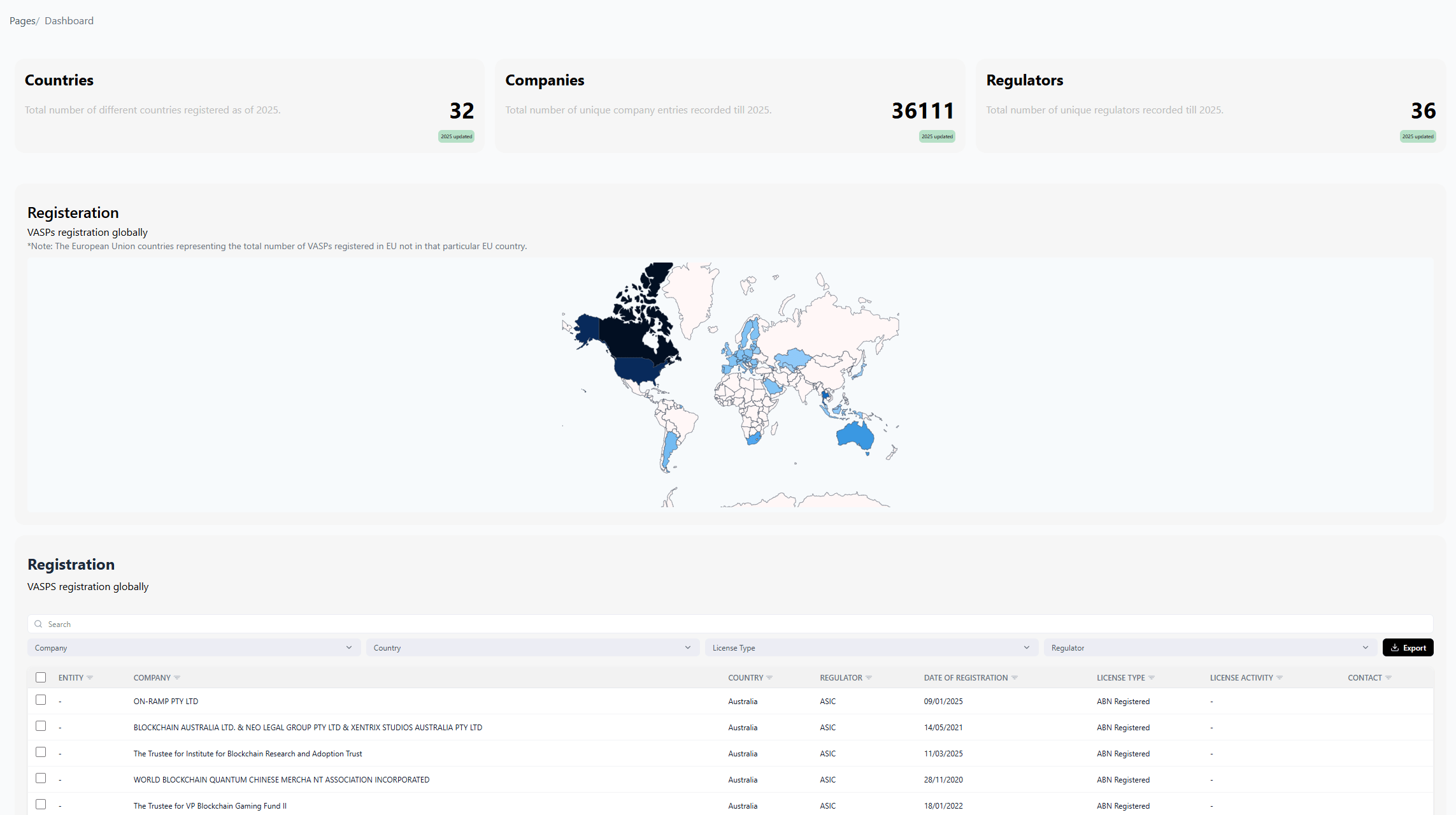
The dashboard gives an immediate snapshot of the global VASP landscape. At the top, three simple figures show the scope of the dataset: the number of countries with registered entities, the total count of companies, and the regulators responsible for overseeing them. This provides a sense of scale and helps users benchmark the industry at a glance.
A world map adds a geographic dimension by highlighting where registrations are most concentrated. Darker shading signals jurisdictions with larger numbers of licensed firms, while lighter colors mark those with fewer entries. This allows users to quickly see regional clusters, from North America and Europe to emerging markets in Asia and Latin America.
Beneath the map, the registration table lists individual VASPs. Each row contains the company name, country, regulator, license type, and other details. Together, the summary numbers, map, and table offer both a macro and micro view: a global picture of VASP registrations alongside the ability to drill down into specific firms.
How to Search VASP Records
The database is designed to make searching straightforward. The core fields are displayed in a single table, and each can be filtered to narrow results. For example, typing the name of a company or entity quickly shows whether it is listed and under which regulator. This is the simplest way to confirm if a business holds a license.
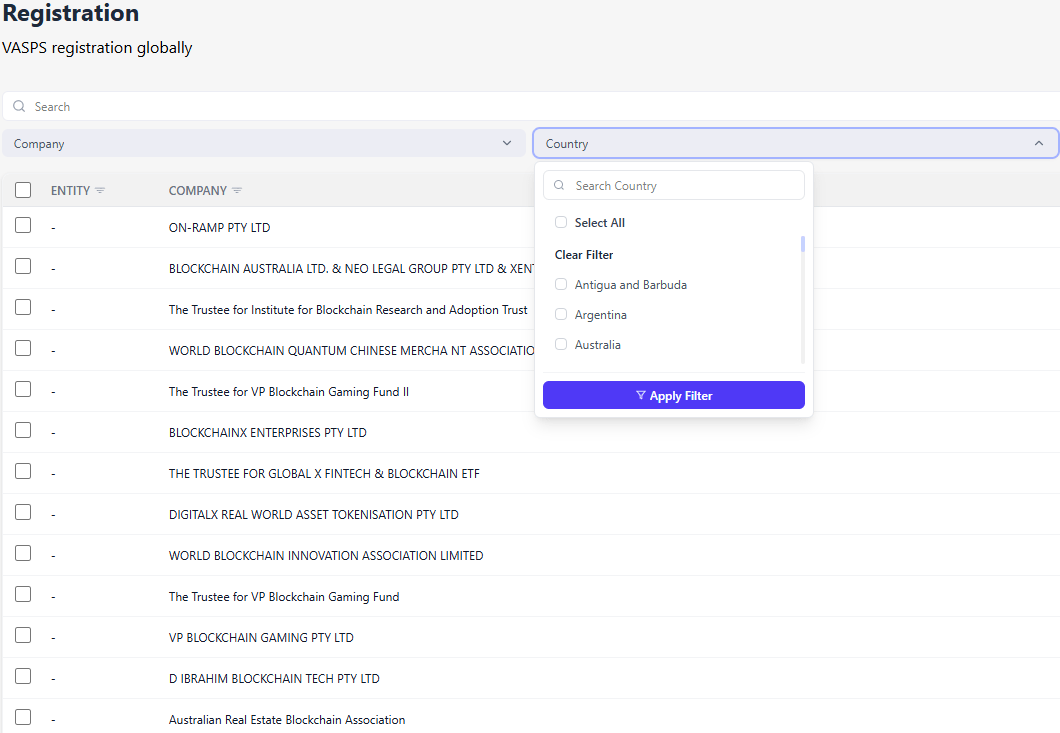
Filtering by country is often the starting point for compliance teams and market researchers. Selecting a jurisdiction limits the view to VASPs registered there, which can then be compared against neighboring markets. The regulator filter adds another layer, useful when multiple agencies operate in the same country or when firms want to see the scope of a single authority.
The license type and license activity fields provide detail about what a VASP is allowed to do, from exchanges and custody to token issuance. Combined with the date of registration, these filters can be used to track how a market evolves over time, spotting new entrants or shifts in licensing trends.
Rather than replacing regulatory lists, the search function brings them together in a format that is faster to use and easier to compare. This makes it possible to move from broad questions to precise answers in just a few clicks.
Interpreting VASP Licensing Information
Search results show more than just names and jurisdictions. Each entry includes details on the license type and the activity it covers. These fields are central to understanding what a VASP is permitted to do. A license might specify exchange services, custody, token issuance, or a broader set of activities. Reading this correctly helps determine whether a firm can legally operate in the role it claims.
The activity status is another key signal. Some regulators list firms as registered but not yet fully active, while others may note if a license has lapsed or been suspended. Looking at this status helps distinguish between entities that are operational and those that exist only on paper.
It is also common to encounter blank fields. Not every regulator publishes the same level of detail, and in some cases, the information may not be updated regularly. A missing license type or activity field does not necessarily mean the firm is unlicensed, but it does highlight differences in transparency across jurisdictions.
Interpreting these details requires context. The database makes it easier to compare entries, but the meaning of each field still depends on the rules of the regulator behind it. This is why combining the license information with country and regulator filters gives the clearest picture.
Tracking VASP Updates in Real Time
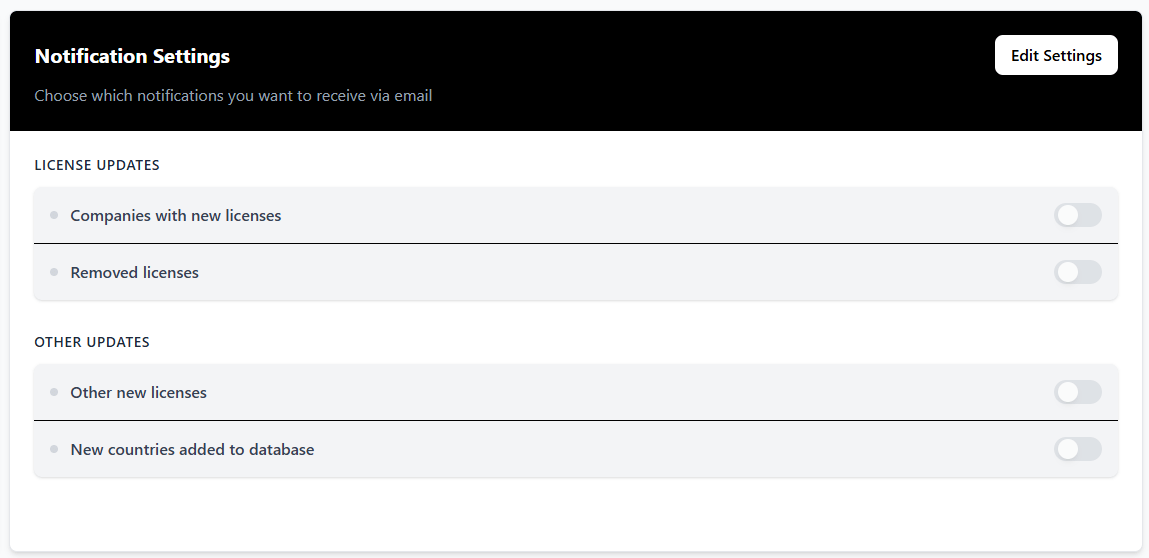
The profile section of the database allows users to set notifications for updates. This feature ensures that changes in licensing status or new entries do not go unnoticed. Notifications can be enabled to track when a regulator issues a new license, when an existing entity is removed, or when a new country begins publishing VASP registrations.
For compliance teams, this removes the need to monitor multiple regulatory websites manually. For researchers and market participants, it offers a way to stay ahead of developments as jurisdictions expand their oversight of digital assets. By receiving updates in real time, users can respond quickly to changes that may affect risk assessments, partnerships, or strategic planning.
Why VASP Data Is Useful
The value of a VASP database lies in how it can be applied to real decisions. For compliance teams, it provides a reliable source to confirm whether a counterparty is licensed before onboarding. Instead of checking dozens of national registers, a single search can verify status and regulator oversight.
For businesses and investors, the data enables market comparison. By filtering across countries, it becomes easier to see which jurisdictions have the most activity, which regulators are attracting new entrants, and where gaps exist. This helps guide market entry strategies and partnerships.
The database is also useful for monitoring risk. Alerts on license removals or regulatory warnings allow firms to respond quickly if a partner becomes non-compliant. Identifying clusters of firms in lightly regulated jurisdictions can highlight potential blind spots.
Frequently Asked Questions (FAQ)
Do all countries publish VASP data?
No. Some regulators provide detailed public registers, while others share only limited information or none at all.
What if a company does not appear in the database?
It may be unlicensed, or its regulator may not publish data. Users should always cross-check with the relevant authority.
Can the database show if a VASP is fully active?
Yes, where regulators publish status information. Some licenses are granted but not yet operational, and this is reflected when available.
How often is VASP data updated?
Updates are pulled as regulators publish changes. The notification feature highlights new licenses, removals, and jurisdictional additions.
Why is VASP data important for compliance?
It confirms licensing status, helps detect non-compliant entities, and supports due diligence when dealing with counterparties.