


 Buy a Licensed Company
  Explore VASP Data
  Talk to an Expert

 Atis Shala
Atis is a senior analyst and community lead with four years of experience in crypto. He has a bachelor from the Rochester Institute of Technology.
Atis Shala
Atis is a senior analyst and community lead with four years of experience in crypto. He has a bachelor from the Rochester Institute of Technology.
The Beginner’s Guide to Bull and Bear Crypto Markets

If you are new to crypto, the words bull market and bear market can sound dramatic, confusing, or even intimidating. In reality, they describe the environment the market is operating in, not just whether prices are going up or down. Understanding this early can save beginners years of frustration, bad decisions, and emotional burnout.
A bull market in crypto is a period where prices generally rise over time, confidence grows, and optimism dominates. People feel excited, risk-taking increases, and new participants rush in believing opportunities are everywhere. A bear market is the opposite environment. Prices trend downward, confidence fades, fear replaces excitement, and many participants leave the market entirely or become overly cautious.
What makes crypto different from traditional markets is intensity. Crypto bull markets tend to rise faster, higher, and more emotionally than stocks or bonds. Crypto bear markets fall harder, last longer psychologically, and feel more personal because price swings can be extreme. This volatility magnifies both profits and mistakes, especially for first-cycle investors who have never experienced a full market cycle before.

The single most important idea to understand is this – markets move in cycles. Crypto does not go up forever, despite of Bitcoin maxis pushing the narrative hard, and it does not stay down forever either. Bull and bear markets alternate, shaped by liquidity, sentiment, technology, and human behavior. When beginners expect constant growth, normal downturns feel like failure instead of a natural phase.
Bull and bear markets are environments you operate within, not just price movements you react to. Understanding the environment changes everything.
What Makes Crypto Markets Different From Traditional Markets
Before diving deeper into bull and bear markets, it is important to understand why crypto behaves so differently from traditional financial markets. Many beginner mistakes happen not because people misunderstand bull and bear markets, but because they assume crypto should behave like stocks, bonds, or real estate. It does not.
Crypto markets trade 24 hours a day, seven days a week, with no closing bell and no pause for emotions to cool off. Prices can move dramatically overnight, during weekends, or while you are asleep. This constant motion amplifies emotional reactions and shortens decision-making time, especially for new investors.
Another key difference is who participates. Crypto is dominated by retail investors rather than institutions. That means prices are more heavily influenced by crowd behavior, social media, headlines, and momentum. When excitement spreads, it spreads fast. When fear appears, it can feel overwhelming.
Crypto is also extremely volatile by nature. Large price swings are normal, not exceptional. What would be considered a market crash in traditional finance can be a routine correction in crypto. This volatility is closely tied to narratives – stories about new technology, adoption, regulation, or innovation often move prices faster than fundamentals alone.
Boom and bust cycles happen much faster in crypto. Bull markets accelerate quickly as speculation and technology combine, while bear markets compress pain into shorter, more intense periods. Because crypto represents both a financial asset and an emerging technology, expectations swing wildly between revolutionary optimism and complete dismissal.
This is why crypto bull markets often feel euphoric, almost unreal, and crypto bear markets feel catastrophic, even when nothing fundamental has changed. Understanding this difference sets expectations early and helps beginners avoid shock, panic, and emotional decisions as market conditions shift.
Understanding Market Cycles: How Bull and Bear Markets Are Born
At the center of every bull and bear market is a cycle. Markets do not randomly switch moods. They move through repeatable phases driven by money flow, expectations, and human behavior. Once beginners understand this, bull and bear markets stop feeling chaotic and start feeling navigable.
In simple terms, a market cycle describes how prices, participation, and sentiment evolve over time. While no two cycles look exactly the same, most crypto cycles move through four broad phases.
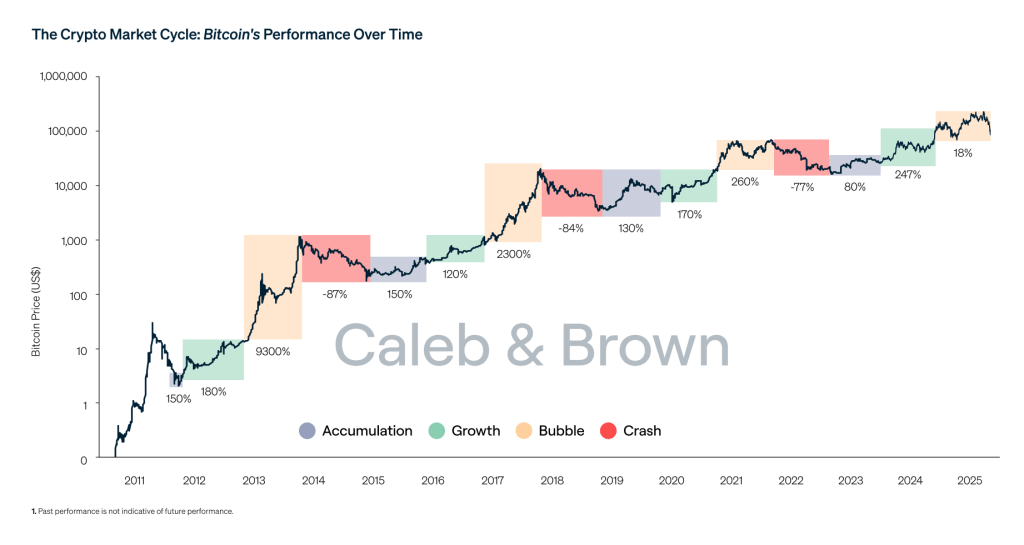
First, accumulation. This phase happens quietly, usually after a painful bear market. Prices move sideways, interest is low, and most people have emotionally checked out. Long-term participants slowly re-enter while fear still dominates the narrative.
Next is the uptrend, commonly called the bull market. Prices begin rising consistently, confidence returns, and participation increases. At first, growth feels steady and logical. Later, optimism turns into excitement, and excitement often turns into excess.
Then comes distribution. Prices may still be rising, but smart money begins reducing exposure. Volatility increases, narratives become louder, and late participants rush in believing the trend is guaranteed. This phase is emotionally deceptive because it feels like strength while weakness is forming underneath.
Finally, the downtrend, or bear market, takes over. Prices fall, leverage unwinds, speculation collapses, and confidence erodes. What felt permanent during the bull market suddenly feels fragile.
No market stays bullish or bearish forever because cycles are governed by liquidity, speculation, leverage, and time. Easy money fuels expansion. Excess leverage creates instability. Time allows both optimism and fear to overshoot reality before correcting.

What Is a Crypto Bull Market?
A crypto bull market develops when prices rise consistently over time and confidence spreads across the market. Participation increases, attention returns, and optimism becomes the dominant emotion. For beginners, this phase often feels welcoming and validating because actions are rewarded quickly and mistakes are easily overlooked.
One of the clearest signs of a bull market is a sustained price uptrend. Assets tend to form higher highs and higher lows, meaning pullbacks happen but recovery follows. These pullbacks often feel brief and manageable, reinforcing the belief that the market will continue upward.
As prices rise, public interest grows. Media coverage increases, social platforms become more active, and conversations shift from caution to opportunity. Trading volume expands as more people participate, adding liquidity and reinforcing upward momentum. Valuations stretch as investors become willing to pay higher prices based on future expectations rather than current reality.
Several forces work together to drive crypto bull markets. New capital enters the market, often from retail investors drawn in by performance and headlines. Positive narratives around technology, adoption, or innovation provide justification for rising prices. Easier financial conditions make risk-taking more comfortable, while momentum feeds on itself through reflexivity – rising prices attract buyers, and buyers push prices higher.
This combination creates a powerful feedback loop. As portfolios grow, confidence increases. As confidence increases, risk tolerance expands. Assets that seemed speculative earlier begin to feel reasonable, and caution gradually fades into the background.
Why Are Bull Markets Easier to Make Money?
This is why bull markets often feel easy. Many assets rise together. Losses feel temporary. Timing appears less important. For first-cycle investors, this can create the impression that success comes from simply being present rather than being disciplined.
The critical beginner warning is subtle but important – bull markets reward participation, but they punish overconfidence. As confidence grows, risk management often weakens. Position sizes increase, leverage becomes tempting, and exit plans disappear. These habits feel harmless while prices rise, yet they shape outcomes once conditions change.
How to Recognize a Bull Market Early?
Once you understand how bull markets form and how emotions behave, the next challenge is recognition. Beginners often assume bull markets announce themselves clearly. In reality, they develop gradually and only feel obvious after they are already well underway. The goal is not perfect timing, but early awareness.
One of the simplest signals is trend structure. In early bull markets, prices begin forming higher highs and higher lows over time. Pullbacks still happen, but they tend to stop above previous lows. This shift signals improving demand rather than temporary excitement.
Another key sign is volume expansion. Rising prices supported by increasing trading volume suggest that more participants are committing capital, not just short-term traders pushing prices briefly higher. Volume helps confirm whether a move has substance behind it.
Bull markets also reveal themselves through coin breakouts that hold. Prices move above important resistance levels and stay there instead of immediately falling back. These sustained breakouts indicate acceptance of higher prices rather than rejection.
Sentiment gradually improves as well. Conversations shift from fear to curiosity, then to cautious optimism. Media coverage becomes less dismissive and more exploratory. Capital begins rotating into higher-risk assets, as investors grow more comfortable moving beyond the safest options.
An important clarification for beginners is essential here – one rally does not equal a bull market. Bull markets require time, structure, and confirmation. Short-term spikes can happen inside bear markets. What matters is consistency across multiple signals.
This patience prepares you for the opposite situation, where early warning signs point toward weakening conditions rather than growth.
What Is a Crypto Bear Market?
A crypto bear market unfolds when prices trend downward over an extended period and confidence steadily erodes. Participation declines, attention fades, and caution becomes the dominant mindset. For beginners, this phase often feels confusing and emotionally exhausting, especially when optimism from the previous bull market is still fresh.
One of the defining features of a bear market is a sustained downtrend. Prices form lower highs and lower lows, meaning recovery attempts fail and selling pressure returns. Rallies feel brief and unreliable, gradually training participants to expect disappointment rather than continuation.
As prices fall, trading volume and public interest decline. Media coverage shifts toward criticism and doubt, while social activity slows or turns negative. Periods of sharp selling, often called capitulation events, occur when fear peaks and investors rush to exit at almost any price. After these moments, the market may enter long stretches of sideways movement, where prices stagnate and attention disappears almost entirely.
Several forces contribute to the formation of bear markets. Excess leverage unwinds as positions built during the bull market are forced to close. Liquidity dries up as new capital stops entering and existing participants reduce risk. Narratives lose credibility when expectations fail to materialize, and external pressure from regulation or broader economic conditions adds uncertainty.
These conditions shape how bear markets feel emotionally. Confidence erodes slowly at first, then more deeply as time passes without recovery. Media coverage grows increasingly negative, reinforcing pessimism. Investor fatigue sets in as months of inactivity replace the excitement that once defined the market. Many participants disengage not because they believe crypto has ended, but because waiting feels pointless.
How to Recognize a Bear Market Early
Bear markets also develop in stages, and early recognition helps beginners avoid denial-driven decisions. The signals often appear subtle at first, especially when confidence from the previous bull market lingers.
One of the earliest signs is failed rallies. Prices bounce upward but struggle to continue, repeatedly stalling at lower levels. Over time, this creates lower highs, showing that sellers regain control faster after each attempt at recovery.
Declining volume during upward moves is another warning. When prices rise on weak participation, it suggests a lack of conviction. At the same time, volatility often increases, with sharper drops and unstable price action replacing smoother trends.
Sentiment plays a crucial role. In early bear markets, negativity does not disappear after small recoveries. Doubt persists, narratives weaken, and confidence fails to rebuild. This persistence separates temporary fear from a shifting environment.
A critical distinction beginners must learn is the difference between a correction and a bear market. Corrections happen within healthy uptrends and are followed by renewed strength. Bear markets show repeated failure to regain momentum over time.
Denial becomes dangerous when investors assume every drop will quickly reverse. Ignoring early signs often leads to emotional decisions later, when losses feel overwhelming rather than manageable.
The Psychology of Bull and Bear Markets
More than charts or indicators, psychology determines outcomes in crypto markets. Bull and bear markets place very different emotional pressures on participants, and beginners often struggle because they react to feelings without realizing those feelings are part of the cycle itself.
During bull markets, rising prices create greed and urgency. Gains feel exciting, and the fear of missing out grows as others appear to profit effortlessly. Beginners often trade more frequently, chase memecoins, and take risks they would normally avoid. Because losses are rare and recoveries are quick, risk feels distant and unimportant. This environment trains people to ignore caution and associate confidence with competence.
These emotional pressures explain why many beginners buy late in bull markets. By the time confidence feels strongest, prices have often already risen significantly. The decision to buy is driven less by opportunity and more by the discomfort of being left behind. It feels safer to join the crowd than to wait.
Bear markets apply pressure in the opposite direction. Falling prices trigger fear and self-doubt. Losses feel personal and permanent. Capitulation happens when emotional pain outweighs patience, leading investors to sell simply to escape discomfort. Loss aversion intensifies as people become more focused on avoiding further losses than on long-term potential.
As time passes, many beginners disengage completely. Watching the market feels pointless, and participation drops to zero. This explains why many sell late in bear markets. The decision often comes after prolonged stress rather than clear analysis. Selling provides emotional relief, even when prices are already depressed.
These reactions form a repeating emotional pattern. Optimism slowly builds into excitement, excitement turns into excess, excess collapses into fear, and fear fades into indifference. Beginners do not fail because they lack intelligence. They struggle because emotions change faster than awareness.
Recognizing these emotional shifts without judgment is a turning point. Once beginners understand that feelings are signals of the environment rather than instructions to act, they gain distance from impulsive decisions. This awareness leads naturally to the next step – learning how to recognize bull and bear markets early using structure rather than emotion.
Bull vs Bear Market Early Signals
| Signal Type | Early Bull Market | Early Bear Market |
| Trend Structure | Higher highs and higher lows | Lower highs and failed recoveries |
| Volume | Expanding on upward moves | Weak on rallies, stronger on drops |
| Breakouts | Hold above key levels | Breakouts fail quickly |
| Sentiment | Cautious optimism building | Persistent doubt and negativity |
| Risk Behavior | Capital moves into risk | Capital retreats to safety |
Common Beginner Mistakes in Bull and Bear Markets
Understanding bull and bear markets conceptually is only half the challenge. The harder part is managing behavior when the environment quietly pushes emotions in one direction. The mistakes below are common, predictable, and human. Recognizing them early helps beginners reduce damage without blaming themselves.
Common Beginner Mistakes in Bull Markets
Bull markets reward activity and confidence, which can slowly weaken discipline. As prices rise and participation increases, mistakes often feel invisible until conditions change.
Common bull market mistakes include:
- Buying after parabolic moves when excitement peaks and downside risk quietly increases
- Overleveraging positions because gains feel easy and losses feel unlikely
- Ignoring exit plans as selling feels unnecessary during strong uptrends
- Chasing narratives instead of evaluating risk and timing
- Believing growth will continue uninterrupted, which weakens caution and position sizing
These behaviors are closely tied to bull market psychology. Greed, urgency, and optimism reinforce each other, making restraint feel unnecessary. The danger is not participation itself, but allowing confidence to replace structure.
Common Beginner Mistakes in Bear Markets
Bear markets apply pressure in the opposite direction. Falling prices and long periods of inactivity create emotional fatigue, leading beginners to prioritize relief over patience.
- Common bear market mistakes include:
- Panic selling near lows to escape emotional discomfort
- Abandoning long-term plans due to prolonged uncertainty
- Overtrading sideways price action in search of control
- Ignoring accumulation opportunities because interest and optimism are low
- Losing conviction due to noise, negativity, and repeated failed rallies
These mistakes emerge from fear, exhaustion, and loss aversion rather than poor logic. Over time, disengagement can feel safer than thoughtful participation.
The key lesson remains consistent – bear markets punish emotion, not patience. When beginners manage behavior instead of reacting to feelings, they preserve clarity and flexibility for the next phase of the cycle.
How Strategies Change Between Bull and Bear Markets
One of the most important realizations for beginners is that strategy depends on environment. Bull and bear markets reward very different behaviors, even when the same assets are involved. Many mistakes happen when investors apply a single approach to all conditions instead of adapting to what the market is offering. Considering that crypto is not as regulated as other markets, this makes mistakes even more dangerous.
Strategy Focus During Bull Markets
In bull markets, price strength and participation support growth-oriented strategies. Opportunities appear more frequently, and momentum plays a larger role in outcomes.
- Common strategic priorities in bull markets include:
- Momentum matters, as rising trends tend to continue longer than expected
- Risk tolerance increases, allowing for broader participation across assets
Position management becomes critical, since gains can disappear quickly during sharp pullbacks
Bull markets reward engagement, but structure still matters. Managing position size, taking partial profits, and avoiding emotional overexposure help prevent confidence from turning into vulnerability.
Strategy Focus During Bear Markets
Bear markets shift the goal from growth to survival. Fewer opportunities exist, and patience becomes a strategic advantage rather than a weakness.
Common strategic priorities in bear markets include:
- Capital preservation matters, as avoiding large losses creates future flexibility
- Selectivity increases, focusing only on the strongest assets or setups
- Time horizon lengthens, with less emphasis on short-term movement
Bear markets reward restraint. Doing less, waiting longer, and accepting inactivity often outperform constant engagement.
How Bull and Bear Markets Fit Together
When viewed up close, crypto markets can feel chaotic and exhausting. When viewed from a distance, a clearer pattern emerges. Bull and bear markets are not opposing forces battling for control. They are connected phases of the same long-term process.
Crypto adoption unfolds alongside innovation, speculation, regulation, and human behavior. Volatility exists because crypto represents something still evolving. New technology attracts optimism, optimism attracts capital, and capital amplifies price movement. Periods of excess are followed by periods of correction, allowing the system to reset and mature.
Over time, multiple cycles shape successful investors. Early cycles teach emotional awareness. Later cycles reward patience, structure, and experience. Each bull market offers opportunity, while each bear market offers perspective. Those who survive multiple cycles tend to make fewer emotional decisions, not because they predict better, but because they react less.
This is why patience compounds more than prediction. Accurately calling tops and bottoms is rare and unnecessary. Remaining engaged, adaptable, and emotionally stable across cycles creates more consistent outcomes than attempting to outsmart the market.
Seen through this lens, cycles are not failures or interruptions. They are features, not bugs. They remove excess, reinforce discipline, and allow long-term growth to continue quietly beneath the surface.
Where the Crypto Market Stands in July 2026
The framework in this guide is only useful if you can apply it to the market in front of you, so here is what the signals say in the middle of 2026. The short version is that crypto entered a corrective, fear driven phase after a strong start to the year, and the market is now consolidating while it waits for a catalyst.
Bitcoin opened 2026 above $93,000. By the end of June it had fallen to a fresh 21 month low near $60,000, and on 20 July it traded around $64,000. That is a drop of roughly a third from the January high, well beyond a routine pullback and into the territory this guide describes as a downtrend. Bitcoin also slipped below its 50 month moving average near $65,150, a level long term holders watch as a line between structural strength and weakness. Two forces drove the move, both external rather than technological: steady outflows from the spot Bitcoin ETFs, and uncertainty about how far the Federal Reserve would go on interest rates.
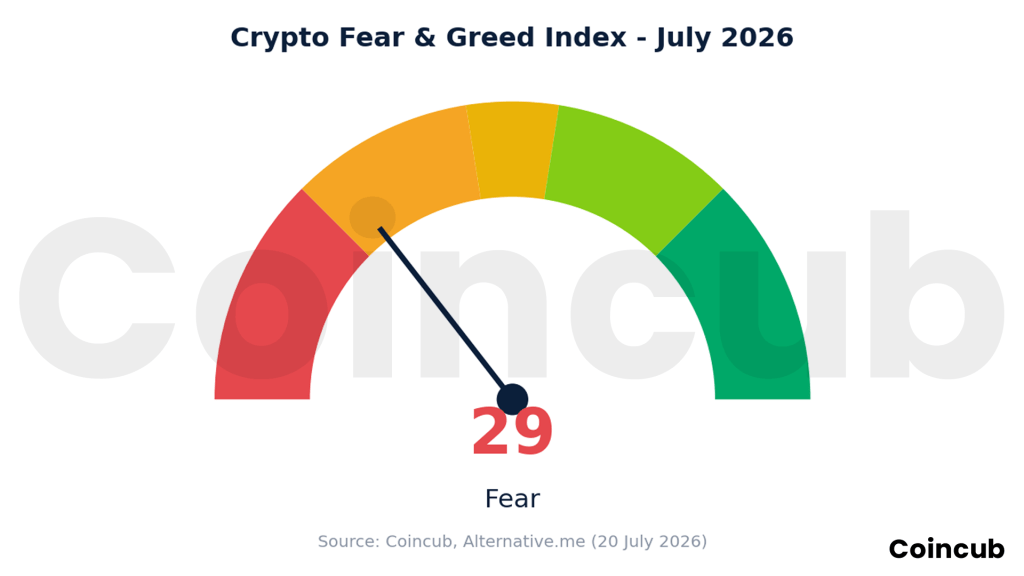
Sentiment followed price down. The Crypto Fear and Greed Index sat at 29 in late July, in the fear zone, a long way from the greed that defined the opening weeks of the year. Trading conviction thinned and rallies struggled to hold, the classic texture of an early to mid bear phase rather than a healthy correction inside an uptrend.
Reading the Current Signals Against the Checklist
Run the market through the early warning signals this guide already lays out, and the picture is consistent rather than contradictory.
| Signal | What the guide says to watch | Reading in July 2026 |
|---|---|---|
| Trend structure | Lower highs and failed recoveries signal weakness | Lower highs across H1, price down about a third from January |
| Moving average | Price below long term averages favours bears | Below the 50 month average near $65,150 |
| Sentiment | Persistent doubt marks a shifting environment | Fear and Greed at 29, fear zone |
| Capital flows | Capital retreating to safety confirms caution | Sustained spot Bitcoin ETF outflows |
| Volatility | Sharper drops replace smooth trends | Tight range coiling after a steep slide |
Notice what the checklist does not say. It does not say the cycle is over or that recovery is impossible. It says the current environment rewards the behaviour this guide assigns to bear phases, which is capital preservation, selectivity and a longer time horizon, rather than the aggressive participation that pays off in a confirmed uptrend.
Final Thoughts on How Beginners Should Approach Crypto Markets
For beginners, the most important skill in crypto is not forecasting price or finding perfect entries. It is learning how to operate calmly inside changing environments. Bull markets reward participation, but they test discipline. Bear markets reward preparation, but they test patience. Each phase exposes different weaknesses, and each phase offers different lessons.
The value of understanding cycles is that a phase like July 2026 stops feeling like a personal failure and starts feeling like a known chapter. A first cycle investor watching a third of the market value evaporate often reacts with the two mistakes this guide warns about, panic selling near lows and abandoning a long term plan out of exhaustion. The framework asks for the opposite response: slow down, size positions responsibly, and treat the fear reading as information about the environment rather than an instruction to act.
It is also worth remembering that tight, low conviction ranges like the current one tend to precede decisive moves in either direction. Analysts watching July 2026 pointed to upcoming Federal Reserve decisions as the likely trigger, with base case targets clustered near $65,000 and more bullish scenarios closer to $70,000. Nobody, including this guide, can tell you which way it breaks. The point of the cycle lens is not prediction. It is staying rational and engaged through both the euphoria of January and the fear of July, so that you are still in the game when the next phase arrives.
Crypto markets will continue to rise and fall. That movement does not signal failure or success on its own. What matters is how you respond. The goal is to survive and stay rational through both bull or bear markets.
Frequently Asked Questions (FAQ)
What is a bull and bear market? +
A bull market is a period when prices trend upward over time, driven by optimism and increased buying activity. A bear market is when prices generally decline, sentiment weakens, and selling pressure persists for weeks or months.
How to remember bull vs bear? +
Think of the animals: a bull pushes prices up, striking upward with its horns, while a bear swipes prices down. This image helps link the direction of price movement to the terms.
Will 2026 be a bull or bear market? +
There is no consensus. Some analysts see early bear signals for crypto continuing from late 2025, while others note stabilization or rebound potential. Mixed sentiment and volatility make directional calls for 2026 uncertain.
What is the bull and bear market in crypto? +
In crypto, a bull market means a sustained upward trend in coin prices and growing engagement, while a bear market means prolonged price declines and weakening sentiment. These phases reflect widespread investor behavior, not day-to-day volatility.
Is crypto now in a bear market? +
Many indicators show bearish conditions persisting into early 2026, with some analysts noting developing bear trends and weakened demand, though views vary and confirmation may come only in hindsight.
Is crypto in a bull or bear market in 2026? +
As of July 2026 the weight of evidence points to a corrective, bearish phase. Bitcoin is down about a third from its January high, trades below its 50 month average, and the Fear and Greed Index sits at 29. The market is consolidating rather than trending, which often comes before a decisive move.
Why did crypto fall in the first half of 2026? +
The decline was driven mainly by outflows from spot Bitcoin ETFs and uncertainty over Federal Reserve interest rate policy, rather than by any breakdown in the underlying technology. Sentiment amplified the move as confidence faded.
Will the market recover? +
Cycles have always alternated between expansion and contraction, and each past bear phase eventually gave way to a new uptrend. Timing that turn is nearly impossible, which is why the guide stresses process over prediction and patience over perfect calls.