Buy a Licensed Company
  Explore VASP Data
  Talk to an Expert

 Atis Shala
Atis is a senior analyst and community lead with four years of experience in crypto. He has a bachelor from the Rochester Institute of Technology.
Atis Shala
Atis is a senior analyst and community lead with four years of experience in crypto. He has a bachelor from the Rochester Institute of Technology.
NEAR Protocol Price Prediction 2026-2030: After the September Rally

- NEAR traded between $3.56 and $3.66 on 20 September 2026, with a market capitalisation near $4.7 billion and roughly 1.3 billion tokens in circulation. The token gained about 104 percent over the trailing 30 days and roughly 50 percent over the trailing week.
- Our 2030 base case is $15.00 to $28.00, implying a market capitalisation of roughly $20 billion to $36 billion, and every bull case below states the capitalisation it requires.
- NEAR Intents is the number that has moved most. Weekly volume reached $1.04 billion on 18 September 2026 with a single-day peak near $300 million, taking cumulative volume to $29.5 billion across more than 31 supported blockchains.
- The network shipped post-quantum cryptography ahead of most competitors. The mainnet upgrade of 20 July 2026 activated ML-DSA-65 signatures under the FIPS-204 standard, introduced dynamic resharding, and deployed the gas key system defined in NEP-611.
- Institutional access remains pending rather than granted. Grayscale filed an S-1 on 20 January 2026 to convert its NEAR Trust into a spot ETF under the ticker GSNR, with a decision expected around September 2026, and Bitwise has an application outstanding from May 2025.
- Published forecasts for NEAR disagree more violently than for almost any comparable asset. Coinpedia’s 2030 range runs from $18.70 to $71.78 while Changelly’s runs from $2.44 to $3.73, a gap of roughly nineteen times at the upper end.
Where NEAR stands on 20 September 2026
NEAR traded at $3.56 on CoinGecko and $3.66 on CoinMarketCap on 20 September 2026, giving a market capitalisation between roughly $4.65 billion and $4.78 billion and a rank in the low twenties. Circulating supply stood at approximately 1.3 billion tokens, and because essentially all supply is circulating, the fully diluted valuation matches the market capitalisation. Twenty-four hour volume ranged from $1.05 billion to $1.61 billion, which is exceptionally heavy relative to capitalisation and confirms that the recent move has been driven by real repositioning.
The move itself has been sharp. NEAR gained roughly 50 percent in the trailing week and 104 percent over 30 days, breaking through the $2.80 to $3.00 resistance band during a session on 18 September 2026 that added about 30 percent in twenty-four hours. Over twelve months the gain is a more modest 13 percent, which tells you the rally started from a low base after a weak first half.
The token remains roughly 82 percent below its record of $20.42, set on 16 January 2022. Reaching that level again would require a market capitalisation near $26.5 billion at the current supply.

What changed for NEAR in 2026
The most measurable development is NEAR Intents, which has moved from a promising feature to the network’s clearest source of real volume. On 18 September 2026 it processed $1.04 billion in weekly volume with a single-day peak near $300 million, bringing cumulative volume to $29.5 billion across a solver network spanning more than 31 blockchains. This matters because Intents is the mechanism through which NEAR’s chain abstraction thesis actually earns fees. A user expressing an intent to swap or move value across chains generates activity that settles through NEAR, whether or not the assets involved live on NEAR.
Confidential Intents added a second layer in September 2026, with total value locked passing $70 million and triggering the first reward snapshot under the NEAR@3.33 incentive programme. Incentivised TVL should always be discounted relative to organic TVL, and the useful question for readers is what share remains after the incentives end.
The Near Mainnet 2026 Upgrade
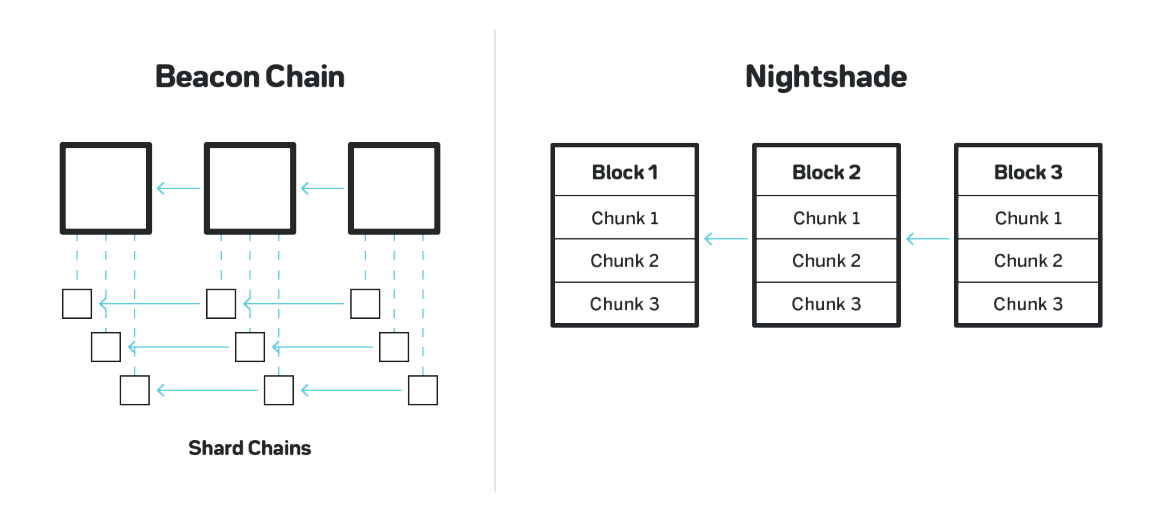
On the protocol side, the mainnet upgrade of 20 July 2026 was substantial. It activated post-quantum signatures using ML-DSA-65 under the FIPS-204 standard, which puts NEAR ahead of most Layer 1 networks on a risk that remains distant and is expensive to address late. It introduced dynamic resharding so the network adds shards automatically as demand rises rather than through governance events. The 1 million transactions per second figure often quoted for NEAR is a laboratory benchmark, and production throughput depends on how many shards the network is running at a given time. It deployed version 2.13.0 including the gas key system defined in NEP-611. A testnet deployment on 2 July 2026 preceded it.
The roadmap beyond that centres on SPICE, an upgrade targeting 0.4 second finality by decoupling consensus from execution, and on extending post-quantum cryptography to validator security with a target of 31 December 2027.
Institutional access has progressed without concluding. Grayscale filed an S-1 on 20 January 2026 to convert its NEAR Trust into a spot ETF under the ticker GSNR, with a decision expected around September 2026, and updated the filing as attention to AI-linked tokens increased. Bitwise filed a separate application in May 2025 that remains pending. Readers should note that a filing is a request rather than an approval.
The tokenomics change that underpins the supply side happened earlier and still holds. A governance vote in late 2025 reduced maximum annual inflation from roughly 5 percent to approximately 2.5 percent, which halved the dilution rate for holders and improved the real yield available to stakers.
How NEAR actually captures value
Understanding where NEAR’s price could go requires being precise about how the token accrues value, because the narrative and the mechanism are not the same thing.
The token does three jobs:
- It is staked by validators to secure the network and earns rewards for doing so.
- Pays for transaction fees and, distinctively, for data storage, since accounts must lock NEAR in proportion to the state they occupy.
- It carries governance weight over protocol upgrades and resource allocation.
The storage mechanism is the one that connects most directly to the AI narrative. Every account on NEAR locks a small amount of NEAR to pay for the data it stores, and that locked balance leaves circulating supply for as long as the account exists. If autonomous agents proliferate and each requires its own account and persistent state, the amount of NEAR locked for storage grows with the number of agents rather than with the number of human users. Combined with inflation at 2.5 percent, that produces a plausible path to supply tightening without requiring a burn mechanism.
Chain abstraction is the mechanism that connects to Intents. When a user signs a transaction on Bitcoin or Ethereum through a NEAR account using multi-party computation, NEAR captures fee revenue from activity that happens elsewhere. The $29.5 billion of cumulative Intents volume is the measure of whether this works, and the honest reading is that it works at meaningful scale and has yet to prove it can grow another order of magnitude against competing interoperability solutions.
The bull and bear arguments in late 2026
The case for NEAR rests on three things that are each partly proven. Intents volume demonstrates that chain abstraction attracts real usage rather than only developer interest. The AI positioning is more than branding, given the founder’s background in machine learning research and the specific infrastructure built for confidential agent execution. The usability advantage of human-readable accounts and recoverable access remains genuinely differentiated as crypto tries to onboard non-technical users.
The case against rests on three things that are each partly true. Liquidity depth on Ethereum and Solana remains far greater, and a chain that cannot hold stablecoin liquidity struggles to keep the DeFi activity that makes an ecosystem self-sustaining. Regulatory treatment of multi-party computation and non-custodial cross-chain signing is unsettled in both the United States and Europe, and chain abstraction depends on it. Competition in high-throughput execution is crowded, with parallelised EVM chains offering comparable performance and better compatibility with the existing Ethereum developer base.
The metrics that settle these arguments are specific, and readers tracking NEAR should watch four. Monthly active accounts holding more than a trivial balance filter out bot activity. External chain transaction counts measure whether chain abstraction is being used rather than admired. Storage staking volume proxies the growth of complex applications and agents. Developer retention across the Nearcore and Intents repositories indicates whether the ecosystem is compounding or hollowing out.
NEAR Protocol price prediction 2026-2030
These ranges were built on 20 September 2026 from a spot price of roughly $3.60, a circulating supply near 1.3 billion, inflation at approximately 2.5 percent, and the Intents and upgrade data above. Crypto prices are volatile and forecasts of this kind are frequently wrong, so every row states its assumption and the capitalisation its bull case implies.
| Year | Bear case | Base case | Bull case | Bull case implied market cap | Governing assumption |
|---|---|---|---|---|---|
| 2026 | $2.20 to $3.20 | $3.50 to $5.50 | $6.50 to $9.00 | roughly $12 billion | ETF decision lands, Intents volume holds above $1 billion weekly |
| 2027 | $2.50 to $4.50 | $6.00 to $11.00 | $15.00 to $22.00 | roughly $29 billion | Chain abstraction compounds, spot ETF trading with real flows |
| 2028 | $3.00 to $6.00 | $9.00 to $16.00 | $25.00 to $38.00 | roughly $50 billion | Agent economy produces sustained onchain transaction volume |
| 2029 | $3.50 to $7.00 | $12.00 to $22.00 | $35.00 to $55.00 | roughly $72 billion | Storage locking tightens float, NEAR is a top-ten network |
| 2030 | $4.00 to $8.00 | $15.00 to $28.00 | $45.00 to $70.00 | roughly $91 billion | NEAR is the default coordination layer for the agent economy |
NEAR in 2026
The final months of 2026 hinge on the Grayscale ETF decision expected around September and on whether Intents volume holds above the $1 billion weekly level it reached in mid-September. Our base case of $3.50 to $5.50 assumes the rally consolidates near current levels with gradual upward drift, which is the normal pattern after a 104 percent month. The bull case of $6.50 to $9.00 requires an approval plus continued market strength, and at roughly $12 billion of capitalisation it would represent a substantial but not extraordinary re-rating. The bear case of $2.20 to $3.20 assumes the ETF decision slips or disappoints and the September move retraces, which would still leave NEAR above its mid-2026 range.
NEAR in 2027 and 2028
The middle years test whether Intents compounds or plateaus. A base case of $6.00 to $11.00 for 2027 assumes weekly volume grows steadily, a spot ETF trades with modest but real flows, and NEAR establishes itself as one of several credible interoperability layers. The bull case of $15.00 to $22.00 assumes it becomes the dominant one, which would put capitalisation near $29 billion and place the NEAR coin firmly inside the top ten.
Carrying into 2028, the base case of $9.00 to $16.00 assumes the agent economy produces sustained transaction volume rather than demonstrations, and that storage locking begins to visibly tighten the float. The bull case of $25.00 to $38.00 implies roughly $50 billion of capitalisation, which would exceed NEAR’s January 2022 record price and require the AI infrastructure thesis to be substantially correct.
NEAR in 2029 and 2030
By 2030 the range between bear and bull is roughly seventeen times, which reflects how much of NEAR’s valuation depends on a thesis rather than on current revenue. A base case of $15.00 to $28.00 implies capitalisation between roughly $20 billion and $36 billion, which is a defensible valuation for a major Layer 1 with a working interoperability business. The bull case of $45.00 to $70.00 implies $58 billion to $91 billion, and it requires NEAR to be the coordination layer that autonomous agents default to.
Frequently Asked Questions (FAQ)
What is the NEAR price today? +
NEAR traded between $3.56 and $3.66 on 20 September 2026, with a market capitalisation between roughly $4.65 billion and $4.78 billion and about 1.3 billion tokens in circulation. The token gained roughly 104 percent over the previous 30 days.
Is there a NEAR ETF? +
Not yet. Grayscale filed an S-1 on 20 January 2026 to convert its NEAR Trust into a spot ETF under the ticker GSNR, with a decision expected around September 2026, and Bitwise has a separate application pending from May 2025. Readers should confirm the current status with the SEC before assuming approval.
What are NEAR Intents and why do they matter? +
NEAR Intents let a user state a desired outcome, such as swapping an asset across chains, and have a network of solvers execute it. They matter because they are the mechanism through which NEAR earns fees from activity on other blockchains. Weekly volume reached $1.04 billion on 18 September 2026, with cumulative volume of $29.5 billion across more than 31 chains.
Can NEAR reach $100? +
Reaching $100 would imply a market capitalisation near $130 billion at the current supply, which sits above the top of our 2030 bull case of $70.00. It would require NEAR to become one of the largest crypto assets in existence. We regard it as a low-probability outcome over this horizon.
How high can NEAR go in 2026? +
Our bull case for the remainder of 2026 is $6.50 to $9.00, which assumes a favourable ETF decision and continued market strength. The base case is $3.50 to $5.50.
Is NEAR an AI crypto? +
NEAR positions itself as infrastructure for user-owned AI, and the positioning is backed by specific engineering rather than branding alone. It provides confidential execution environments for agents, low-cost programmatic payments, and a storage model where each agent account locks NEAR. Whether the agent economy grows large enough to matter for the token price remains unproven.
What is NEAR's inflation rate? +
A governance vote in late 2025 reduced maximum annual inflation from roughly 5 percent to approximately 2.5 percent. With most supply already circulating, that dilution rate is modest and improves the real yield available to stakers relative to the network's earlier high-emission model.