Buy a Licensed Company
  Explore VASP Data
  Talk to an Expert
 Buy a registered Canadian MSB

Our review on MEXC Exchange: A Deep Dive into Features, Fees, and User Feedback
| Founded | 2018 |
| Headquarters | Seychelles |
| Website URL | https://www.mexc.com/ |
| Daily volume trading | $5B |
| Number of cryptocurrencies | 3,000+ |
| Crypto licences | MSB (US), AUSTRAC (Australia), MTR (Estonia – revoked 2023) |
| Cryptocurrency Fees | 0% maker / 0.05% taker spot, 0% maker / 0.02% taker futures (discounts with MX) |
| Minimum deposit | $10–$30, depending on the fiat provider |
| Digital Wallet | No native wallet; integrates with third-party wallets |
| Promotion | Yes (bonuses, zero-fee events, airdrops, contests) |
| Currency | USD, EUR, GBP, AED, BRL (45 fiats via third parties) |
| Deposit Method | Crypto, card, SEPA (limited regions), P2P, third parties |
MEXC launched in 2018 under the name MXC Exchange. The founding team aimed to create a trading platform that could move faster than the big names at the time. Their pitch was to list new projects quickly, provide high leverage for active traders, and keep fees lower than the market average. That strategy allowed MXC to carve out a niche as the go-to exchange for new altcoins, at a time when others were already tightening their listing standards.
The company is registered in Seychelles. Early operations focused on Asia, particularly Singapore and surrounding markets, but the exchange quickly expanded its footprint. Within the first two years, MXC reported millions of users across dozens of countries, supported by aggressive marketing and continuous token listings.
In 2021, the exchange rebranded to MEXC Global. The new name reflected the company’s push to make itself a global alternative to Binance and Huobi. MEXC leaned into its reputation for being one of the fastest to list new projects, which made it especially popular among speculative traders and communities chasing the latest narratives like meme coins, GameFi, or DeFi tokens.
From 2022 to 2024, MEXC’s growth sped up due to product expansion. The platform introduced perpetual futures contracts with leverage much higher than most competitors, reaching up to 500x in certain markets. It also launched copy trading. The introduction of Kickstarter and Launchpad linked utility to its native MX token, allowing holders to vote on new listings and get early access to token sales. During this time, MEXC began experimenting with hybrid models and eventually built DEX+, a service that combines liquidity from decentralized exchanges while keeping centralized execution speed. MEXC’s emphasis on quick listings and promotional events helped it attract a younger, retail-focused user base. It gained strong traction in markets where traders wanted early access to tokens that larger exchanges had not yet secured. This strategy faced regulatory challenges. In 2023, regulators in Canada, Austria, and Germany warned against the platform. Despite these setbacks, MEXC kept operating globally, maintaining millions of active accounts.
In 2025, MEXC is one of the top 10 exchanges by daily trading volume, regularly processing billions of dollars in spot and derivatives trades. MEXC reports more than 40 million users across over 170 markets and access to more than 3,000 digital assets, on figures the exchange published in August 2026. Independent coverage is narrower, with CoinGecko indexing 1,635 coins across 2,020 pairs and recording roughly $707 million of 24-hour spot volume, against the $5 billion daily figure the exchange has quoted.
2025 also marked the start of what MEXC called its Proof of Trust initiative. This included live Proof-of-Reserves reporting and the creation of a $100 million Guardian Fund, designed to reimburse users in case of technical failures or hacks. Alongside this, MEXC announced a $300 million Ecosystem Development Fund to invest in Web3 projects over five years.
MEXC’s August 2026 attestation, published on 14 August and independently audited by Hacken, reports every major asset above full backing. Bitcoin coverage is the outlier at 288 percent against 4,282.20 BTC of user balances, with USDT at 115 percent covering 1,691,925,884.19 USDT, USDC at 114 percent covering 170,998,567.28 USDC, and ether at 113 percent covering 58,457.33 ETH.
Set against peers, the absolute scale is modest: CoinGecko records total MEXC exchange reserves of roughly $618 million, compared with $3.29 billion at KuCoin and $8.2 billion at Gate. A high ratio on a small base is a different proposition from a high ratio on a large one, and readers comparing venues should see both figures.
MEXC has built its reputation on product variety. Instead of focusing only on core spot and derivatives markets, the exchange offers a broad set of services designed to appeal to both beginners and aggressive traders. The core philosophy is to provide users with access to a wide range of assets, leverage options, and promotional events.
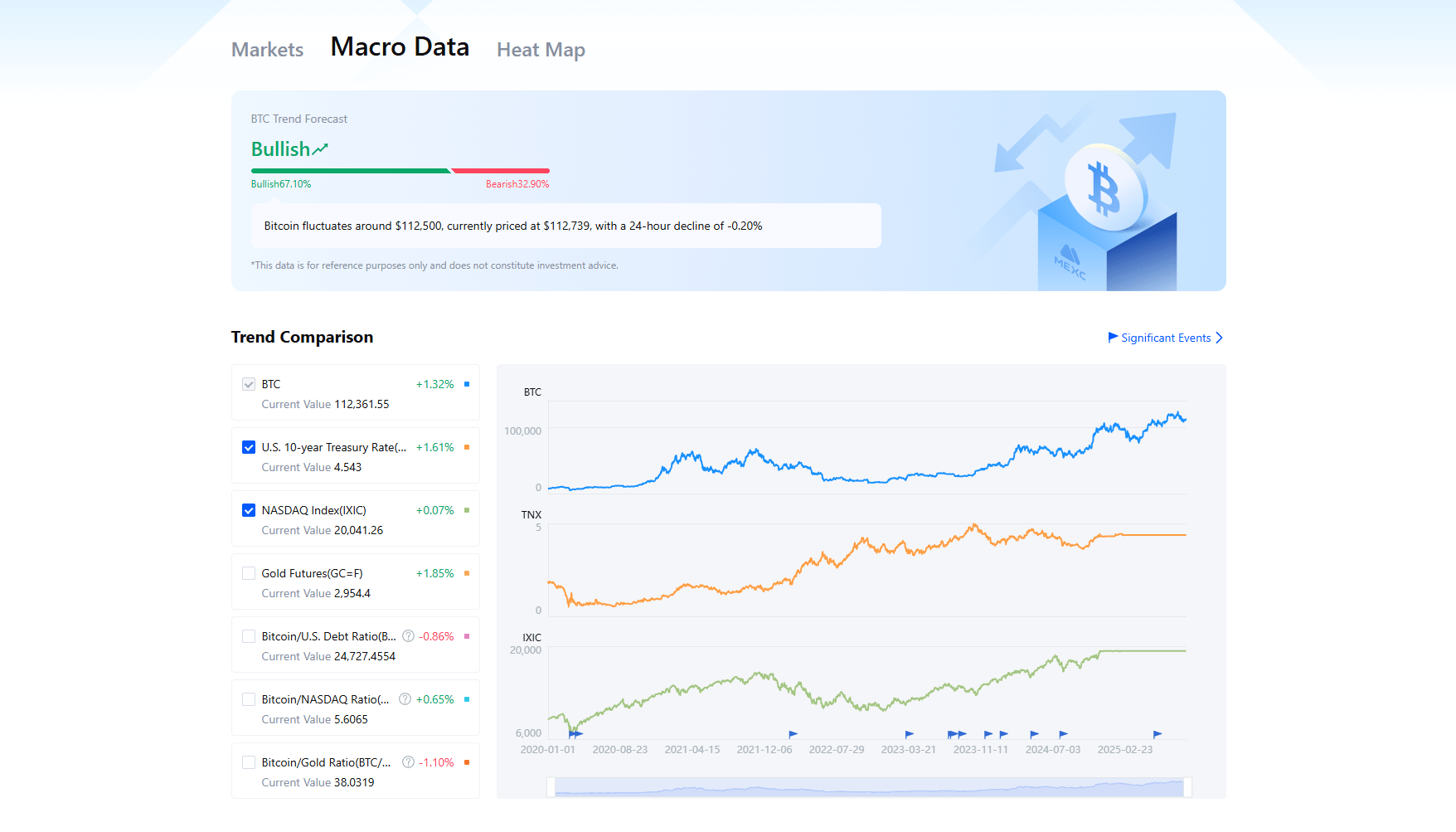
The spot market is where MEXC gained its first wave of traction. As of 2026, the platform lists more than 3,000 cryptocurrencies across thousands of trading pairs, making it one of the broadest selections of any exchange. Categories include BTC ecosystem tokens, Solana projects, meme coins, GameFi, DeFi, AI tokens, and inscription assets like BRC-20s.
Traders can choose between simple market orders, classic limit orders, or stop-limit strategies. The layout is straightforward: an order book, price chart, and buy/sell box. For advanced users, the exchange offers deeper charting and API connections. One of MEXC’s biggest differentiators is the speed of listings. New tokens often appear on MEXC before Binance, Bybit, or OKX, attracting communities looking for early liquidity.
MEXC’s futures desk is among the most aggressive in the industry. The exchange supports more than 1,200 perpetual contracts, split across USDT-M, Coin-M, and USDC-M settlement types.
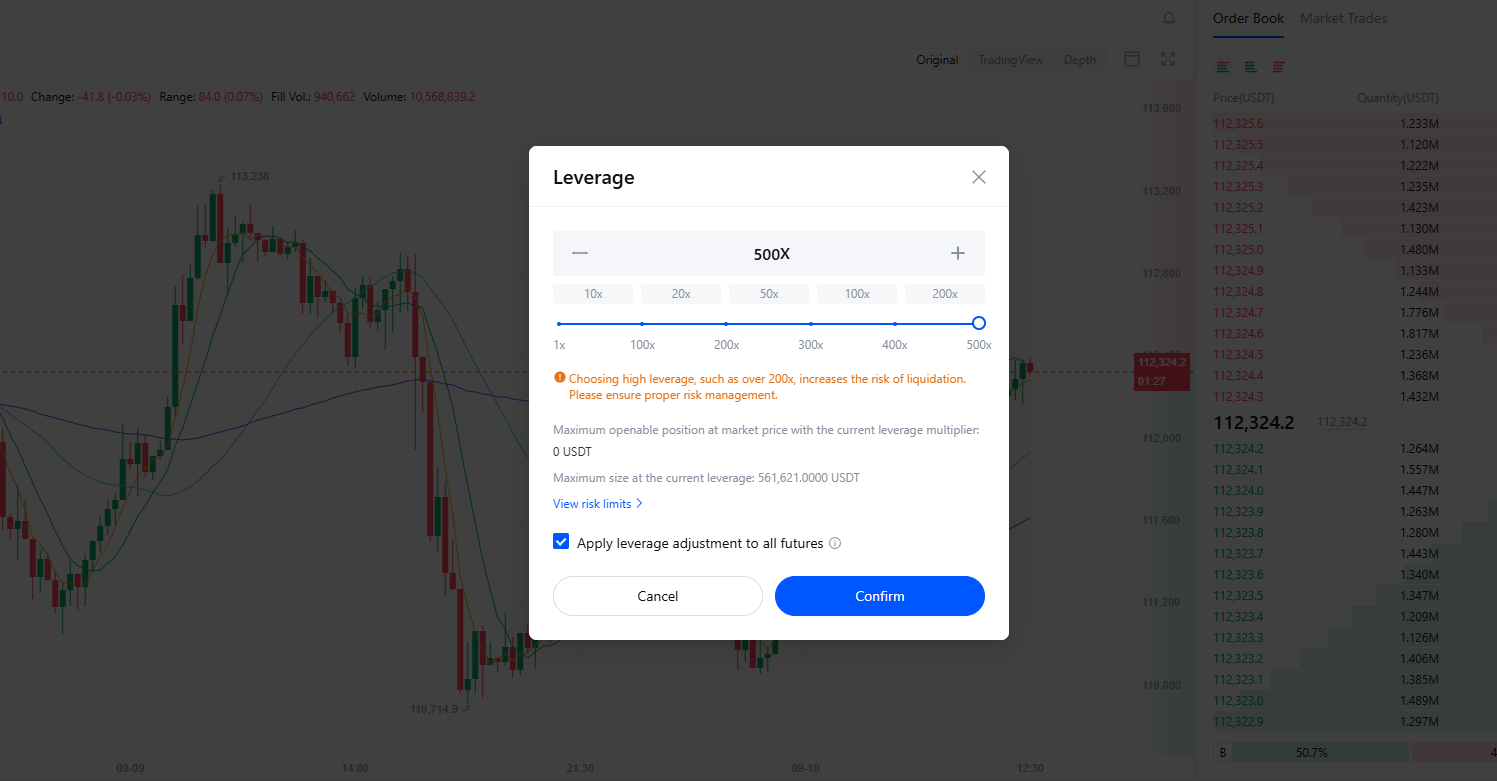
MEXC also offers demo trading for newcomers.
Spot margin trading is available with up to 10x leverage. Borrowing rates vary depending on the asset, but typically fall in the 5–15% APY range. Margin pairs include both majors (BTC/USDT, ETH/USDT) and smaller tokens, though liquidity is thinner outside the top 50.
MEXC has become a hub for copy trading in futures markets. Users can browse a leaderboard of top traders ranked by ROI, win rate, and profit over different timeframes. Minimum entry is low, often just $10.
Professional traders who allow followers to earn a share of profits (up to 15%). For beginners, this provides exposure to high-risk strategies without direct execution. The flip side is that following the wrong trader can lead to steep losses, since leverage is involved.
DEX+ is MEXC’s hybrid trading system that merges centralized execution with decentralized liquidity. It aggregates rates from external DEXs like Raydium, Pumpfun, and PancakeSwap, enabling swaps across multiple chains (Ethereum, BNB Chain, Solana, Base, Tron, and others).
Users don’t necessarily need a Web3 wallet to access DEX+. They can trade directly from their MEXC account. Those who prefer non-custodial control can connect wallets like MetaMask, Phantom, or Trust Wallet.
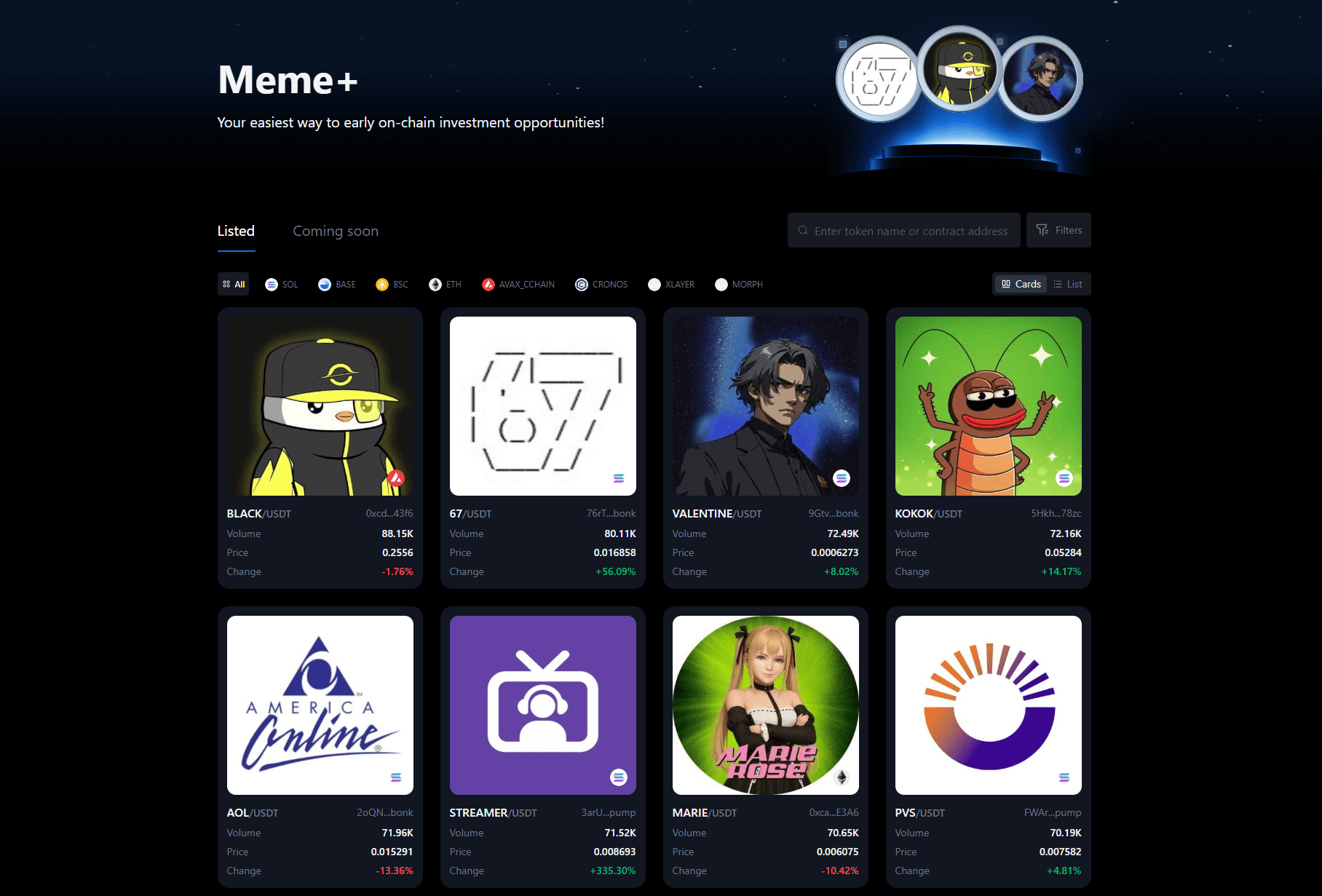
A niche feature launched in 2024, Meme+ caters to traders chasing high-risk meme coins. It offers an order-book-driven marketplace for early meme tokens across Solana, Base, BSC, Ethereum, and Berachain. While the number of projects is still under 100, Meme+ serves as a gateway for speculative traders seeking structured liquidity without navigating raw DEX environments.
MEXC runs a large Earn suite, covering staking, lending, and event-based rewards.
Daily MX airdrops and high-value competitions are a core part of MEXC’s identity. Traders’ Fest, for example, allows trading of 100 pairs at zero fees. Significant token events regularly carry $1M+ prize pools, keeping engagement high among active traders.
One of MEXC’s most significant selling points is its cost structure. The exchange has built its brand around being cheaper than competitors, sometimes even running zero-fee campaigns for spot and futures pairs.
MEXC uses a maker–taker model for spot markets. The base structure already undercuts Binance, Coinbase, and OKX, and discounts apply for holders of the MX token.
| Tier | 30-Day Volume or MX Holdings | Maker Fee | Taker Fee | Notes |
| Regular (no MX) | None | 0% | 0.05% | Standard rate |
| VIP 1 | 500 MX | 0% | 0.04% | Discounts unlocked with token holdings |
| VIP 2 | 2,500 MX | 0% | 0.035% | |
| Higher VIP | >5,000 MX or volume-based | 0% | 0.02%–0.03% | Daily snapshots decide the tier |
| MX Discounts | Pay fees in MX | Up to 50% off | Up to 50% off | Some promos are reduced to 0% |
Perpetual futures and contract markets follow a similar structure, again with MX token benefits.
| Tier | 30-Day Volume or MX Holdings | Maker Fee | Taker Fee |
| Regular | None | 0% | 0.02% |
| VIP Levels | Higher MX or volume | 0% | 0.015%–0.018% |
| MX Discounts | Pay in MX | Up to 20–50% off | Up to 20–50% off |
MEXC’s VIP system aims to reward both high-volume traders and MX token holders. Eligibility is calculated using three random daily snapshots of a user’s holdings and volume, with the lowest snapshot deciding the tier. The discount then applies the following day at 16:00 UTC. This approach prevents temporary balance “inflation” just to unlock lower fees.
For professional traders, higher tiers unlock discounts, raise withdrawal limits, and increase API rate caps, making it easier to run high-frequency strategies.
| Method | Fee Structure |
| Quick Buy | 3.67% debit card fee (USDT) / 3.5% via third parties (Banxa, Mercuryo) |
| P2P | 2% – 7% depending on seller and payment method |
| Bank Transfer | 2.5% |
MEXC spent 2026 extending well beyond crypto spot and derivatives. RealStocks gives users access to more than 7,000 United States stocks and exchange-traded funds, alongside more than 200 tokenised United States equities, stock and index futures, and a Pre-IPO Launchpad that has run subscription events on names including SHEIN. A binary “Up or Down” prediction feature launched on 24 July 2026 with a $1 million prize pool. The exchange also created an annual brand event, MEXC 0808, which ran from 8 to 28 August 2026 around a zero-fee theme and a $500,000 prize pool. On the exchange’s own figures, its fee strategy saved 3.44 million users more than 1.1 billion USDT in trading fees during 2025.
Two of those product lines carry regulatory weight that the marketing does not mention. Tokenised equities and pre-IPO access are securities-adjacent products in most jurisdictions, and offering them from a venue that holds no CASP authorisation, no VARA licence and no United States registration widens the gap between what MEXC sells and where it is permitted to sell it.
MEXC has held several registrations over the years. It obtained an MSB (Money Services Business) license in the United States, though this has never been enough to serve the U.S. retail market legally. Access to MEXC remains blocked for U.S. residents, who are redirected by IP filters. The exchange also once held an Estonian MTR license, which allowed it to serve European clients, but this was revoked in late 2023 by Estonia’s Financial Intelligence Unit. At the time, regulators cited shortcomings in AML and compliance standards. MEXC Estonia OÜ appealed the decision, but as of 2026, the license remains inactive.
In Australia, MEXC has previously referenced coverage under AUSTRAC’s digital currency license framework, though this was tied to third-party arrangements rather than a direct, standalone license. As of 2026, MEXC continues to operate in over 170 jurisdictions, but outside of a few registrations, it has not secured the deep licensing footprint that competitors maintain.
Authorities in multiple countries have issued warnings about MEXC. In 2023, the British Columbia Securities Commission (BCSC) in Canada added the exchange to its warning list, flagging it as an unregistered platform offering services to Canadian residents. Similar alerts were issued by the Austrian Financial Market Authority (FMA) and Germany’s BaFin, both of which cautioned investors that MEXC was operating without authorization. These warnings did not shut the exchange down in those countries outright but added to its reputation as a platform skirting the edges of compliance.
As of 2026, MEXC is restricted in the U.S., U.K., and Canada, among other jurisdictions. Users in these regions cannot access core services and frequently encounter issues during the account creation stage. Even in the unrestricted areas, certain features like fiat deposits via SEPA or third-party providers are only available after advanced KYC verification. This uneven availability is one of MEXC’s key drawbacks compared to fully licensed competitors, where fiat support is more consistent.
While MEXC has faced regulatory headwinds, it has also stepped up its internal compliance. The exchange now enforces tiered KYC verification, with higher withdrawal limits and fiat access gated behind advanced identity checks. In 2025, it rolled out new fraud detection tools and bot restrictions as part of its “market integrity” campaign, intercepting millions of dollars in suspicious activity. Risk-control freezes, however, remain a sore point for users, as these measures sometimes lock accounts for extended periods while identity or fund sources are reviewed.
Effective January 1, 2026, MEXC has implemented CARF (Crypto-Asset Reporting Framework) protocols. Users must provide a Tax Identification Number (TIN) to access full withdrawal limits and participate in Kickstarter events.
MEXC’s regulatory position deteriorated across 2025 and 2026 rather than improving. The Netherlands Authority for the Financial Markets issued a public warning on 16 September 2025 stating that MEXC Global was providing crypto-asset services in the Netherlands without the required MiCAR licence, in breach of Article 59 of the regulation. MEXC does not appear in ESMA’s register of authorised crypto-asset service providers, which held 328 unique active firms when it was last checked on 29 August 2026.
That absence became decisive on 1 July 2026, when the MiCA transitional periods across member states expired. From that date, only a firm holding a CASP authorisation listed in ESMA’s register may serve clients in the European Union or the EEA. A European resident holding a balance on MEXC is therefore dealing with a venue that has no lawful basis to serve them, which affects the practical value of any consumer protection the exchange advertises.
Dubai moved in the same direction. The Virtual Assets Regulatory Authority issued an investor and marketplace alert on 5 March 2026 naming MEXC Estonia OÜ and MEXC Global LTD, stating that neither holds a licence to provide virtual asset services in or from Dubai and that their activities breach VARA regulations. VARA escalated on 22 June 2026 with a notice of fines against MX Global LTD, finding that the entity had provided virtual asset broker-dealer and exchange services to customers in Dubai without a licence from 2022 until April 2026, and that it had failed to meet know-your-customer obligations when onboarding users. VARA directed the entity to cease and desist from all unlicensed activity in or from Dubai. The notice did not disclose the monetary amount.
Visit MEXC
Security has become one of the biggest benchmarks for centralized exchanges after years of industry hacks, and MEXC has worked to show that it takes this seriously. Unlike some competitors, MEXC has avoided any major platform-wide breach in 2024 and 2025, despite a general rise in crypto exchange exploits during that period. Still, its reputation is mixed because of account freezes tied to “risk controls” and complaints about frozen balances.
MEXC applies the standard set of protections you would expect from a large exchange:
In 2025, MEXC formalized its Proof of Trust framework. This includes routine Proof-of-Reserves (PoR) reports designed to show that the exchange holds more than enough assets to cover user deposits. These reserves are verifiable on-chain, and MEXC publishes regular snapshots to support transparency. While PoR alone does not eliminate counterparty risk, it has become a baseline expectation in the industry, especially after the collapse of FTX.
To reinforce trust, MEXC launched the Guardian Fund in June 2025 with an initial $100 million allocation. The fund aims to cover user losses in the event of platform breaches, hacks, or unexpected technical failures. Unlike insurance, which only applies in specific cases, the Guardian Fund is discretionary and controlled by the exchange, meaning its effectiveness ultimately depends on MEXC’s willingness to deploy it. Still, it acts as a signal that the exchange intends to backstop its users, similar to Binance’s SAFU fund.
MEXC has also implemented more aggressive risk control systems. These tools help to intercept suspicious behavior, block automated bot attacks, and prevent money laundering. In 2025, the exchange reported seizing nearly $5 million in fraudulent activity through these systems. However, these same measures often result in frozen accounts for legitimate users, especially when large withdrawals trigger manual KYC checks. Several high-profile complaints in mid-2025 involved multi-million-dollar balances being locked until users completed in-person verification at MEXC offices.
MEXC has engaged with third-party cybersecurity firms to test and monitor its systems. In June 2025, it announced penetration testing with Hacken and ongoing monitoring arrangements with CertiK. The exchange also partners with compliance and custody providers such as Elliptic, Sumsub, LSEG, and Fireblocks, strengthening its ability to track illicit flows and safeguard customer assets.
Visit MEXC
Getting started on MEXC is simple and doesn’t require much more than an email or phone number. New users can register directly on the website or through the mobile app by clicking Sign Up, entering their details, and creating a password. A verification code is then sent to confirm the account.
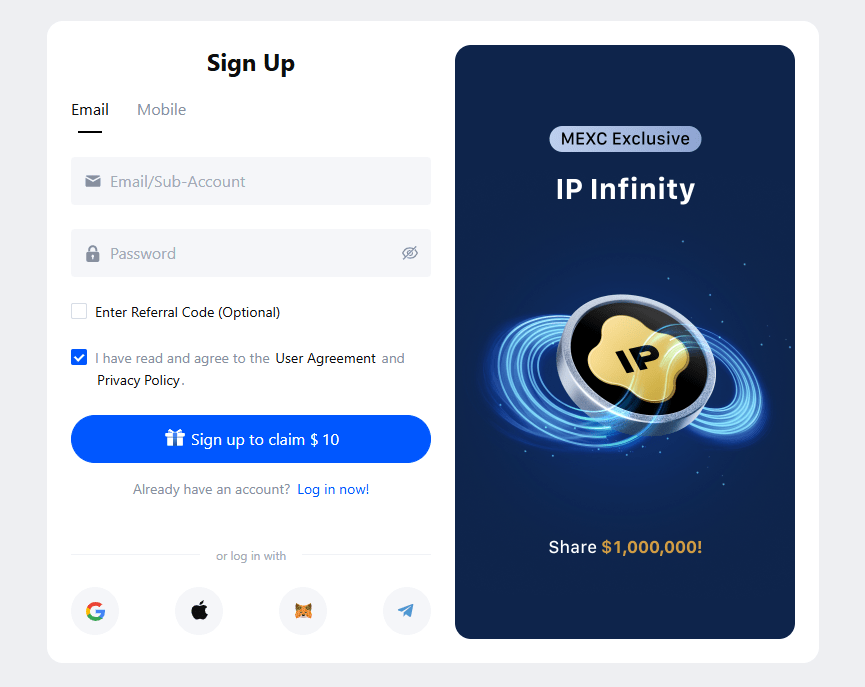
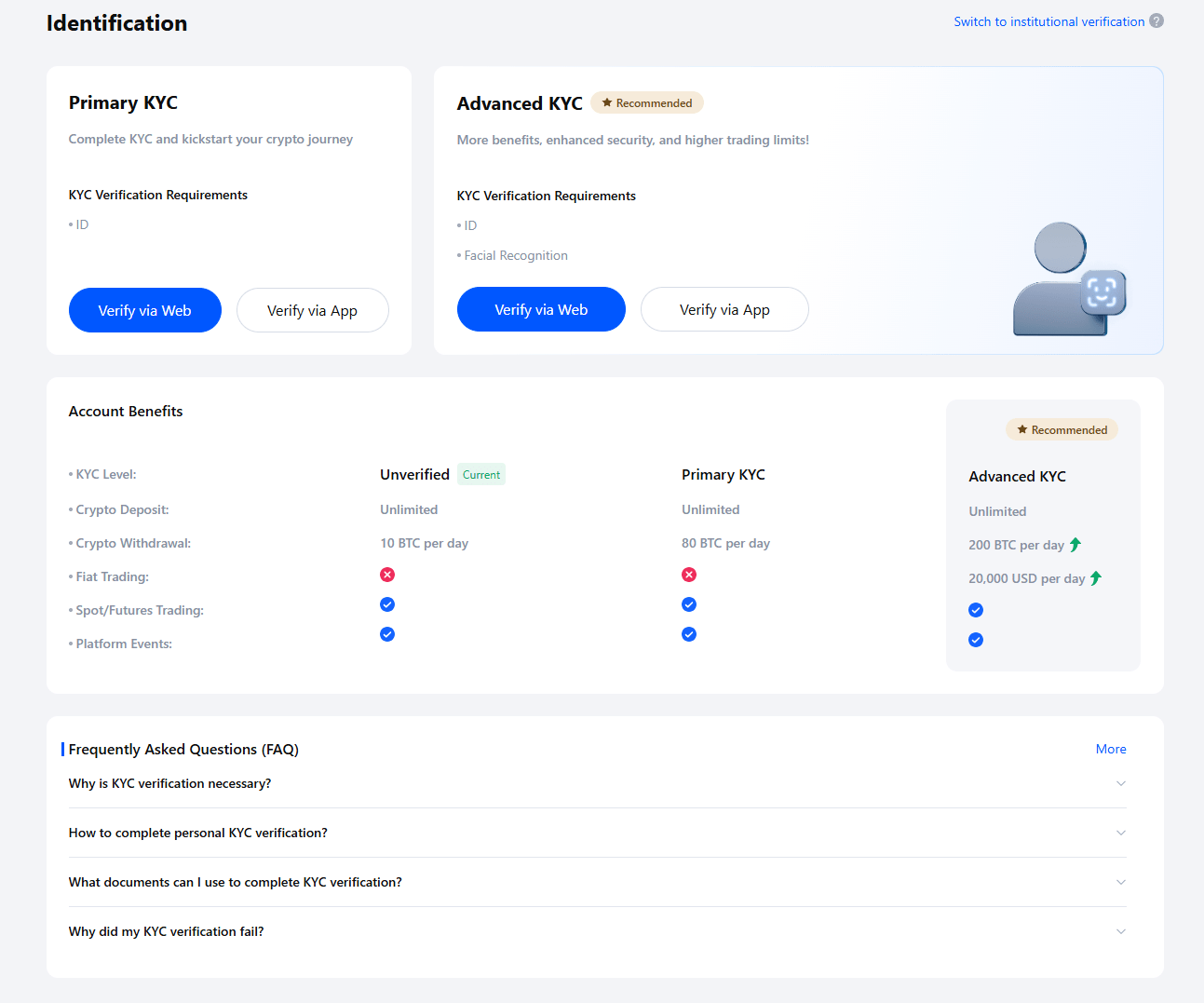
Once the account is active, trading can begin immediately with crypto deposits; no KYC is required at this stage. However, identity checks unlock higher withdrawal limits and access to fiat services. Primary KYC asks for a government-issued ID and basic personal information, while Advanced KYC adds facial recognition. Completing these levels raises daily withdrawal limits from 10 BTC (unverified) to 80 BTC (primary) and 200 BTC (advanced).
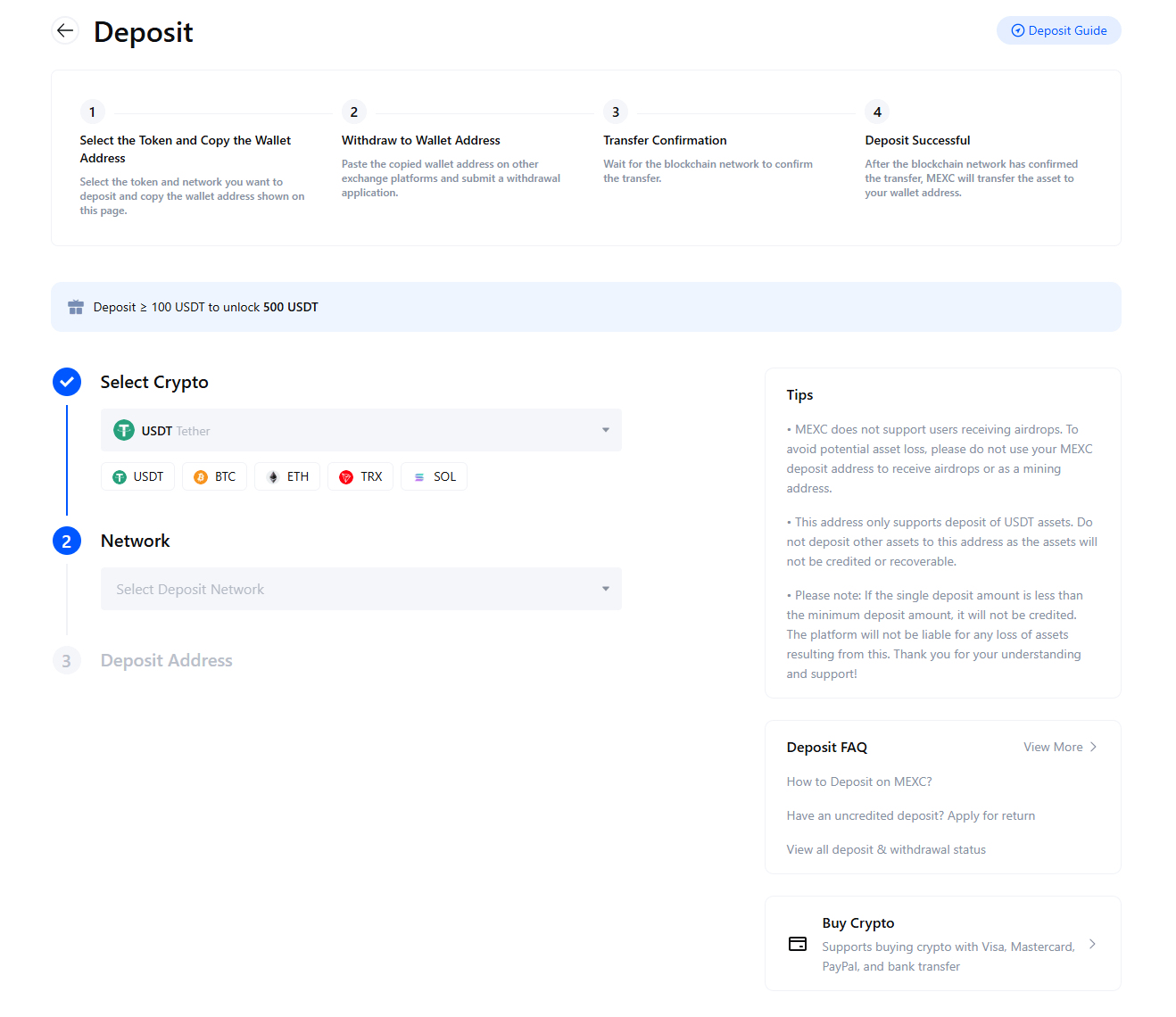
For deposits, users can transfer crypto directly, buy coins with a credit or debit card, or use peer-to-peer trades. Third-party payment providers like Banxa, Mercuryo, and MoonPay also support bank cards and digital wallets. Advanced KYC is required to access SEPA transfers in Europe.
The process overall is fast. Registration takes minutes, and basic KYC can often be cleared in under an hour. Advanced verification may take up to a day, depending on the documents provided.
MEXC does not charge fees for crypto deposits, which keeps the barrier to entry low for traders moving funds from other platforms or wallets. Network fees only come into play when withdrawing, and these are passed through directly to users depending on blockchain congestion. Typical charges in 2025 are around 0.0005 BTC for Bitcoin, 0.005 ETH for Ethereum, and 5 USDT on ERC-20. Withdrawals of the native MX token cost one MX. These rates sit broadly in line with industry norms, though they are higher than some rivals that have negotiated optimized channels for high-volume networks like USDT.
Fiat access is more complicated. Buying crypto with a credit or debit card is supported through third-party providers such as Banxa, Mercuryo, and MoonPay. These services usually add a surcharge of one to three percent on top of network costs. Apple Pay and Google Pay are available for quick purchases, while SEPA transfers are offered for verified users in a limited set of European countries. Not all jurisdictions have access to these rails, which makes fiat onboarding inconsistent. For many users outside supported regions, peer-to-peer trades become the main option. The P2P market carries no fees but depends heavily on counterparties, which introduces its own risks.
On withdrawals, crypto tends to move smoothly when transactions are modest. Reviews confirm that sending out a few thousand dollars in USDT or BTC usually clears within minutes, provided the account is in good standing. Problems start to appear with larger sums or fiat withdrawals. MEXC applies what it calls T+N rules, meaning assets bought through fiat on-ramps are subject to a waiting period of seventy-two to one hundred twenty hours before they can be withdrawn. The stated goal is to prevent chargebacks and fraud, but for users, this often feels like a forced hold. New accounts face the strictest delays, while advanced KYC users usually pass through faster.
Risk controls extend into deposit handling as well. There are cases where deposits from other exchanges require additional checks before being credited, particularly if the source platform has flagged risk or if the transaction passes through wallets associated with suspicious activity. Users have described being asked to provide screenshots or confirmation letters from the originating exchange to prove ownership. In practice, this can mean long waits for funds that are technically visible on-chain but not yet released into a user’s balance.
User reviews of MEXC draw a clear contrast between smooth day-to-day trading and frustrating experiences once risk systems are triggered. On the positive side, many traders highlight how straightforward the interface is. Both the app and the web version are easy to navigate, with order placement kept simple and the main tools accessible without much effort. This makes it approachable for beginners, while more advanced traders still find enough depth through charts and API access. The mobile app is frequently praised for execution speed and stability, with some users noting that it holds up even during volatile markets. Low fees and tight spreads are another recurring theme. For a large portion of users, deposits and withdrawals are processed quickly, which helps reinforce the idea that the platform works as advertised when handling normal-sized trades. The wide choice of features, from high-leverage futures and copy trading to grid bots and staking events, adds to the sense of value, especially for those who enjoy experimenting with different strategies. Promotions and bonuses are also seen as part of the appeal, with several traders describing meaningful rewards from ongoing contests and airdrops.
The negative experiences almost always come down to risk controls, fiat conversion, or customer support. The most common frustration is account freezes. Users describe being locked out of trading or withdrawals while extra checks are carried out, sometimes on small balances but more often on larger ones. Fiat withdrawals are another pain point, as transfers to banks or third-party providers frequently come with multi-day security holds, especially for new accounts. Escalations usually require deeper KYC, and reviewers complain that document requests can become repetitive or unclear. Rewards programs also attract criticism, with users stating that they completed the necessary tasks but were told they were ineligible, often without a transparent reason. Support replies exist, but they are usually described as generic or circular, with instructions to “wait” or to check guides rather than resolving the problem directly. A few reviews also mention that two-factor authentication fails to complete smoothly on mobile, leaving funds temporarily stuck. Finally, some traders point to delistings and questionable token quality as risks that make them more cautious about relying on MEXC as a primary platform.
Customer support is one of MEXC’s weakest points. The exchange advertises 24/7 help through live chat, email, and an online ticket system, but the quality of responses depends heavily on the complexity of the issue. For basic questions, users usually receive quick replies that point them to guides or FAQs. In more complicated cases (such as frozen accounts, delayed withdrawals, or disputes over rewards), the experience is very different.
The most common complaint is that support replies are generic and repetitive. Traders describe being told to “please wait” or “follow the instructions in our user agreement,” often without meaningful progress on their case. Some report being passed from one support channel to another, with no clear resolution timeline. In the worst cases, disputes have dragged on for weeks, especially when users were asked to provide additional documentation multiple times. This has led to a perception that MEXC’s customer service is not proactive, but reactive, mainly designed to slow down escalations rather than resolve them quickly.
There are positive experiences as well. Several users report fast and professional help with minor issues, such as account access, password resets, or clarifications on trading mechanics. Some reviews highlight live chat agents who responded promptly and solved minor problems on the first attempt. Others note that the platform’s large Telegram community often fills the gap, with experienced traders answering questions before official support does.
MEXC has made attempts to address these weaknesses. The Help Center is regularly updated with tutorials, event FAQs, and security tips. The exchange has also introduced dedicated forms for “abnormal funds” and P2P disputes. But these measures have not changed the underlying issue: support capacity has not scaled at the same pace as user growth. With over 30 million accounts worldwide, the gap between promotional promises and actual service delivery is noticeable.
Visit MEXC
Yes, MEXC has avoided any major hacks in recent years. It uses standard security features like 2FA, anti-phishing codes, IP and withdrawal whitelists, and keeps most of its assets in cold storage. They also publish Proof-of-Reserves and have set aside a $100 million Guardian Fund to compensate users in case of a breach.
While basic trading is possible without KYC, Advanced KYC is now mandatory for all airdrops (Kickstarter), fiat on-ramps, and to comply with 2026 DAC8/CARF tax reporting requirements.
For credit/debit card purchases, MEXC supports 45 different fiat currencies (including major ones like USD, EUR, GBP, JPY, AUD, BRL, INR, and AED) through Visa and Mastercard payment channels. MEXC BlogMEXC
MEXC offers fiat purchases via Visa/MasterCard and third-party services like Banxa, Mercuryo, and MoonPay. Some European users can access SEPA transfers after completing advanced KYC. P2P trading is also supported in select countries.
Yes, but withdrawals in fiat are subject to longer security holds (typically 72–120 hours), restricted payment provider availability, and manual checks, especially for larger amounts or first-time withdrawals.
Visit MEXCSubscribe to our newsletter, you are in very good company











 Canada
  Australia