Buy a Licensed Company
  Explore VASP Data
  Talk to an Expert

 Atis Shala
Atis is a senior analyst and community lead with four years of experience in crypto. He has a bachelor from the Rochester Institute of Technology.
Atis Shala
Atis is a senior analyst and community lead with four years of experience in crypto. He has a bachelor from the Rochester Institute of Technology.
Best AI Crypto Coins: The Must-Watch for 2025
Artificial intelligence reshapes global industries, from healthcare to finance, and blockchain technology amplifies this shift by decentralizing AI operations. Developers integrate AI with crypto to build networks that process data securely and efficiently without relying on centralized servers. These systems leverage blockchain’s immutability and transparency to handle machine learning tasks, predictive analytics, and automated decision-making. Crypto in this space rewards participants for contributing resources like computing power or datasets, fostering collaborative ecosystems.
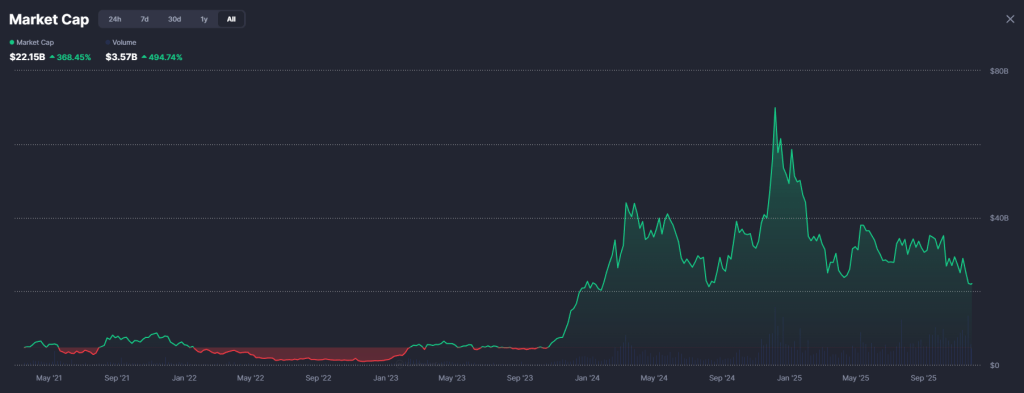
In 2025, the AI crypto sector captures significant attention as adoption accelerates. The total market capitalization of AI-related cryptocurrencies stands at $22.09 billion. This figure reflects massive growth amid broader crypto market expansion, where the overall cryptocurrency market cap exceeds $3 trillion. Many reports forecast the AI crypto market to expand to over $80 billion by 2030. Factors like institutional investments, technological mergers, and real-world applications drive this surge.
What Are AI Crypto Coins?
AI crypto coins represent cryptocurrencies that fuel blockchain projects incorporating artificial intelligence. Project teams design these tokens to support decentralized networks where AI algorithms run on distributed nodes instead of centralized data centers. Blockchain provides the backbone, ensuring secure transactions and data integrity, while AI adds intelligent processing capabilities.

At the core, blockchain merges with AI through mechanisms like smart contracts that automate AI tasks. For instance, nodes in a network use consensus protocols to validate AI model outputs, similar to how miners verify transactions in proof-of-work systems. Tokens incentivize users to participate: individuals stake coins to lend GPU power for training models or share anonymized data for machine learning datasets. Rewards distribute proportionally, encouraging a global, collaborative AI ecosystem.
This approach offers clear advantages over traditional AI. Centralized systems, dominated by companies like Microsoft or Amazon, face scalability limits, high costs, and privacy risks from data silos. Decentralized AI coins mitigate these issues. Blockchain encryption protects user data, reducing breach vulnerabilities. Networks scale horizontally by adding nodes worldwide, lowering latency and expenses. Efficiency improves as tokens align incentives, drawing idle resources into productive use.
Decentralized Computing Through AI Smart Contracts
Key concepts include decentralized computing, where tokens buy processing time on peer-to-peer networks, and token incentives for data sharing, which builds vast, diverse datasets for better AI accuracy. In DeFi, AI coins optimize lending protocols with predictive risk assessments. NFTs benefit from AI-generated art authenticated onchain. Web 3 gaming uses AI for dynamic environments, with coins governing in-game economies. Regulations evolve to address such approaches, focusing on token classification and AI ethics, but little has been done to actually regulate the intersection between AI and crypto.
Simply put, AI crypto coins democratize access to advanced intelligence tools. They empower developers to create applications that traditional infrastructure cannot match, blending blockchain’s security with AI’s adaptability. Investors value them for utility beyond speculation, as adoption grows in sectors like healthcare diagnostics and supply chain optimization.
The AI and Crypto Intersection in 2025
The AI crypto market in 2025 demonstrates resilience and expansion within the larger cryptocurrency landscape. Leading coins command significant valuations, with Bittensor (TAO) at a market cap of around $3.2 billion, followed closely by Internet Computer (ICP) and NEAR Protocol (NEAR) each around $2.2-2.4 billion. Data from CoinMarketCap highlights these as top performers in the AI category, which totals $22.09 billion in market cap. This positions AI coins as a key subcategory, capturing about 0.70% of the $3.1 trillion overall crypto market.
Several factors influence this growth. Regulations play a pivotal role; governments worldwide implement frameworks that classify AI tokens as utilities rather than securities, easing listings on exchanges and attracting institutional funds. The U.S. Securities and Exchange Commission, for example, approves more AI-focused ETFs, boosting liquidity. Technological advancements also accelerate adoption: integrations of AI with Web3 enable seamless dApps for automated trading and content generation. Economic drivers, including low interest rates and tech sector rallies, funnel capital into high-growth areas like AI crypto.
Mergers and partnerships mark 2025’s landscape. The formation of the Artificial Superintelligence Alliance (ASI) from Fetch.ai, Ocean Protocol, and SingularityNET exemplifies consolidation, enhancing network capabilities and market share. Real-world applications expand, with AI coins powering supply chain predictions in logistics and personalized experiences in gaming.
There’s still a lot of challenges, however. Volatility remains a constant in the industry, and this subsector is affected too; prices fluctuate 5-20% daily on the smallest things. Adoption hurdles include technical complexity, users need wallets and staking knowledge, and scalability issues in growing networks.
Despite these, the overall sentiment remains optimistic. Analysts predict steady growth, with the sector potentially reaching its past all-time high of $80 billion. The potential is huge, although such predictions can go both ways.
Best AI Crypto Coins
Although there are tens of AI crypto coins that have potential for 2025, only a few of them check all the boxes: solid market caps, practical utilities, groundbreaking innovations. Market cap indicates investor confidence and liquidity. Utility measures real-world application, such as enabling decentralized AI tasks. Innovation assesses unique tech contributions, like novel consensus mechanisms. Projections draw from roadmaps, partnerships, and market trends, anticipating growth in AI adoption.
Bittensor (TAO)
Bittensor is built around a decentralized network where independent contributors work together to train and improve AI models. Instead of relying on a single authority, the system lets nodes submit predictions and data, which are then assessed through its Yuma Consensus mechanism. The result is a competitive marketplace for intelligence, where different participants specialize in particular AI tasks and users can access those strengths whenever they need them.
Its economy revolves around the TAO token. With a capped supply of 21 million, mirroring Bitcoin’s scarcity model, TAO plays a central role in securing and governing the network. Participants stake TAO to operate as validators or miners, earning rewards when their contributions prove valuable. Roughly 9.6 million tokens are currently in circulation, powering governance decisions and network fees. A portion of these fees is burned, which helps keep inflation under control.
Bittensor’s applications range from language processing to image recognition, and the network is increasingly being integrated into DeFi systems for functions such as risk modeling. Looking ahead to 2025, the project aims to expand its enterprise partnerships and broaden its subnet architecture so businesses can deploy more customized AI services.
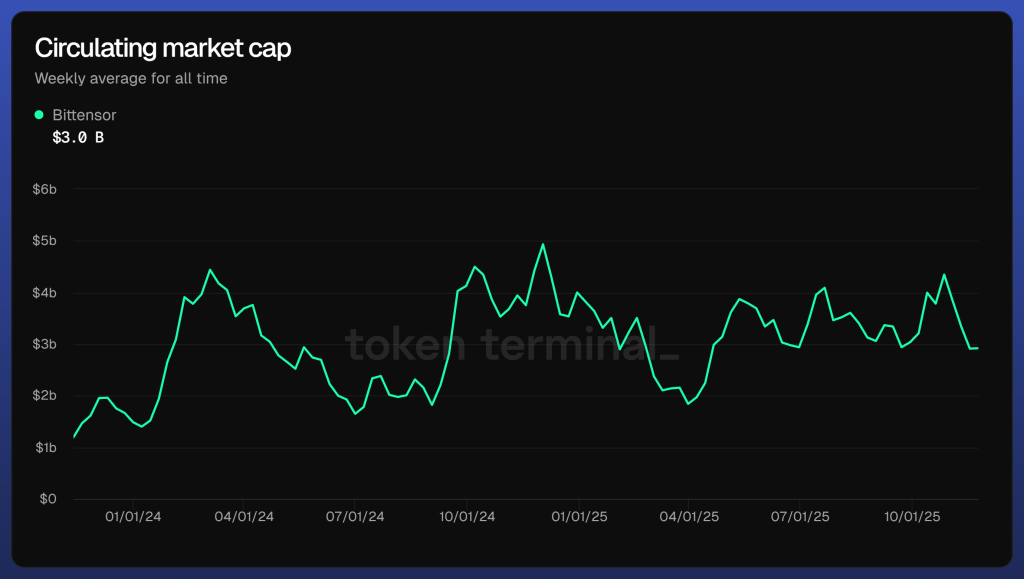
At present, the network has a market capitalization of about $3.0 billion dollars, with TAO priced near 311 dollars and a daily trading volume of roughly 203 million dollars.
NEAR Protocol (NEAR)
NEAR Protocol builds a layer-1 blockchain designed to handle AI-focused workloads, using sharding to keep transactions fast and efficient. Developers can launch AI-enabled dApps with approachable tools that avoid the high gas fees seen on many competing networks.
The token does not have a capped supply, yet the protocol counterbalances this through a burn mechanism that permanently removes 70 percent of all transaction fees. Stakers help secure the chain and typically earn annual rewards in the range of 8 to 10 percent. More than 1.2 billion tokens are currently in circulation, and NEAR is used to pay for both gas and storage.
The ecosystem has been gaining traction in areas like predictive analytics for Web3 gaming and data feeds for DeFi oracles. Looking into 2025, the project plans to expand its AI developer grants and strengthen crosschain connectivity through new bridges.
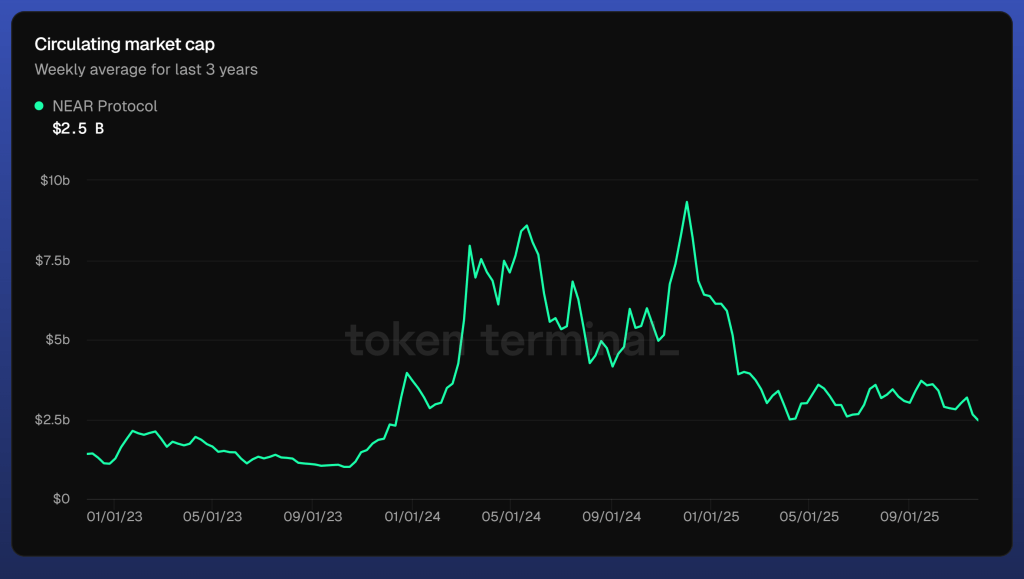
Today, NEAR carries a market capitalization of roughly 2.83 billion dollars, trades around 1.94 dollars, and sees daily volume of about 456 million dollars.
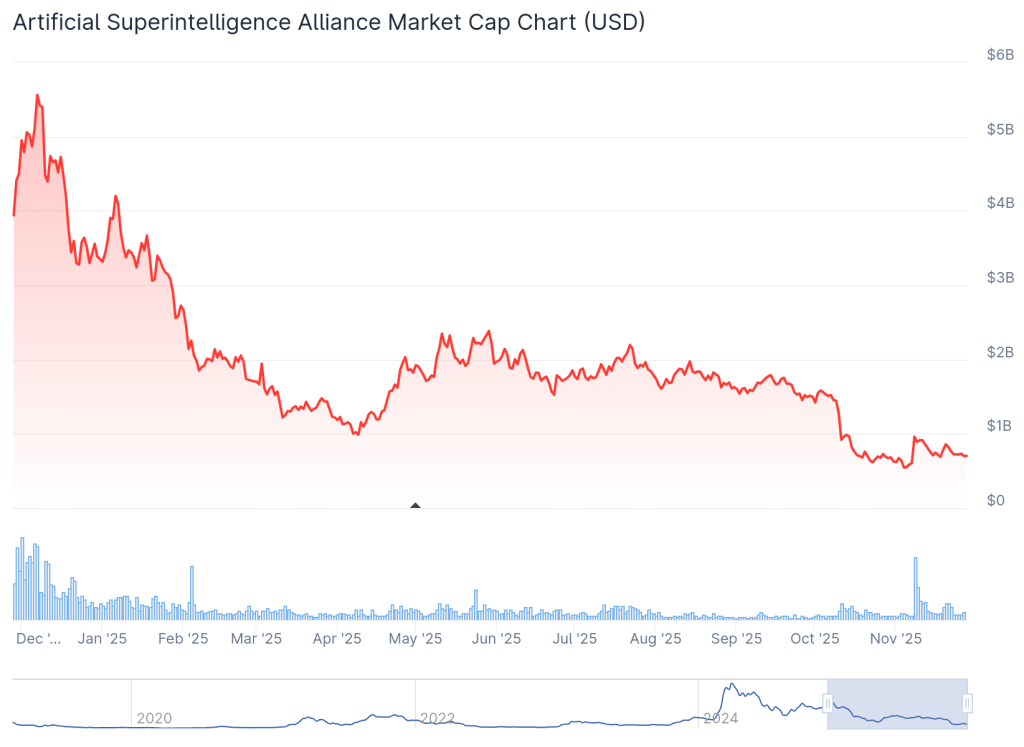
Fetch.ai (FET/ASI)
Fetch.ai, now integrated into the Artificial Superintelligence Alliance (ASI), operates a system built around autonomous economic agents capable of handling tasks such as algorithmic trading, logistics routing, and data optimization. These agents communicate and coordinate through the blockchain, creating a decentralized AI economy that functions without reliance on a central authority.
The formation of ASI brings together Fetch.ai, Ocean Protocol, and SingularityNET under one cooperative framework. The goal is to develop a powerful open ecosystem for decentralized artificial intelligence. Within this structure, autonomous agents act as intelligent software workers that take on complex assignments, negotiate with other agents, and make decisions based on real-time data. Their interactions on the blockchain create a transparent and trustless environment where automation can scale efficiently across industries.
The merger also simplified tokenomics by consolidating FET, OCEAN, and AGIX into a single token supply. ASI now holds a total of about 2.71 billion tokens, with nearly 2.6 billion in circulation. Users stake ASI to secure the network and pay fees for deploying agents or accessing services, which encourages both participation and long-term stability.
Practical use cases continue to expand. In decentralized finance, agents can automate lending strategies, rebalance portfolios, and execute yield farming operations. In the Internet of Things sector, they manage secure data exchanges between devices and optimize network performance.
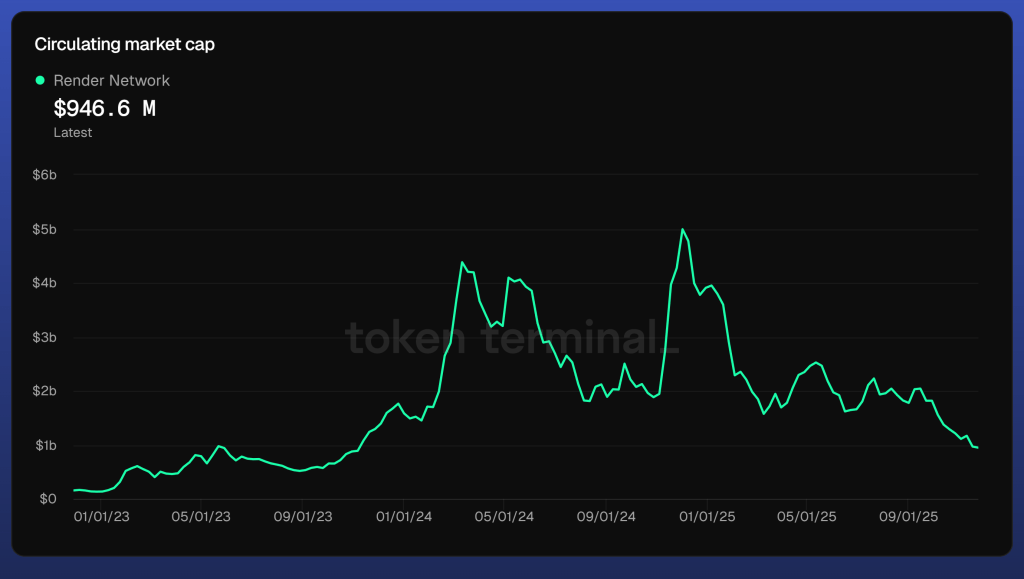
Render (RENDER)
This momentum positions Render as one of the most practical real-world infrastructures in the decentralized compute sector. As studios, independent creators, and AI developers look for scalable alternatives to traditional cloud rendering, the network’s distributed model provides a cost-efficient and transparent solution. Each rendering task is recorded onchain, ensuring verifiable output and reliable payments for GPU providers. This trustless environment reduces the overhead typically associated with large-scale projects and opens the door for smaller creators to access enterprise-grade power.
The broader creative economy is already leaning heavily into Render’s capabilities. Virtual production teams use the network for high-resolution scene generation, while architects rely on it for rapid photorealistic visualization. AI researchers are increasingly drawn to the platform as generative models become more computationally demanding. By spreading workloads across thousands of independent nodes, Render minimizes wait times and enhances workflow flexibility, making it an appealing backbone for both experimental and commercial development.
Looking toward 2025, Render is preparing feature upgrades that sharpen performance for AI-assisted design and real-time simulation. Additional tools for dynamic resource allocation and improved quality verification are expected to attract more enterprise clients, particularly studios shifting to cloud-based pipelines. The team also aims to expand global GPU participation, increasing overall throughput and reducing the cost per job.
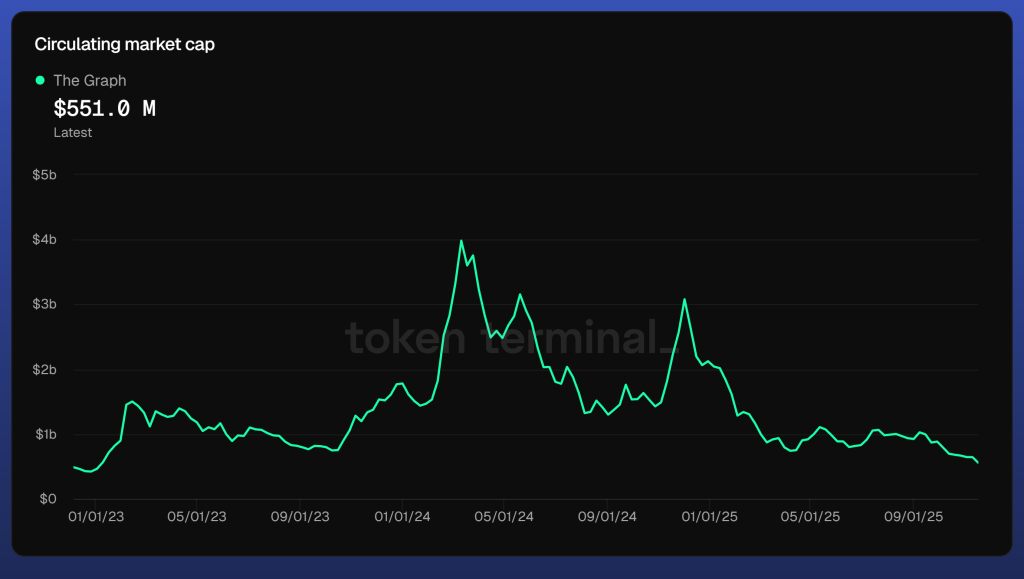
The Graph (GRT)
While Render tackles the heavy lifting of decentralized compute, the Web3 stack still needs reliable access to data, and that is where The Graph comes in. In the bustling realm of decentralized information, it has solidified its place as a core infrastructure layer, handling blockchain queries as demand keeps climbing. Originally launched as a protocol for indexing and retrieving onchain data, The Graph lets developers build subgraphs, essentially custom APIs that pull information from Ethereum, Polygon, and other networks with speed and precision. By distributing this indexing work across a network of independent participants, it avoids the bottlenecks and single points of failure.
Its economy centers on the GRT token, with a maximum and total supply of about 10.8 billion and roughly 10.6 billion already in circulation. Inflation is managed through a structured system instead of uncontrolled minting. Indexers stake GRT to run infrastructure, host subgraphs, and respond to queries, earning fees from users, while curators signal which subgraphs are most valuable, helping direct traffic and rewards to the right places.
Most of its current traction comes from DeFi and NFT ecosystems. Protocols rely on The Graph to query lending pools, track positions in real time, and fetch metadata for NFT marketplaces. The occasional challenge, such as a 2025 outage sparked by intense DeFi activity, has exposed the strain of rapid growth, yet migrations onto its network and ongoing upgrades point toward greater resilience. Throughout 2025, the roadmap emphasizes crosschain expansion, performance improvements, and collaborations such as work with the Blockchain for Social Impact Coalition.
On the market side, The Graph currently sits at a capitalization of around 551 million dollars, with GRT trading near 0.053 dollars and daily volume of about 28 million dollars.
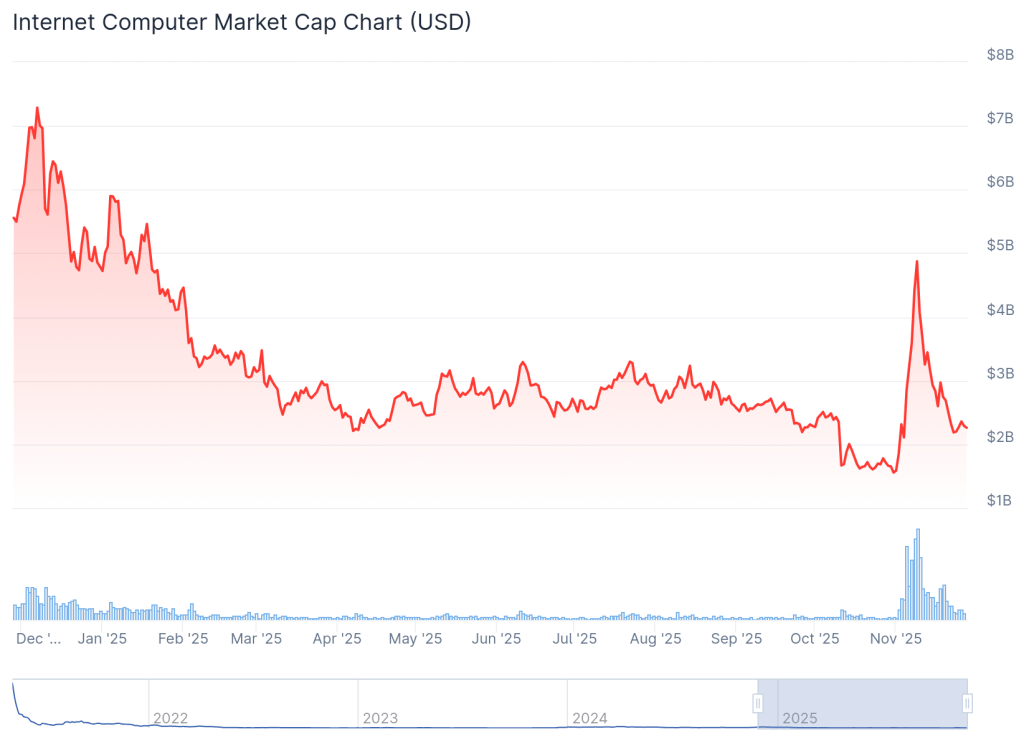
Internet Computer (ICP)
As data indexing and compute solutions mature across Web3, attention is shifting toward the infrastructure required to run applications at scale. The Internet Computer (ICP) enters this space with a fundamentally different approach to decentralized cloud technology. In a landscape still dependent on centralized hosting for most front-end and server workloads, ICP brings the full application stack onchain. Built by the DFINITY Foundation, it turns blockchain into a global, tamper-proof computing layer capable of running full-stack applications without external servers. Its core units, called canisters, function as advanced smart contracts with large storage and compute capacity, enabling websites, AI workloads, and complex algorithms to operate entirely within a decentralized environment.
ICP’s token model supports this vision through an inflationary design rather than a capped supply. Users burn ICP to generate cycles, the computational resource that powers canisters, mirroring a pay-as-you-go cloud model but without corporate intermediaries. Stakers lock ICP in the Network Nervous System, the platform’s governance layer, where they vote on upgrades and help steer network evolution. The circulating supply is roughly 541 million tokens.
Adoption is growing, especially across AI-driven projects and secure communication platforms like OpenChat, which uses ICP to deliver encrypted, censorship-resistant messaging. Enterprises exploring decentralized analytics are also beginning to test the network’s capabilities. Looking toward late 2025, the roadmap highlights expanded AI scalability, faster inter-canister performance, broader machine-learning libraries, and deeper interoperability with other Web3 ecosystems.
Recent market activity places ICP at a valuation near 2.2 billion dollars, trading around 4.14 dollars with daily volume of about 583 million.
Virtuals Protocol (VIRTUAL)
Rounding out the list is Virtuals Protocol, an AI-driven ecosystem designed to help creators generate, customize, and monetize digital media directly onchain. Where ICP focuses on decentralized computation at scale, Virtuals shifts attention to the creative layer, combining generative models with modular toolkits for image, audio, and interactive content. All outputs are anchored in blockchain-verified ownership, giving creators transparent control over their work.
The ecosystem is powered by the VIRTUAL token, which provides network access and governance rights. The supply is capped at 1 billion tokens, with about 653 million currently circulating. Stakers gain priority access to high-demand AI pipelines and contribute to protocol governance, while creators spend VIRTUAL to deploy models or mint their outputs as NFTs. Fee sinks help stabilize token dynamics by funneling part of usage costs into ecosystem rewards rather than constant sell pressure.
Virtuals Protocol already shows practical traction across digital art platforms, personalized media engines, and entertainment studios seeking scalable AI support. Integrations with NFT marketplaces further streamline distribution, allowing creators to instantly monetize their assets. Looking into 2025, the roadmap highlights expanded creator-economy modules, including collaborative AI workspaces and real-time media agents capable of dynamically responding to user inputs.
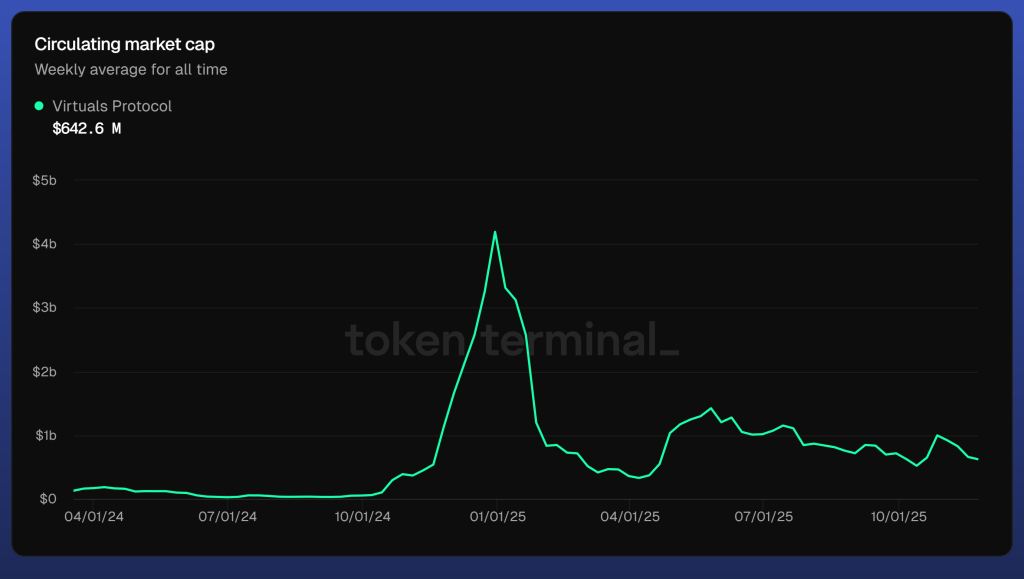
Current market indicators place the project at a roughly $642 million capitalization, with VIRTUAL trading near $1.00 and daily volume around $154 million. As demand for AI-generated content accelerates, analysts see continued adoption of creator-focused tools as a key driver for potential long-term growth.
Best AI Crypto Coins Comparison Table
| Coin | Market Cap | 24h Volume | Key Features |
| Bittensor (TAO) | $2.98B | $203M | Decentralized ML marketplace, Yuma Consensus |
| NEAR Protocol (NEAR) | $2.83B | $456M | Sharding for AI dApps, developer tools |
| Fetch.ai (FET/ASI) | $683M | $128M | Autonomous agents, merger synergies |
| Render (RNDR/RENDER) | $994M | $84M | GPU rendering network, metaverse ties |
| The Graph (GRT) | $580M | $27M | Data indexing, subgraph queries |
| Internet Computer (ICP) | $2.95B | $591M | Canister smart contracts, cloud alternative |
| Virtuals Protocol (VIRTUAL) | $691M | $154M | AI content tools, media monetization |
Final Thoughts on Best AI Crypto Coins
AI crypto continues to sit at one of the most important intersections in modern technology. As artificial intelligence becomes increasingly integrated into global industries, blockchain provides the decentralization, transparency, and user ownership that traditional AI infrastructures often lack. The projects featured in this list represent a more conservative selection, focusing on established teams, proven utility, and stronger market positions rather than purely speculative experiments.
Each of these coins reflects a different pillar of the emerging AI blockchain ecosystem. Bittensor opens access to collaborative machine learning networks. NEAR and ICP focus on scalable infrastructure capable of supporting AI-driven applications. Render and The Graph supply essential computing and data indexing layers that developers rely on daily. The ASI alliance brings together several respected AI projects into a unified ecosystem. Virtuals Protocol supports creators who want to build and monetize AI generated media onchain. Together, they outline a landscape that is both innovative and grounded in real-world use.
Challenges still exist. Market volatility remains high and user onboarding can be complex for newcomers. Centralized AI leaders also continue to move aggressively into markets that overlap with decentralized projects. Even so, the direction of growth is clear. Institutional interest is rising, regulatory environments are becoming more structured, and real applications continue to emerge across sectors like gaming, analytics, logistics, and digital content.
If these trends continue, the AI crypto sector may become one of the most important areas in the broader digital economy. For investors seeking a balanced approach with exposure to forward-looking technology, the projects in this list provide a foundation rooted in utility, stability, and long-term potential.
Frequently Asked Questions (FAQs)
What makes an AI coin valuable?
An AI coin is valuable when it has real utility, such as paying for AI computations, accessing AI tools, or powering decentralized machine learning networks. Strong adoption, clear tokenomics, and an active ecosystem also increase its long-term value.
Which AI crypto is best?
The best AI crypto right now is Bittensor, leading the sector in regards to market capitalization. Other leading AI crypto coins include Internet Computer for scalable AI infrastructure, and NEAR Protocol for fast AI-focused dApps. The right choice depends on your use case and risk tolerance.
What is the AI cryptocurrency?
An AI cryptocurrency is a digital token that powers blockchain projects using artificial intelligence. These tokens pay for AI computations, data processing, or autonomous agent services in decentralized networks, allowing AI systems to run without centralized servers.
What’s the risk in AI crypto?
The main risks in AI crypto include high price volatility, unproven technology, security vulnerabilities, and competition from large centralized AI companies. Users may also face complex setups and regulatory uncertainty as the sector continues to evolve.