


 Buy a Licensed Company
  Explore VASP Data
  Talk to an Expert


The MiCA Clock Is Ticking. Is Your Wallet Ready?
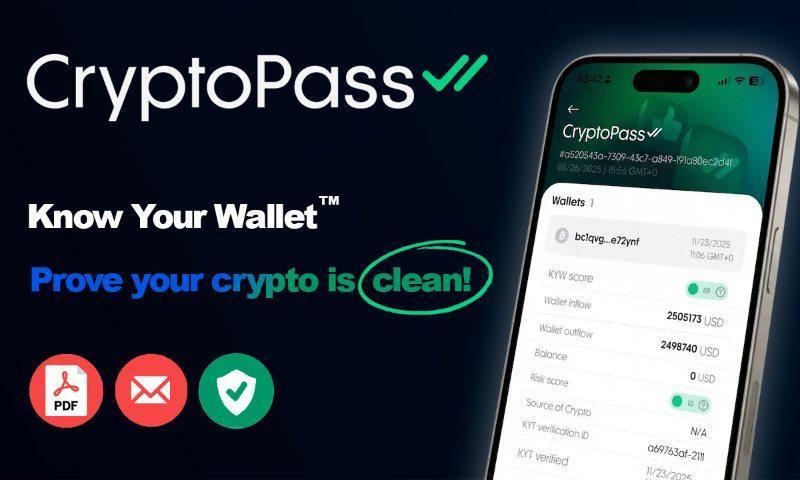
From July 2026, every EU exchange must verify unhosted wallets. Here’s the tool that makes compliance a two-minute job.
If you hold crypto in a self-custody wallet — a Ledger, a MetaMask, anything you control — the way you interact with exchanges in Europe is about to change permanently.
Under the EU’s Transfer of Funds Regulation, which runs alongside MiCA, every crypto-asset service provider operating in the EU is now legally required to verify the ownership of unhosted wallets involved in transfers above €1,000. The final enforcement deadline for full MiCA compliance is July 1, 2026. After that date, there are no more transitional periods, no more grace windows. Exchanges that can’t verify your wallet will block the transaction. Full stop.

Most users don’t realise this is already happening. Withdrawal requests are being held. Deposits are being delayed. Support tickets are piling up. And the standard advice — send a screenshot, write an email, export a transaction history — doesn’t satisfy an AML compliance team. None of it proves you actually own the wallet.
WHAT EXCHANGES ACTUALLY NEED
Proof of wallet ownership means a verifiable, standardised document that confirms: this wallet belongs to this person, and its transaction history is clean. Not a screenshot. Not a statement. A proper, auditable record.
That’s exactly what CryptoPass generates.
Connect your wallet using the Satoshi Test (Bitcoin and most chains) or WalletConnect (Ethereum and EVM). Your private keys never leave your device. The app runs an AML and KYT check on the wallet’s full history, assigns a KYW score from 0 to 100, and produces a blockchain-anchored PDF certificate with an embedded hash and QR code — the kind of document a compliance officer can actually act on.
The basic check is free. The full certificate starts at €10. The whole process takes under two minutes.
BUILT FOR THE REGULATORY REALITY
CryptoPass is operated by Cibex AG, registered in Liechtenstein and operating within the EU regulatory framework. The certificates are structured to be compatible with FATF recommendations, MiCA requirements, and 5AMLD obligations. An independent legal opinion from Dr. Stephan Ochsner — former CEO of the Liechtenstein Financial Market Authority — confirms the CryptoPass report provides genuine added value for source-of-funds clarification and unhosted wallet verification.
The app supports Bitcoin, Ethereum, BNB Chain, TRON, and 570+ wallet types.
July 2026 is not far away. If you move crypto between your own wallet and any EU-regulated exchange, you need to be able to answer the question exchanges are now required to ask: prove this wallet is yours.
CryptoPass is the answer. Free to download. Free to check. Ready when you need it.
—
iOS: https://apps.apple.com/us/app/cryptopass/id6446356149
Android: https://play.google.com/store/apps/details?id=com.cryptopass.dev
Website: https://cryptopass.com