

 Buy a Licensed Company
 Explore VASP Data
 Talk to an Expert

 News Room
Admin Coincub
FBI Seizes 900 Webcam Videos Tied to $400 Million North Korean Crypto Thefts
The FBI said North Korean hackers stole more than $400 million in crypto by impersonating trusted contacts on fake video calls. The bureau seized over 900 webcam videos as the Justice Department disrupted the hackers’ infrastructure.
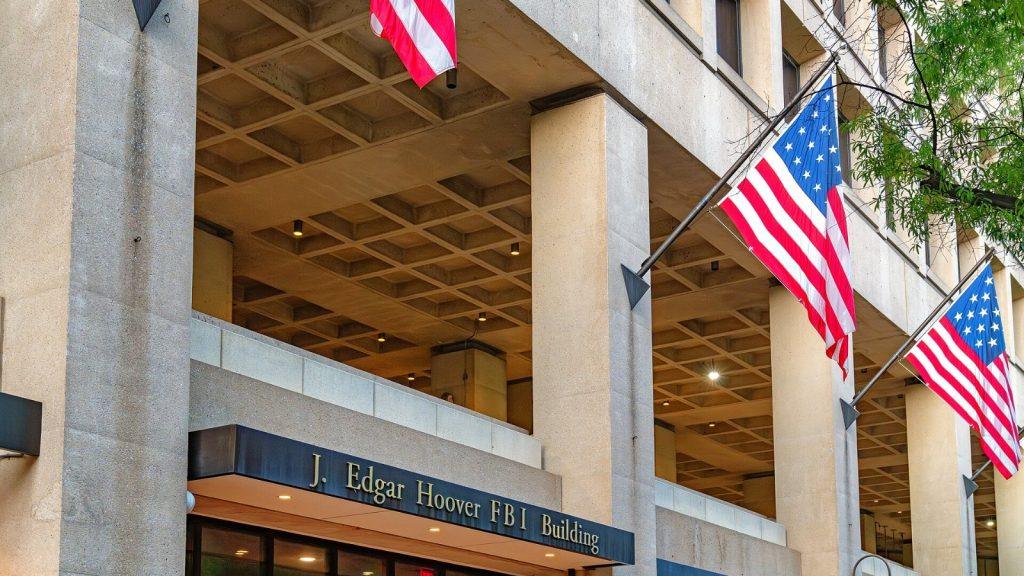
The Federal Bureau of Investigation (FBI) said on Nov. 12 that North Korean hackers stole more than $400 million in cryptocurrency using stolen webcam videos to pose as trusted contacts. The US Justice Department (DOJ) said the same day it had disrupted cloud infrastructure behind the scheme, which targets crypto workers and open-source developers.
- The FBI seized more than 900 webcam videos of victims under a federal warrant.
- The FBI said the scheme, called FaceStealer, stole more than $400 million in crypto over 18 months.
- One compromised developer maintained a JavaScript library with tens of millions of weekly downloads.
FBI and Justice Department act against FaceStealer
The DOJ said it had taken down cloud-based systems used by the North Korean hackers. Under a federal warrant, the FBI seized more than 900 webcam recordings of past victims, which the hackers had stored to impersonate them in later calls. The FBI attributes FaceStealer to North Korean state hackers tracked under names including Sapphire Sleet, UNC1069, APT38 and BlueNoroff. The takedown was one of several actions the United States announced that day against North Korean crypto theft.
“It exploits our trust in ubiquitous video conference platforms and valued personal relationships,” said Patrick Grandy, who heads the FBI’s Los Angeles field office. The bureau said the hackers have also gone after people who maintain open-source software, aiming to slip malicious code into programs that millions of others download.
How the FBI said the scheme worked
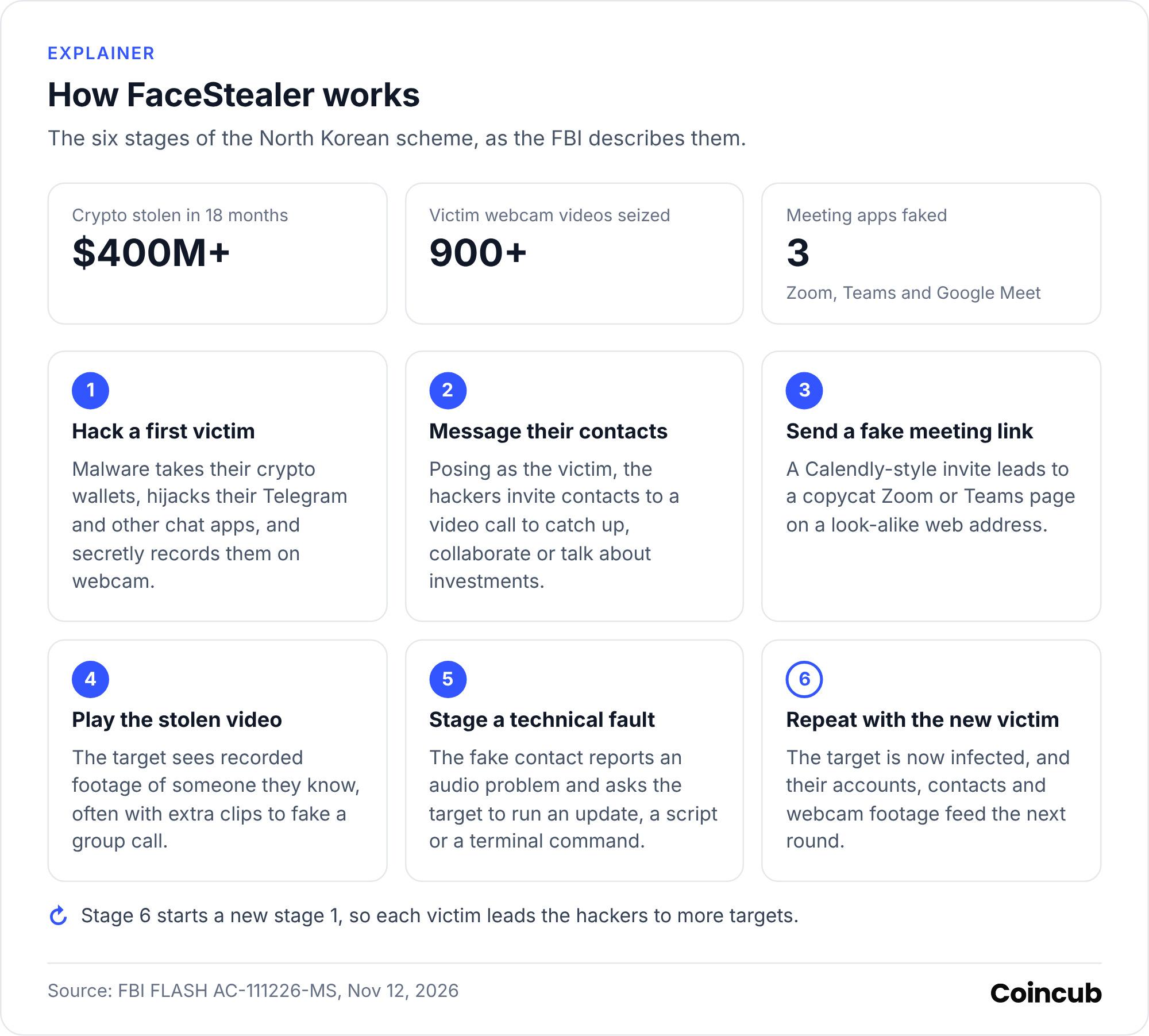
According to the FBI, the hackers target people in the crypto and Web3 industries and, increasingly, maintainers, the developers who build and look after open-source software.
The attackers sent invitations to fake video calls from stolen or invented accounts on platforms including Telegram, LinkedIn, Slack and Discord. They read chat histories in hacked accounts to write messages that seemed to come from someone the target knew.
The FBI said the calls ran on fake versions of Zoom, Microsoft Teams and Google Meet controlled by the hackers. During the call, the attackers played stolen webcam footage of familiar contacts, often adding more clips so several people appeared to attend.
A staged technical problem then led to a request to install an update, run a script or paste commands into a terminal. Doing so installed malware that logged keystrokes, took screenshots and kept the attackers inside the computer. The hackers also saved victims’ webcam footage and contact lists to use in later scams.
In some cases, the FBI said, the attackers watched victims’ crypto wallets for months or more than a year, waiting for balances to grow before taking the funds. The bureau said FaceStealer mostly used real recordings of victims, but the hackers had started making deepfakes, digitally faked videos, of well-known industry figures.
Risk to software users
The FBI described one hacked maintainer whose JavaScript library, a set of reusable code, drew tens of millions of downloads each week. The hackers lured him into a fake Microsoft Teams call, infected his computer and then tried to use his access to add malicious components to the library. The FBI said fast detection and response stopped what could have been very large-scale damage. The bureau has seen similar attempts against other JavaScript package maintainers and, more recently, against developers of Rust software packages.
Earlier North Korean campaigns
In September, police and intelligence agencies in Japan, the United States, Australia and Germany warned about a separate North Korean group, known as WaterPlum or Contagious Interview, whose members posed as recruiters. They asked software developers and other tech workers to download files presented as coding tests. Between December 2025 and July 2026, the group infected at least 30,000 devices in more than 100 countries and moved about $10.7 million in stolen crypto to North Korea.
Binance, a global crypto exchange, said a similar recruiter ploy came before its Oct. 29 hack. According to the exchange, an engineer approached by a fake recruiter was told to download a coding assignment containing malware onto a work computer. Binance put the assets affected at about $6.34 billion and said about $2.85 billion of that had been frozen or intercepted as of Nov. 3. The FBI ties the Binance theft to a different North Korean group it calls TraderTraitor. On Nov. 12, the DOJ announced a court-authorized seizure of more than $1.2 billion stolen from the exchange.
FBI guidance for potential victims
The FBI advised people to confirm meeting requests through a separate channel, join calls only through the official Zoom or Teams app with an invite code, and keep their webcam off until they can see and hear the person who invited them. It warned against running scripts or pasting code into a terminal to fix a meeting problem. Anyone who suspects they were targeted should move funds to a new wallet created on a clean device, warn contacts and employers, and report it at IC3.gov with the keyword FaceStealer, the bureau said.