


 Buy a Licensed Company
 Explore VASP Data
 Talk to an Expert

 News Room
Admin Coincub
Brazil Central Bank Official Links Stablecoin Swaps to Money Laundering
A Central Bank of Brazil official said converting money into stablecoins amounts to money laundering, ahead of a ban on stablecoin sandwiching effective October 1, 2026.
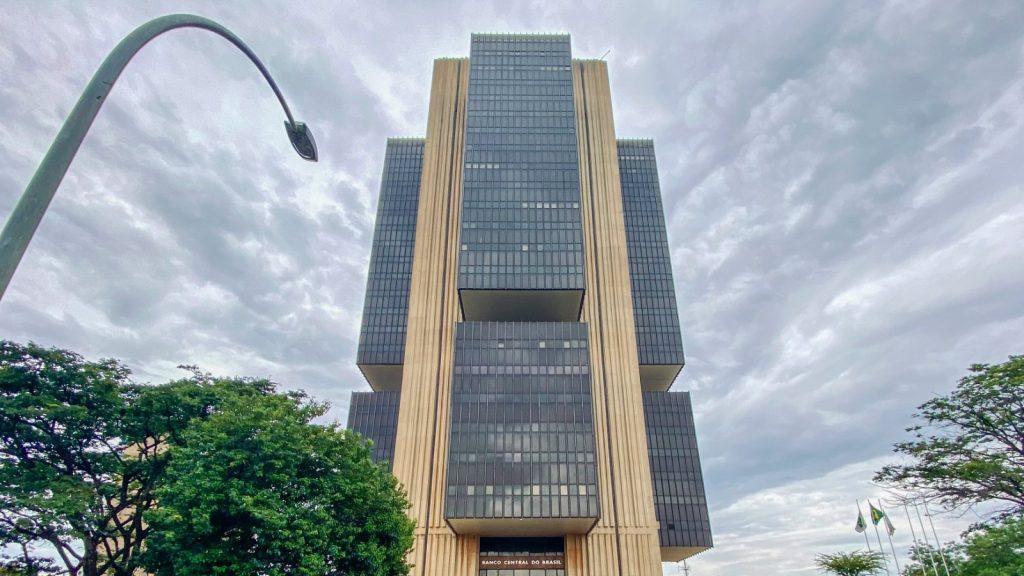
An official at the Central Bank of Brazil said that swapping regular money for stablecoins taints the funds and amounts to money laundering, raising pressure on fintechs that use stablecoins for remittances. A central bank ban on so-called stablecoin sandwiching in fintech international payments has been in force since October 1, 2026.
- Gerson Romantini, head of the central bank’s foreign exchange division, said money that moves into stablecoins acquires a “bad money mark.”
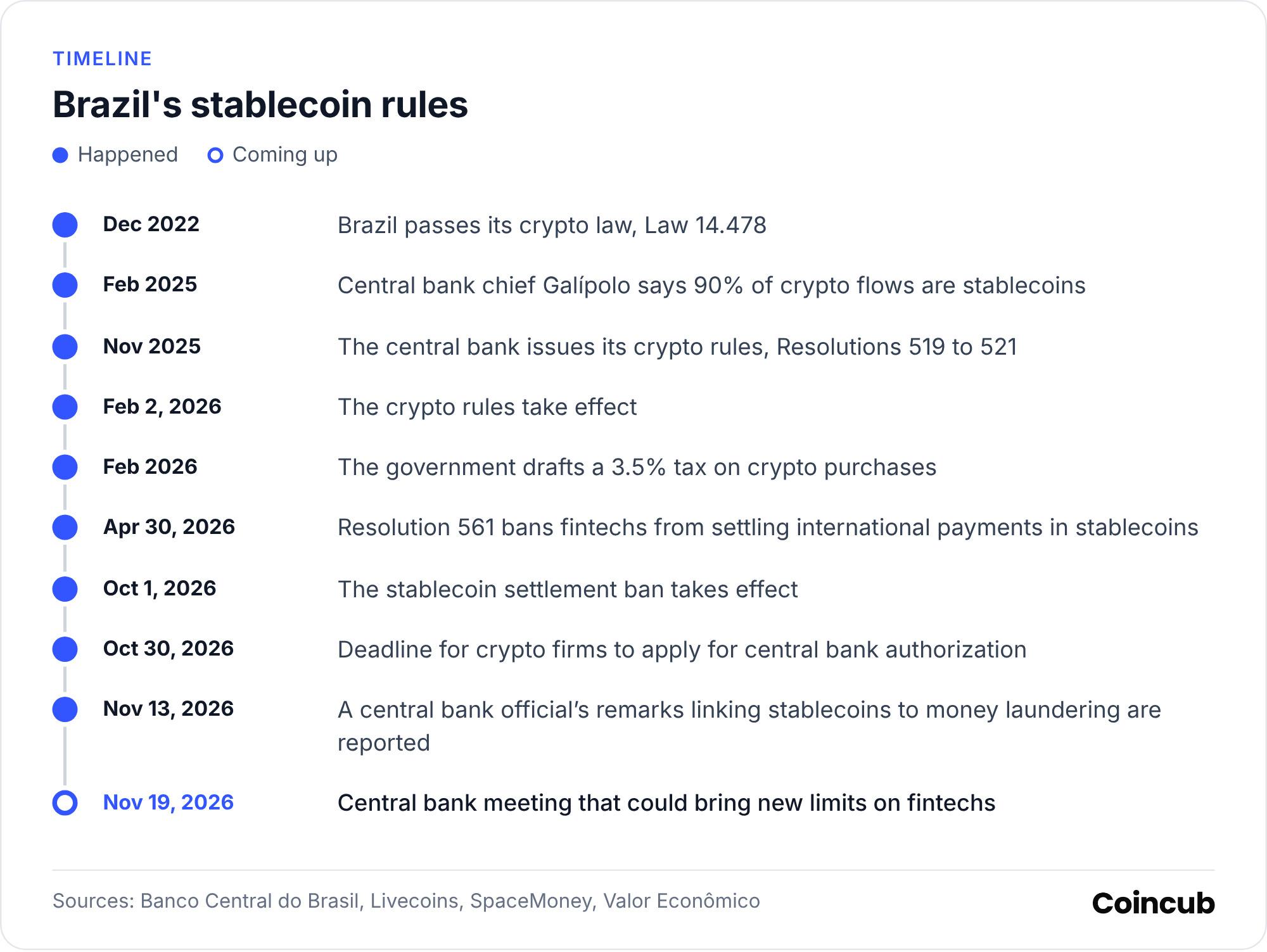
- Resolution No. 561/2026, issued on April 30, 2026, prohibits stablecoin sandwiching from October 1, 2026.
- A 3.5% tax the government has drafted on crypto purchases, with an exemption for individuals buying up to R$10,000 a month, has not taken effect.
What the Central Bank of Brazil official said
Romantini spoke at a closed event with central bank staff and crypto company executives in Brazil, which Brazilian outlet Livecoins reported on November 13. He said the Central Bank of Brazil (BCB), the country’s monetary authority, is especially concerned about how stablecoins are affecting the remittance market. He compared the practice to dólar-cabo, an informal scheme for sending money abroad outside the official exchange market. Stablecoins are crypto tokens designed to hold a steady value, usually tied to the US dollar.
“Anyone with good money who goes into this stablecoin market knows their money has become bad,” Romantini said. He added that the money was not bad at the start, but that the conversion gives it a taint and is then characterized as money laundering.
The ban on stablecoin sandwiching
Romantini also referred to stablecoin sandwiching. In this practice, a company receives Brazilian reais, converts them into stablecoins and sends them to another company abroad to pay bills or handle family remittances. Resolution No. 561/2026, issued on April 30, 2026, bars fintechs offering international payments from settling with partners abroad in stablecoins. The rule took effect on October 1, 2026. Buying and holding stablecoins through an authorized exchange is still allowed.
Romantini said the central bank has not yet inspected these operations. Since October 1, only institutions authorized by the central bank can offer these international payment services, and providers without authorization have until May 31, 2027 to apply.
The proposed 3.5% tax on crypto purchases
The government of President Luiz Inácio Lula da Silva has drafted a 3.5% tax on crypto purchases, including stablecoins, under Brazil’s tax on financial transactions, known as IOF. Individuals buying up to R$10,000 a month would be exempt. The draft was reported in February 2026, and the tax has not taken effect. No date has been set.
Earlier central bank concerns
The central bank has raised similar concerns before. In February 2025, central bank President Gabriel Galípolo said people used stablecoins because they were buying things they did not want to declare in order to avoid some type of taxation.
The central bank’s crypto rules, Resolutions 519 to 521, took effect on February 2, 2026. They treat some stablecoin payments and transfers abroad as foreign exchange operations, which brings them under the central bank’s currency rules.
What happens next
Industry groups and lawmakers have asked the central bank to explain Romantini’s remarks, warning that broad links between stablecoins and money laundering create legal uncertainty. A central bank meeting on November 19 could bring new limits on fintechs in the stablecoin market, according to Brazilian outlet SpaceMoney.