


 Buy a Licensed Company
 Explore VASP Data
 Talk to an Expert

 News Room
Admin Coincub
US Derivatives Regulator Chief Criticizes States Over Kalshi Criminal Charges
CFTC Chairman Michael Selig criticized states for filing criminal charges against prediction market executives, as federal authorities sued Arkansas and Louisiana over gambling enforcement against Kalshi and others.
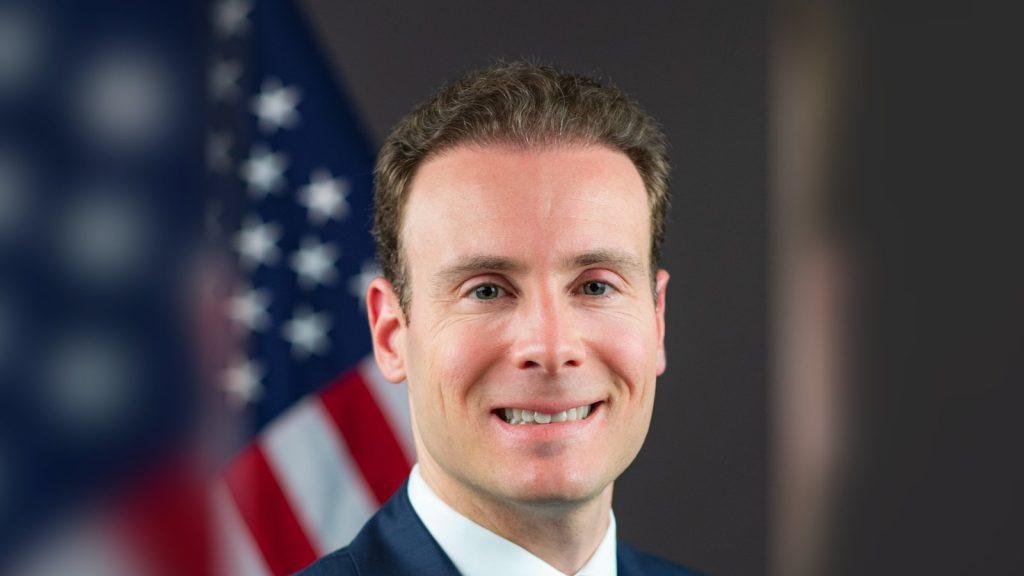
Michael Selig, chairman of the Commodity Futures Trading Commission (CFTC), criticized states for pursuing criminal charges against prediction market executives on November 13, 2026. He said courts, not the threat of prison, should settle whether event contracts are gambling or federally regulated derivatives.
- Utah prosecutors filed 14 criminal charges against Kalshi and its executives on October 28, including CEO Tarek Mansour and COO Luana Lopes Lara.
- The Justice Department and CFTC sued Arkansas on November 12 and Louisiana on November 13 to block state gambling enforcement against prediction markets.
- The CFTC said Arkansas was the 11th state it had sued to defend federal interests in prediction markets.
What CFTC chairman Selig said about state prosecutions
Speaking at the Cantor Convergence conference, Selig accused state authorities of aggressively challenging businesses that operate under federal derivatives rules. “We’re seeing states bring criminal charges, essentially trying to lock up founders and CEOs of these companies that are offering lawful products under a federal regime,” he said.
Event contracts let people trade on whether a specific event, such as a game result, will happen. Selig said the CFTC has exclusive authority over derivatives traded on federally registered exchanges. He said he is willing to take the jurisdiction fight to the US Supreme Court rather than keep fighting state-by-state actions. His position does not cancel any state case. Courts must decide whether federal commodities law overrides each challenged state gambling law.
The Utah criminal case against Kalshi
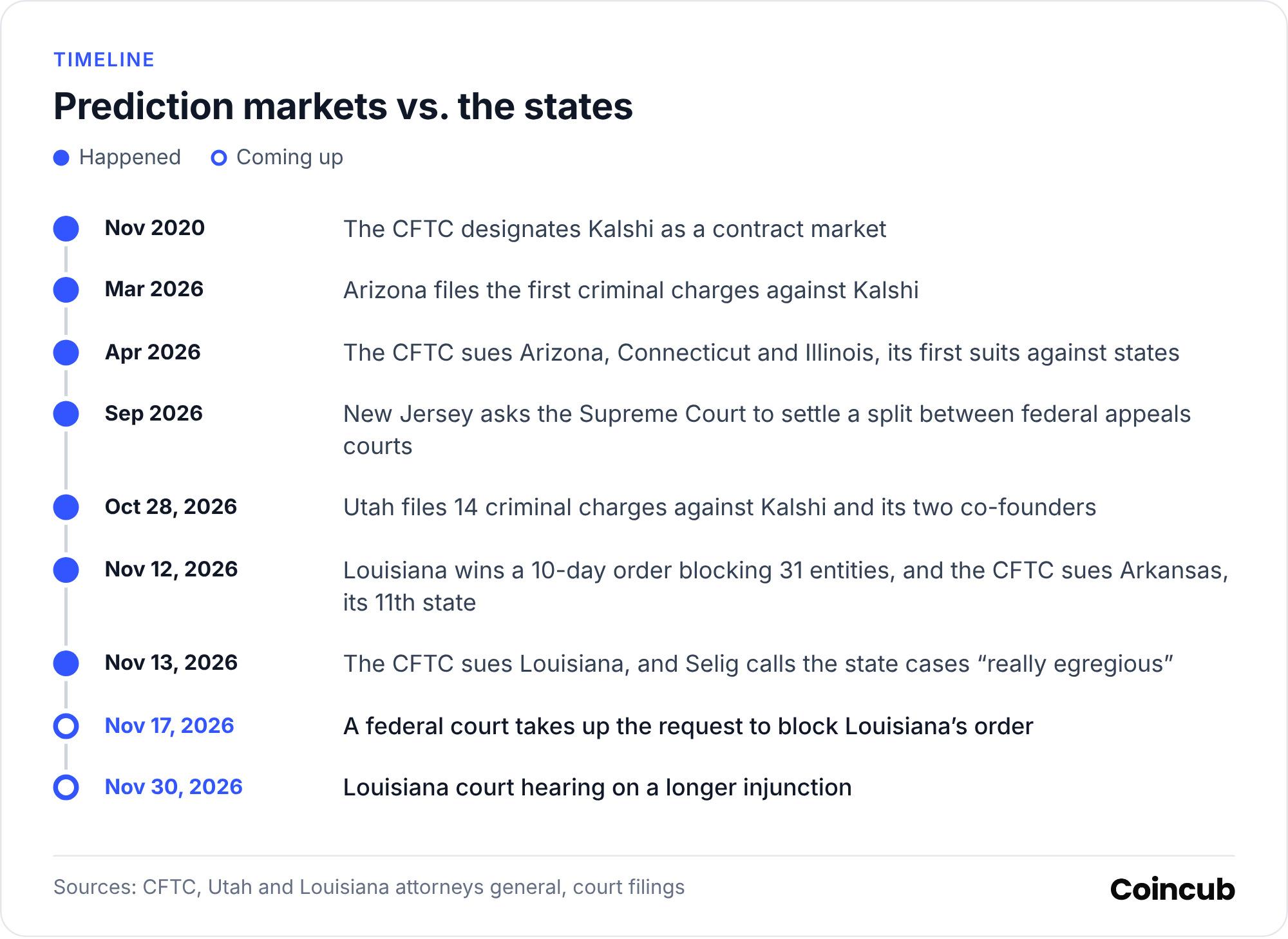
Kalshi, a US prediction market, faces one second-degree felony count alleging a pattern of unlawful activity, 12 third-degree felony counts tied to promoting online gambling and one misdemeanor count in the US state of Utah. Prosecutors allege Kalshi illegally facilitated contracts on sporting events. Kalshi disputes the allegations, and no defendant has been convicted. Utah is the second state to bring criminal charges against Kalshi, after Arizona in March, where a federal court has since blocked the case.
Federal lawsuits against Arkansas and Louisiana
Arkansas Attorney General Tim Griffin filed an enforcement action against Kalshi on November 4, alleging breaches of gambling and consumer protection laws. The Justice Department and CFTC answered with a federal complaint on November 12 seeking declaratory and injunctive relief against Arkansas and Griffin. Federal authorities argue the state cannot ban transactions on CFTC-regulated exchanges that fall within the regulator’s legal authority. The CFTC said it has also filed supporting briefs in four federal appeals courts and one state supreme court.
On November 12, Louisiana Attorney General Liz Murrill sued 31 entities belonging to 10 operators, including Kalshi, Polymarket, Robinhood and the crypto exchanges Coinbase, Crypto.com and Gemini. A state judge issued a temporary restraining order that evening without hearing from the companies. It bars them for 10 days from offering event contracts on sports, elections and awards to anyone in Louisiana without a state license. On November 13, the CFTC and the Justice Department sued Louisiana in federal court, and Kalshi and Polymarket filed their own federal challenges.
Why courts disagree on prediction markets
The CFTC argues qualifying event contracts are swaps under the Commodity Exchange Act and fall under its exclusive control. States say federal registration does not exempt sports contracts from gambling, licensing or consumer protection laws. Federal appeals courts have split. The Third Circuit backed Kalshi against New Jersey in April, while the Ninth Circuit sided with Nevada in August and the Sixth Circuit with Ohio and Tennessee in September. New Jersey asked the Supreme Court in September to settle the question.
What happens next
A federal court in Louisiana takes up the CFTC’s request to block the state’s order on November 17. Louisiana’s own case against the companies has also moved to federal court. The Arkansas suit, pending appeals and the Utah criminal case continue. No nationwide ruling exists, and the Supreme Court has not taken up the question. A broad federal win could spare operators from defending products in each state, while a narrow reading could leave rules varying by customer location.