Buy a Licensed Company
  Explore VASP Data
  Talk to an Expert

 Atis Shala
Atis is a senior analyst and community lead with four years of experience in crypto. He has a bachelor from the Rochester Institute of Technology.
Atis Shala
Atis is a senior analyst and community lead with four years of experience in crypto. He has a bachelor from the Rochester Institute of Technology.
The Truth About Bitcoin ATM Fees
- Bitcoin ATMs are the fastest cash-to-crypto on-ramp, but they charge far more than online exchanges, commonly 10% to 25% all-in.
- Your true cost has two parts: a visible transaction fee (roughly 5% to 20%) and a hidden spread between the ATM’s Bitcoin price and the live market rate.
- Fees stay high for real reasons, though. cash handling, armored transport, KYC and AML compliance, volatility buffers, and the convenience premium.
- Operators vary widely. Large networks like CoinFlip and Bitcoin Depot tend to be cheaper than small independent machines, which can exceed 20%.
- You can cut costs by comparing machines on Coin ATM Radar, making fewer larger transactions, timing low network congestion, and using stablecoins where supported.
- For large or frequent trades, regulated exchanges like Coinbase, Kraken, or Binance are far cheaper than any ATM.
- Regulation is tightening as several US states added fee disclosure rules and daily caps in 2025 and 2026 to curb scams, which affects limits and the paperwork you will see.
Do Hidden Bitcoin ATM Fees Exist?
Bitcoin ATMs have become the fastest way to buy or sell crypto using cash, often found in gas stations, malls, and convenience stores. The process is simple: insert bills, scan your wallet, and receive Bitcoin within minutes. But behind that convenience lies a cost few users understand.
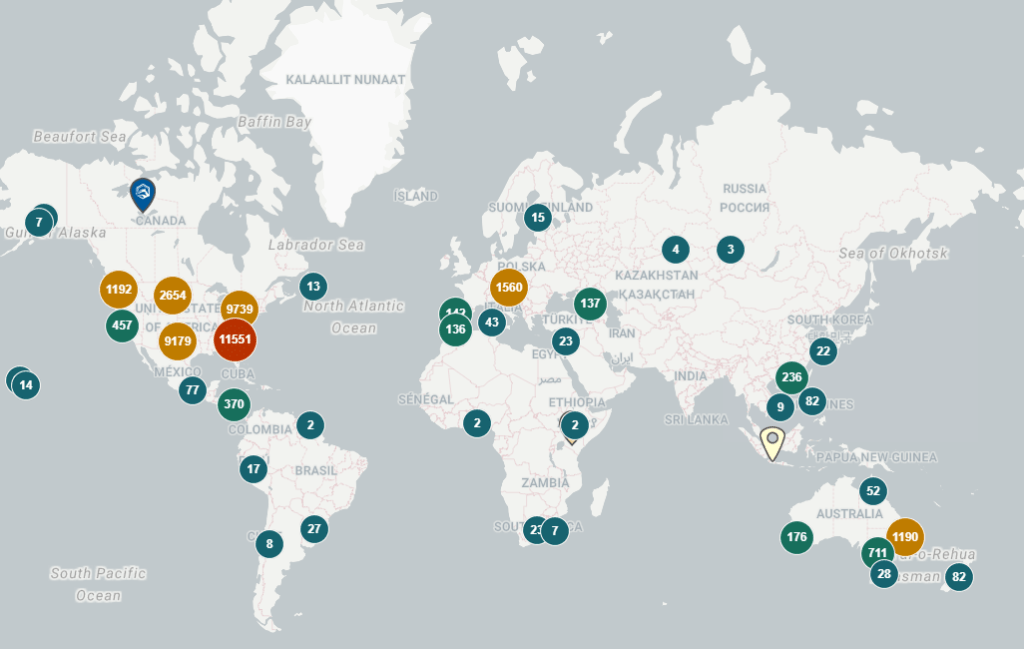
Many first-time buyers walk away surprised after realizing that Bitcoin ATMs charge between 10% and 25% in transaction fees. These machines may seem like a direct bridge between traditional money and crypto, yet their cost structure remains one of the least transparent parts of the crypto industry. Despite this, adoption continues to grow. More than 30,000 Bitcoin ATMs are now active worldwide, showing strong demand for cash-to-crypto access.
How are these fees calculated, why do they vary so widely, and what can you do to avoid overpaying? Understanding these costs is essential for anyone who uses Bitcoin ATMs regularly, especially since high fees can silently erode your returns. Convenience always carries a price, and knowing that price in advance helps you keep more of your crypto in your wallet.

What Is a Bitcoin ATM?
A Bitcoin ATM is a physical kiosk that allows users to buy or sell Bitcoin using cash or debit cards. Unlike traditional ATMs, which connect directly to your bank account, Bitcoin ATMs connect to cryptocurrency exchanges or liquidity providers to process transactions on the blockchain. They serve as on-ramps and off-ramps between fiat currency and crypto assets, bridging the gap between cash users and the digital economy.
Most Bitcoin ATMs support two main functions. The buy option lets users insert cash, scan a crypto wallet QR code, and receive Bitcoin directly to their address. The sell option allows users to send Bitcoin from their wallet and withdraw cash once the transaction is confirmed on the blockchain. Some machines are “one-way,” meaning they only allow purchases, while others are “two-way” and support both buying and selling.
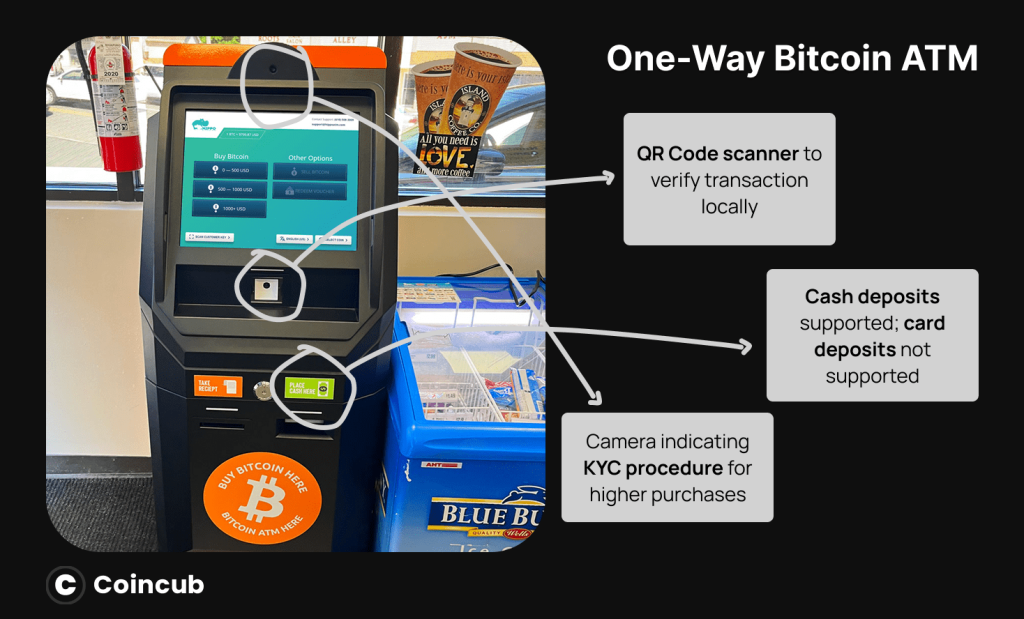
These ATMs are not operated by banks or the Bitcoin network itself. They are managed by private companies that handle the machine’s liquidity, compliance, and maintenance. Because of this, fees, limits, and supported coins can vary significantly between operators. Bitcoin ATMs offer accessibility and speed, but understanding who runs them and how they function is key to using them wisely.
How Bitcoin ATM Fees Work
Bitcoin ATM fees are made up of two main components that determine how much you actually pay: the transaction fee and the spread fee.
The transaction fee is the direct charge added by the ATM operator, usually ranging between 5% and 20% of the transaction value. It appears clearly on the screen before you confirm the purchase or sale. This fee compensates the operator for maintaining the machine, providing liquidity, and handling compliance costs.
The spread fee is less obvious but equally important. It represents the difference between the live market price of Bitcoin and the rate offered by the ATM. For example, if Bitcoin trades at $100,000 on exchanges but the ATM lists it at $105,000, that’s a 5% spread. Many users mistake this for normal market fluctuation, but it is effectively an additional hidden charge.
Some ATMs also include extra fees, such as network fees for blockchain confirmations or withdrawal fees when converting Bitcoin back to cash. These can further increase your total cost.
Operators justify the high fees by citing factors like Know Your Customer compliance, cash handling logistics, security, and hardware maintenance. They mean that users often pay a premium for speed and convenience compared to using an online exchange.
Why Bitcoin ATM Fees Are So High
Bitcoin ATMs charge higher fees than most online exchanges for several practical reasons. Each machine carries significant operational and regulatory costs that go far beyond software or liquidity.
1. Cash Handling and Maintenance
Bitcoin ATMs deal with physical money, which requires armored cash transport, insurance, and constant restocking. Operators must pay for machine installation, rent for floor space, and regular maintenance. These logistical costs add up quickly and are reflected in the final fee that users pay.
2. Regulatory Compliance
Every reputable Bitcoin ATM operator must comply with Know Your Customer (KYC) and Anti-Money Laundering (AML) laws. This includes registering as a Money Services Business, maintaining state licenses, and verifying user identities. Compliance is expensive and time-consuming, and operators pass a portion of these costs to customers.
3. Volatility Risk
Bitcoin’s price can swing several percent within minutes. To protect against potential losses between the time a transaction is initiated and completed, operators often add a buffer to their pricing. This buffer becomes part of the fee, ensuring that they do not lose money when prices drop sharply.
4. Convenience Premium
The biggest cost factor is convenience. Bitcoin ATMs allow users to buy or sell crypto instantly without waiting for bank transfers or setting up online exchange accounts. That convenience comes at a price, and sometimes, a big one.
| Method | Typical Fee | Settlement Time | Privacy Level |
| Exchange (Binance/Coinbase) | 0.1%-2% | Instant-1 day | KYC required |
| Bitcoin ATM | 3%-20% | Instant | Often semi-anonymous |
Bitcoin ATMs prioritize accessibility and speed, but those advantages are funded directly by higher transaction costs.
The Range of Bitcoin ATM Fees
Bitcoin ATM fees vary widely across regions, operators, and transaction types. On average, users in the United States pay between 12% and 15% in total costs when buying Bitcoin, while European users see slightly broader ranges between 8% and 20%. In emerging markets, fees are even more volatile, with some reporting fees as low as 3% while others going above 15%.
Operator pricing plays a major role. Large providers like CoinFlip charge around 8.99% for purchases and 4.99% for sales, positioning themselves as relatively low-cost options in the U.S. market. Bitcoin Depot, one of the most widespread networks, averages roughly 10% on buy transactions. RockItCoin, another major player, fluctuates between 7% and 20%, depending on the machine’s location, the local cash economy, and demand.
Smaller or independent operators often set higher fees because they handle lower transaction volumes and have higher per-machine costs. They also face more risk managing liquidity and compliance without the scale advantages of larger networks.
Fees can also differ based on which cryptocurrency you purchase. Bitcoin usually carries the lowest markup due to high liquidity, while Ethereum (ETH) and Litecoin (LTC) can have slightly higher spreads because of smaller trading volumes or network fees. Stablecoins like USDT, however, have changed the game. While not all ATMs support it, those who do have lower fees because of the minimal spread of the coin.
Location also matters. ATMs in tourist-heavy or high-demand areas, such as airports or city centers, often carry higher fees than those in suburban or less trafficked zones. Understanding these variations helps users choose the most cost-effective machine before initiating a transaction. Bitcoin ATM pricing is far from standardized.
Hidden Bitcoin ATM Costs You Might Not Notice
Beyond the visible transaction fee, Bitcoin ATMs often include several hidden costs that can make the total expense higher than expected.
An overlooked cost comes from Bitcoin network fees, also known as miner fees. These fluctuate depending on blockchain congestion and are deducted automatically from your transaction. During periods of heavy traffic, they can add several dollars to your total cost.
Some two-way ATMs apply withdrawal fees when you sell Bitcoin for cash, reducing your payout further. Small exchange rate rounding errors can also occur when converting between fiat and crypto, slightly altering the final amount you receive.
Transparency remains a major issue. Many machines do not display a detailed fee breakdown before you confirm the transaction, making it difficult to identify where the extra charges come from. Always check the ATM’s website or operator information, if it has any, in advance to estimate the total cost. Knowing these hidden fees upfront can help you avoid paying fees you weren’t planning to pay.
How to Minimize Bitcoin ATM Fees
While Bitcoin ATMs are convenient, users can take several practical steps to reduce the amount they pay in fees. The first is to compare operators before making a transaction. Websites such as CoinATMRadar allow you to check nearby machines, compare fee ranges, and read user reviews. Choosing a competitive operator can save you up to 10% in costs.
Second, use larger transactions whenever possible. Many Bitcoin ATMs apply lower percentage fees on higher amounts, rewarding users who transact in bulk. Making one $1,000 purchase often costs less than ten separate $100 buys.
Third, monitor network congestion before you use a machine. When Bitcoin’s network is busy, miner fees spike, and those costs are passed to you. Checking platforms like mempool.space can help you time your transaction for lower costs.
If the ATM supports multiple cryptocurrencies, consider using stablecoins such as USDT or USDC. Their lower volatility reduces the spread fee compared to Bitcoin or Ethereum.
Some operators, including CoinFlip, offer loyalty programs or discount vouchers that can reduce future fees by several percentage points. Finally, avoid double conversions like buying USDT and then converting it to Bitcoin, as each step incurs another spread.
Small optimizations like these can make a noticeable difference, especially for frequent users who rely on Bitcoin ATMs as their primary crypto access point.
Are Bitcoin ATMs Worth It?
Whether Bitcoin ATMs are worth using depends entirely on your priorities. For some, the value lies in speed and accessibility. If you need instant crypto without waiting for bank transfers or exchange verifications, a Bitcoin ATM offers immediate results. They are also useful for people who prefer cash transactions or lack access to traditional banking, providing a simple way to participate in the crypto economy. In regions with limited financial infrastructure, these machines can serve as an important bridge between cash and digital assets.
However, Bitcoin ATMs become less practical for large or frequent transactions. High fees can quickly erode profits or investment returns. Anyone who regularly buys or sells crypto will find far lower costs on regulated exchanges like Binance, Coinbase, or Kraken. For users with verified accounts and access to digital payments, online platforms are typically the smarter long-term choice.
The reality is that convenience always carries a price. Bitcoin ATMs excel at offering immediacy and simplicity, but they trade that for higher costs and lower transparency. For one-time or emergency purchases, the premium may be justified. For larger or routine investments, it rarely is. The key is understanding what you’re paying for and deciding whether that instant access is worth the premium. Informed users can make Bitcoin ATMs work to their advantage.
New Rules Reshaping Bitcoin ATM Fees & Lmits
Through 2025 and into 2026, a growing number of US states passed consumer-protection laws aimed squarely at Bitcoin ATMs, largely in response to a surge in scams targeting older users. Common measures include daily transaction caps for new customers, mandatory on-screen fee and scam-warning disclosures, full refund windows for fraud victims within a set period, and operator licensing or registration requirements.
For users, this means lower limits on first transactions, clearer fee breakdowns before you confirm, and more identity verification at the machine. It also pushes some operators to standardize pricing, which can narrow the wide fee ranges this guide describes. Always check the current rules in your state, since both the caps and the required disclosures vary.
Final Thoughts on Bitcoin ATM Fees
Bitcoin ATMs have played a major role in expanding crypto access for everyday users. They allow anyone with cash to buy Bitcoin within minutes, without needing a bank account or online exchange account. In that sense, they help democratize entry into the digital asset world. But that accessibility comes with a price.
The truth is that Bitcoin ATM fees are not simply a result of operator greed. They reflect the real-world costs of handling physical money, maintaining machines, ensuring regulatory compliance, and managing volatility risk. Each transaction involves logistics, security, and legal obligations that go far beyond a simple digital trade.
For many, the higher fees are a fair exchange for convenience and speed. For others, they can quietly drain value over time. Bitcoin ATMs are best viewed as bridges between cash and crypto, fast, practical, and useful when needed, but not always the most economical option. The more you understand about how these machines operate and what drives their pricing, the better equipped you are to decide when that convenience is truly worth paying for.
Frequently Asked Questions (FAQs)
Frequently Asked Questions (FAQ)
What is the average Bitcoin ATM fee? +
The average Bitcoin ATM fee typically ranges between 10% and 15% of the total transaction amount. Most operators charge a buy fee of around 12% and a sell fee of about 6%, though exact costs vary by location and provider. Larger networks such as CoinFlip or Bitcoin Depot usually offer slightly lower rates, while smaller or independent machines may charge over 20%. Always check the displayed rate on the ATM screen or compare fees on platforms like CoinATMRadar before completing your transaction.
Are Bitcoin ATM transactions taxable? +
Yes. Bitcoin ATM transactions are taxable in most countries. When you sell Bitcoin for cash, it is generally treated as a capital gains event, meaning you may owe tax on any profit made since the time you acquired the Bitcoin. Buying Bitcoin through an ATM is not taxed immediately, but you must track your purchase price (cost basis) for future reporting. Tax rules vary by country, so always check local regulations or consult a tax professional to ensure proper compliance.
Are Bitcoin ATMs anonymous? +
Bitcoin ATMs are partially anonymous, depending on the operator and transaction amount. Many machines allow small purchases without full ID verification, often requiring only a phone number for confirmation. However, most countries now enforce Know Your Customer (KYC) and Anti-Money Laundering (AML) rules. For larger transactions, users must provide government-issued ID, selfies, or even address verification.
Why does my ATM charge more than the listed fee? +
Bitcoin ATMs often charge more due to hidden spread fees, network costs, and inflated market price. The machine’s Bitcoin price usually includes a markup above market rates, and extra blockchain or withdrawal fees can raise the final total beyond the displayed fee.
Can I withdraw cash from a Bitcoin ATM? +
Yes. You can withdraw cash from two-way Bitcoin ATMs that support both buying and selling. To do so, send Bitcoin from your wallet to the machine’s address, wait for confirmation, and then collect the cash minus any applicable fees.
Do Bitcoin ATMs have daily limits? +
Yes. Most Bitcoin ATMs set daily limits that range from a few hundred to several thousand dollars, depending on the operator and your verification level. In 2025 and 2026, several US states added lower caps for new users to reduce fraud, so first-time limits are often stricter.
Are Bitcoin ATM fees negotiable or refundable? +
Bitcoin ATM fees are generally fixed and not negotiable. However, some 2025 and 2026 state laws now require refund windows for verified scam victims, and a few operators offer loyalty discounts. Outside those cases, completed transactions are usually final.