



 Buy a Licensed Company
  Explore VASP Data
  Talk to an Expert

 Atis Shala
Atis is a senior analyst and community lead with four years of experience in crypto. He has a bachelor from the Rochester Institute of Technology.
Atis Shala
Atis is a senior analyst and community lead with four years of experience in crypto. He has a bachelor from the Rochester Institute of Technology.
Saylor’s Strategy Creates a Billion Dollar USD Reserve

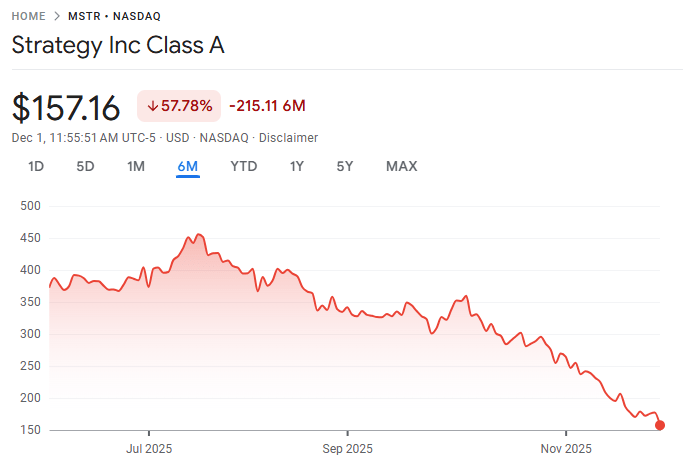
Strategy shares fell sharply on Monday after the bitcoin focused group created a large US dollar reserve to protect its dividend and flagged the risk of multibillion dollar losses if crypto prices stay under pressure.
Strategy, which chief executive Michael Saylor turned from a small software company into the largest corporate holder of bitcoin, said it has set aside 1.44 billion dollars in cash to cover upcoming payouts. The company funded the reserve through recent share sales and said it aims to cover at least 12 months of dividends, with a longer term target of 24 months or more.
The shift comes during a steep pullback in the price of bitcoin, the largest cryptocurrency by market value. Bitcoin has dropped from record levels above 126,000 dollars in early October to around 86,000 dollars in a little over a month, a move that has tested the economics of Strategy’s heavily leveraged balance sheet.

Strategy’s stock fell more than 11 per cent in morning trading and is down about 46 per cent so far this year, as investors reassess a business model that effectively turns the company into a leveraged bitcoin fund with an attached software operation. The group now holds about 650,000 bitcoin, roughly 3.1 per cent of the asset’s total supply, a stash worth about 56 billion dollars at current prices.
Saylor: The New Reserve Should Help Navigate Short Term Volatility
The company financed that bitcoin hoard with a mix of common equity, preferred equity and 8.2 billion dollars of convertible debt. A convertible bond is a type of corporate debt that investors can swap for shares at a preset price. If the share price trades well below that level, holders tend to prefer cash repayment, which strains a company’s liquidity.
Strategy told investors that if bitcoin ends the year in a range between 85,000 and 110,000 dollars, its full year results could swing between a net loss of roughly 5.5 billion dollars and net income of about 6.3 billion dollars. The sensitivity underlines how closely its earnings track crypto price movements, rather than the underlying performance of its software business.
The company also highlighted a metric it calls mNAV, which compares its enterprise value with the market value of its crypto holdings. Enterprise value adds a company’s equity and debt and subtracts its cash. If mNAV falls below one, the market effectively values the firm at less than its bitcoin.
Management said that if mNAV drops under that threshold, it could sell some bitcoin to reinforce the dollar reserve. Any sale would mark a sharp break with Saylor’s long standing strategy of buying and holding bitcoin indefinitely and would echo other corporate adopters that have already started cutting their token exposure.
Saylor said the new reserve should help Strategy “navigate short term market volatility” while it continues its ambition to act as a leading issuer of bitcoin backed credit. Investors now face a simple question: whether a highly leveraged corporate bitcoin strategy can survive an extended crypto winter without sacrificing its core promise to never sell.









