


 Buy a Licensed Company
  Explore VASP Data
  Talk to an Expert

 Atis Shala
Atis is a senior analyst and community lead with four years of experience in crypto. He has a bachelor from the Rochester Institute of Technology.
Atis Shala
Atis is a senior analyst and community lead with four years of experience in crypto. He has a bachelor from the Rochester Institute of Technology.
GALA Price Prediction: Can Gala Token Bounce Back Strong?
Video games have rapidly grown into one of the most influential and expansive forms of entertainment globally. From simple mobile applications enjoyed casually by millions to sophisticated online worlds engaging dedicated communities, billions now regularly participate in gaming. Central to this growth is continuous technological innovation, reshaping how games are developed, played, and in Web3, monetized. Web3 gaming is one step away from revolutionizing gaming forever. In essence, Web3 gaming leverages blockchain technology to transform player engagement by granting digital ownership of digital in-game assets.
Web3 gaming introduces concepts such as play-to-earn models, player governance systems, and seamless trading of in-game assets. This has attracted numerous startups eager to combine immersive entertainment with compelling crypto incentives, leading to interactive ecosystems. Particularly during the 2021 crypto bull market, several Web3 gaming projects achieved substantial visibility and excitement within both gaming and blockchain communities.
Gala Games stands out as the perfect example. Designed explicitly to bring back “ownership” to gamers, Gala leverages blockchain technology to facilitate true digital asset ownership through its native token, GALA. The project rapidly gained popularity and substantial financial momentum amid the GameFi boom, significantly elevating the token’s value. However, as we entered a bear market in 2022, GALA experienced a major decline in its valuation and overall investor sentiment.

Throughout this article, we will analyze Gala’s historical performance, vision, products, and potential future. Gala Games is one of the few projects that survived the last bear market, and its resilience gives hope that it might bounce back to the top once again.
What is Gala (GALA)?
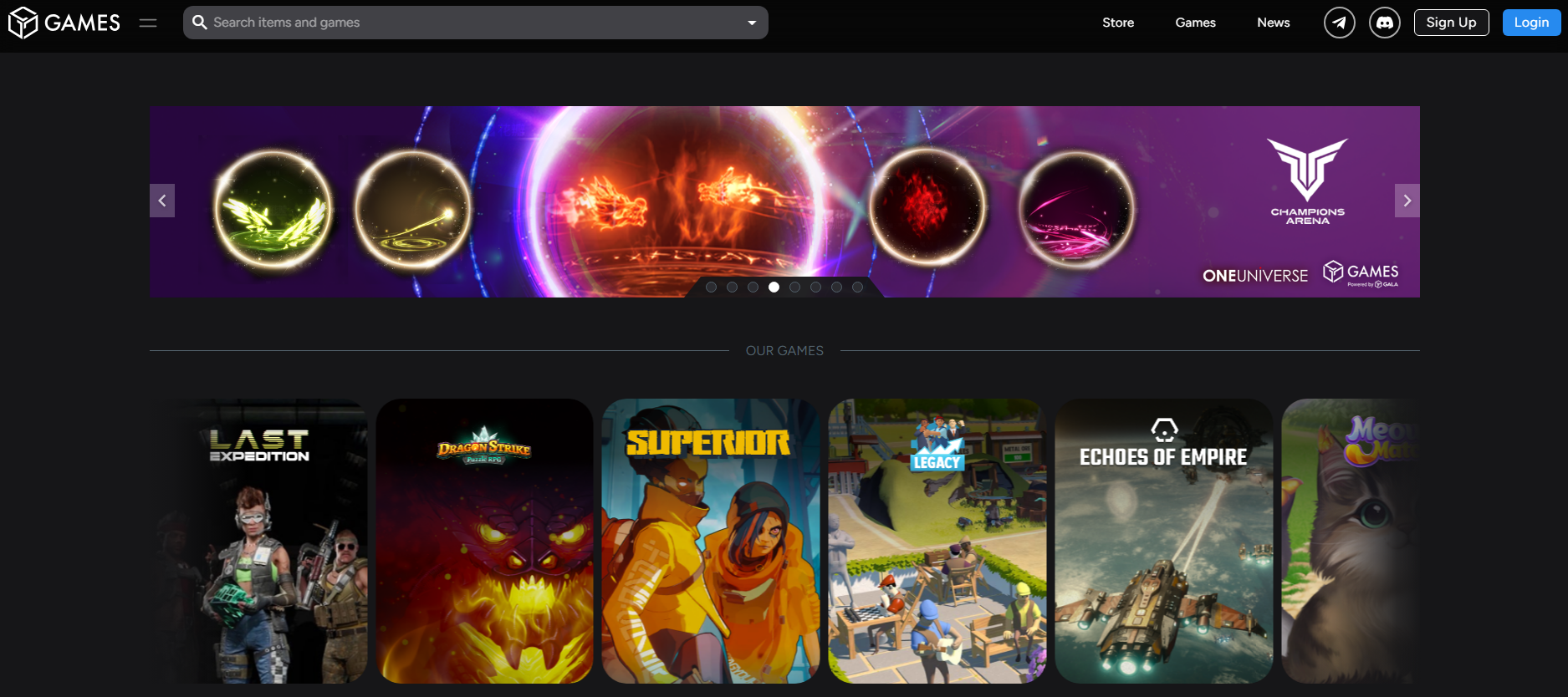
Gala Games is a Web3 platform designed to give gamers more control over the games they play and the assets they earn. Its mission is to return ownership to players, allowing them to truly possess in-game items, trade them, and even participate in game development decisions.
The GALA Token
The GALA token fuels this ecosystem. It is the native utility token powering the Gala Games ecosystem, a blockchain-based platform focused on gaming, entertainment, and digital ownership. Operating primarily on GalaChain, Gala’s proprietary Layer-1 blockchain, as well as being bridged to networks like Ethereum and Binance Smart Chain, GALA serves multiple roles within the decentralized Gala environment.
GALA was initially an ERC-20 and BEP-20 compliant token, but its primary functionality today resides on GalaChain. It functions as a utility, governance, and gas handling token, enabling users to interact with various dApps and services on the platform.
GALA’s core use cases include:
- Native currency: Players can use GALA to purchase in-game items, upgrades, skins, and NFTs across various Gala titles.
- Governance: Token holders can vote on key ecosystem decisions, such as new game proposals, funding distributions, and platform upgrades.
- Node rewards: Operators of Founder’s Nodes who support the network infrastructure earn GALA as a reward for providing uptime and validating network activity.
- Event and participation incentives: Users can earn GALA through competitions, promotions, and community engagement campaigns.
GALA has a fixed total supply of 50 billion tokens. Initially distributed through a daily emission schedule, this emission is halved annually on July 21st. The supply is allocated to ecosystem rewards, the Gala Games team, and reserve funds. A portion of tokens is also burned to manage inflation and promote long-term sustainability.
This deflationary mechanism, combined with real utility in games and platform governance, helps maintain the token’s relevance and scarcity. Developers can integrate GALA into their games to monetize gameplay in a decentralized fashion, aligning incentives between creators, players, and node operators. Ultimately, GALA is the economic engine behind the broader Gala ecosystem, enabling decentralized entertainment at scale.
GalaChain: The Web3 Gaming Chain
GalaChain is Gala Games’ dedicated Layer‑1 blockchain, purpose-built for gaming, entertainment, and Web3 applications. It runs on a Proof‑of‑Authority consensus with approximately 2-second block finality and horizontal scaling capabilities. A key performance metric is transaction throughput. GalaChain supports up to 10,000 transactions per second (TPS) in theory, with real-world benchmarks showing sustained performance around 1,500 TPS.
The network is backed by a decentralized infrastructure of over 50,000 Founder’s Nodes, which help validate transactions, secure the chain, and facilitate cross-chain operations.
Since June 16, 2025, more than 2.8 billion GALA tokens have migrated onchain from Ethereum to GalaChain through the project’s staking and node programs. The ecosystem continues to expand rapidly. As of April 2024, GalaChain supports 13 live games, including popular titles like Spider Tanks, Champions Arena, Town Star, Mirandus, and The Walking Dead: Empires. Several more are in development.
For developers, GalaChain provides a full suite of tools ranging from SDKs, CLIs, and UI libraries that simplify building and deploying decentralized applications. With high throughput, a growing game catalog, and active community support, GalaChain forms the scalable backbone of Gala Games’ Web3 ecosystem.
GALA’s Historical Performance
GALA launched in 2020 with GALA priced at just $0.0010 per token. Initially flying under the radar, the token gained rapid attention during the broader crypto and GameFi boom of 2021.
The most significant rise occurred between late 2021 and early 2022. GALA reached its all-time high of $0.7121, marking a nearly 700x increase from its initial recorded value. This spike coincided with peak interest in blockchain gaming, NFTs, and speculative interest across the crypto market.
However, following the 2021 bull market, GALA, like much of the crypto sector, underwent a steep correction. The token fell sharply over 2022 and 2023, hitting a low of just $0.0002, reflecting broader market declines and waning hype around Web3 gaming projects. Despite this downturn, the token has shown signs of resilience. As of June 23, 2025, GALA is trading at approximately $0.011. While still far below its all-time high, this represents a substantial recovery from its historical low.
GALA’s performance mirrors the cyclical nature of the crypto market but also reflects its evolution from a speculative asset into a utility-driven token. With GalaChain now live and a growing portfolio of games using GALA for transactions, governance, and rewards, the token is becoming more embedded in actual use cases.
Still, GALA’s story is not unlike other GameFi tokens. Projects like Axie Infinity (AXS) and The Sandbox (SAND) also experienced sharp corrections. What sets Gala apart is its continued development during this downtrend, which keeps it in the conversation among Web3 gaming leaders.
Recent Gala Games Developments and Roadmap
Gala Games has entered a pivotal phase in its evolution, with 2024 marking a series of strategic rollouts that signal long-term ambition and renewed momentum. The most significant development has been the formal deployment of GalaChain, the proprietary blockchain ecosystem that now underpins much of Gala’s infrastructure. Formerly reliant on Ethereum, GalaChain’s expansion offers faster transaction speeds, drastically reduced fees, and increased scalability—all crucial ingredients for a Web3 gaming platform seeking mass adoption.
Why GalaChain?
GalaChain is more than just a technical upgrade. It represents a shift toward vertical integration within the Gala ecosystem, allowing developers to build games natively while leveraging onchain asset minting, player rewards, and seamless interoperability. Several of Gala’s flagship titles, including Spider Tanks and Town Star are now actively integrating GalaChain functionality. This rollout is being coupled with SDKs and dev tools aimed at onboarding third-party developers, suggesting Gala is not only focused on building games but on becoming a foundational layer for Web3 game development.
Alongside infrastructure, Gala has maintained a steady cadence of new game launches throughout 2024. Titles like Legacy, from Peter Molyneux’s 22cans studio, and Champions Arena have entered public beta or full release, each bringing unique tokenized economies and NFT integrations. This wave of releases is reinforcing Gala’s commitment to genre diversity, spanning strategy, simulation, RPGs, and casual formats to capture a broad user base.
Underpinning all of this activity is a reshaped tokenomics model. In 2024, Gala introduced more aggressive token burn mechanics, linked directly to platform activity and node participation. These changes are aimed at reducing overall GALA token supply over time, while incentivizing ecosystem usage. The move to GalaChain has also enabled more flexible utility expansions, with the GALA token now used for gas fees, in-game purchases, governance participation, and node rewards within the GalaChain framework. This multifaceted utility is designed to strengthen long-term token demand while aligning user incentives more closely with network health.
From Ethereum to GalaChain: Migrating the New Smart Contracts
One of the more complex but necessary updates has been the migration to new smart contracts, which took place in early 2024. This migration was largely security-driven, prompted by legacy contract limitations on Ethereum. The upgrade process was handled transparently, with detailed instructions and AMA sessions guiding users through token transfers and wallet updates. The Gala team has also undertaken frequent audits and opened up more of their codebase to community review, an effort to increase trust and transparency—a priority that has grown in importance following broader industry concerns around rug pulls and opaque governance.
The Gala Games team has remained active across both public and developer-facing channels. Regular community calls, town halls, and dev blogs provide insight into ongoing projects and upcoming features. This increased transparency is coupled with greater engagement, particularly through Discord, where the Gala community often tests early builds and provides feedback that directly shapes game development.
Strategic partnerships and integrations have also been a highlight of the 2024–2025 roadmap. Gala recently secured collaborations with several prominent blockchain protocols to explore cross-chain functionality. Additionally, fresh funding rounds, although more discreet than in previous cycles, have filled the treasury, ensuring a runway for long-term development. The platform’s ability to attract both indie developers and legacy gaming talent signals confidence from multiple sectors, not just crypto-native ones.
From a market perspective, these developments have injected renewed price sentiment and utility-based demand into the GALA token. While macro volatility remains a factor, the combination of reduced token supply, increased onchain usage, and diversified game offerings has laid the groundwork for a more resilient ecosystem. Investors and players alike are beginning to see GALA not just as a speculative asset, but as a gateway to a growing universe of decentralized entertainment.
GALA Technical Analysis for 2025
The past twelve months have been a turbulent yet formative period for the GALA token, as reflected in its technical indicators and trading patterns. From periods of bullish optimism like the hype of December 2024 to corrective downswings, the price action has painted an overall sentiment of the web3 gaming sector in recent months.
Support, Resistance, and Price Zones
Looking at recent charts, GALA has tested a major support level around $0.01 multiple times throughout the year. This price acted as a strong floor, especially during macro pullbacks in early 2024. On the other side, resistance has consistently held in the $0.035 to $0.038 range. Price has struggled to break past this zone, often retreating on declining volume. This shows that there’s fading momentum rather than sell pressure.
Volume and Moving Averages
Volume trends reveal a few spikes corresponding with key ecosystem events, including the GalaChain migration and game launches. However, volume generally trended lower during consolidation phases, suggesting traders were waiting on catalysts.
The 50-day moving average has acted as dynamic resistance for much of the year. Whenever GALA briefly traded above it, momentum quickly faded unless paired with strong volume. The 200-day MA remains far above current price levels, signaling a broader bearish structure still in place. Unless the token can establish higher lows and climb above the 50-day average convincingly, upside remains technically capped.
RSI and MACD Insights
Relative Strength Index (RSI) has hovered between 40 and 55, indicating a neutral to slightly bearish sentiment. No extreme oversold or overbought conditions were sustained long enough to trigger trend reversals, reinforcing the sideways nature of GALA’s recent behavior.
Meanwhile, the MACD indicator has shown weak bullish divergences on a few occasions. Crosses above the signal line occurred, but failed to translate into long-term uptrends. This suggests traders remain cautious, with momentum needing more fundamental or macro confirmation to build.
Chart Patterns in Play
Technically, GALA’s price action hinted at a double bottom formation between April and June 2024, bottoming around $0.016 and attempting a breakout. However, failure to confirm the neckline around $0.027 undermined the pattern. More recently, a descending triangle has taken shape, hinting at indecision and building pressure. A breakout from this structure, particularly with strong volume, could signal the next directional move.
Correlation with BTC, ETH, and Competing Web3 Gaming Tokens
GALA has maintained moderate correlation with Bitcoin and Ethereum, particularly during major crypto market moves. However, it has also shown periods of divergence, especially during Gala-specific announcements. Compared to other gaming tokens like IMX or SAND, GALA has been less volatile but also slower to recover, possibly due to its still-maturing native chain and broader investor caution in the GameFi sector.
Outlook: Short to Long Term
In the short term, GALA remains range-bound, trading between $0.01 and $0.025. A break above $0.028, confirmed by volume and a MACD crossover, could set the stage for a retest of yearly highs. Medium-term, reclaiming the 50-day moving average and flipping it into support will be key. Long term, much hinges on GalaChain adoption and sustained growth in user activity. Should the ecosystem flourish and token burns accelerate, GALA may attract stronger speculative and fundamental buying interest.
Whale Behavior and Sentiment
Onchain data suggests whales have accumulated in the lower price bands but remain largely inactive in distribution. This “diamond hands” behavior may indicate long-term confidence. Sentiment across trading communities is cautiously optimistic, with a preference for accumulating dips rather than chasing rallies. Overall, the technical setup points to a token in waiting—searching for a breakout catalyst that could redefine its trajectory in the Web3 gaming landscape.
Gala Games Fundamental Analysis
Gala Games is one of the OGs in the Web3 gaming space, and that’s why it is still relevant, although falling off since 2021. If you were to ask a web3 native about Gala today, they would most probably say the project is in the line between infrastructure builder and creative game studio. To understand its real value, it’s essential to go beyond token prices and chart patterns.
GALA’s Market Cap, Circulating Supply, and Developer Activity
As of mid-2025, GALA maintains a market cap of ~$630 million, placing it below giants like Immutable (IMX) and The Sandbox (SAND), but still firmly in the top tier of GameFi tokens. Similarly, its fully diluted valuation (FDV) sits at around ~$700 million. This indicates that most of GALA’s supply is already in circulation– 90% to be exact. With a capped maximum supply of 50 billion tokens, 45 billion of those tokens are already in circulation. With recent updates to tokenomics and ongoing burn mechanisms linked to activity on GalaChain, the team is actively working to address long-standing concerns about oversupply and dilution. But with tens of billions of tokens in circulation, token burns of this kind are unlikely to be effective.
Gala’s developer ecosystem has shown steady growth, particularly since the rollout of GalaChain. The launch of SDKs and infrastructure tools has made it easier for third-party developers to build directly onchain. While the number of fully launched third-party games remains low, several are in testnet or early access phases. Scaling takes time, especially for a project that is still rolling out a separate chain specifically for web3 gaming.
From a community perspective, Gala has maintained an active presence on Discord, X, and other social platforms. Its node operator community, which supports the decentralized infrastructure, remains one of the most engaged in the space. Gala’s governance mechanisms are still evolving, but consistent town halls and direct AMAs with the core team help sustain transparency and engagement. Compared to other GameFi ecosystems, Gala benefits from a more grassroots and passionate user base, even if its raw numbers trail behind larger projects like Axie Infinity.
Real-World Adoption: Are People Using Gala?
Perhaps the most important metric for any GameFi project is whether people are actually using its products. Gala has seen notable user engagement across a handful of titles, especially Spider Tanks, Town Star, and Superior. These games have seen thousands of daily active users during peak months, though sustaining engagement has proven difficult amid broader market volatility. Onchain metrics show that GalaChain has an average of 22,200 monthly active users. Despite its token not performing well, the metrics that matter, at least in the real world, keep pumping.
The integration of GalaChain has also opened new doors for real-world utility. Digital ownership of in-game assets is now native to the Gala ecosystem, not reliant on external chains. This shift makes the user experience smoother and opens the door for things like cross-game asset interoperability and streamlined onboarding for new players. Still, mass adoption remains a work in progress. Compared to mobile-native titles or traditional free-to-play games, Web3 onboarding friction continues to be a limiting factor.
Gala Games’ Ecosystem & Regulatory Outlook
Against the backdrop of a fading GameFi market, Gala’s fundamentals appear relatively strong. While many projects have stalled or shifted focus, Gala continues to ship updates, launch new titles, and expand its blockchain infrastructure. Gala’s success is tightly bound to the performance of its own games because of its “web3-gaming-centric” approach. In contrast, ecosystems like Immutable benefit from broader dApp diversity, exposing them to other sectors of the crypto industry.
Regulatory clarity remains a major question mark for Gala and the broader industry. While Gala has avoided clashes with U.S. regulators, its status as a token issuer and gaming platform could become a problem in the future. Gala has been proactive in establishing regional partnerships and exploring jurisdictional diversification, including growing activity in Southeast Asia and Latin America.
Most of the data and statistics of Gala Games show the potential of a bullish trend. The circulating supply being vastly in circulation, new games being launched, and tens of thousands of onchain users are all indicators that, while Gala may not be marketing itself a lot recently, they are building behind the scenes.
Community Sentiment Around Gala
Back in 2021, Gala Games together with Axie Infinity had the web3 gaming sector in a headlock. However, as time passed by, their influence and mindshare faded. Some might argue that new projects entered the market and took the spotlight, but that wasn’t the case. Gala Games was a giant that couldn’t directly be challenged by other web3 gaming projects at the time. So, the only way for Gala to be dethroned was if the issues stemmed from the inside.
Gala had a huge community, and with such a community, the team had huge responsibilities. Despite delivering good, working products, they did not take care of their community as they should’ve. FYI, traditional games need to have a community to survive, and that statement is many times more valid when it comes to web3 games.
In Reddit’s r/GalaGames, users have been vocal about these issues countless times.
Another user shared an image of a Discord chat from what appears to be Gala’s Discord channel. The X post says that the real reason Gala “failed” was because the team disrespected the community and developers for years.
This is the reason $GALA failed
It wasn’t the millions of dollars spent on “failed” games & the expansion to film/music
It was blatant disrespect toward the community & developers for years without end
Neph, you deserve better pic.twitter.com/mUwqisy31m
— Jesus Martinez 🔺 (@JesusMartinezEZ) June 28, 2025
How Does Gala’s Future Look?
Long‑time GALA holders, including the node operators and early adopters, seem committed, even as the token underperforms. There’s a lot of people still stacking up GALA every chance that they get, but is that enough for the token to bounce back? Not really. The issues that Gala has are internal, and as long as they are not addressed internally, the token will have a hard time performing. Founder Nodes seem to be the biggest blocker for Gala Games at the moment.
GALA Price Prediction: Scenarios
If GalaChain delivers on its promises and new games attract a wider player base, GALA could see significant upward movement. A broader crypto bull run would amplify this. Price could reach $0.10 to $0.15 within a year.
On the contrary, if user growth stagnates, tokenomics fail to stabilize supply, or broader markets turn bearish, GALA could revisit its 2022 lows or even dip below $0.01.
Realistically, however, GALA is likely to continue steady development with increased adoption. In such a scenario, the price of the token could stabilize between $0.03 to $0.06 over the next 12 months.
Please keep in mind that these predictions are not financial advice. Many external factors, from global regulations to Bitcoin’s performance and overall market sentiment, can influence GALA’s price.
What Could Hold GALA Back This Cycle?
GALA faces several challenges:
- Oversaturation in the GameFi space makes it difficult to stand out
- Competing platforms like Ronin and Immutable X have stronger current user bases
- United States regulatory scrutiny could impact token usage and exchange listings
- Token supply concerns persist, despite burns
- Long-term game retention and quality remain uncertain
Any one of these risks could derail the recovery narrative, especially in a bearish macro environment.
Can GALA Bounce Back Strong?
GALA’s path to recovery hinges on continued ecosystem development, adoption of GalaChain, and the broader crypto market environment. Its strengths include an ambitious team, diversified strategy, and growing infrastructure.
However, the platform must overcome user acquisition hurdles and prove the value of its content. Competition is fierce, and patience among investors is wearing thin.
So, can Gala Token bounce back strong? The answer is cautiously optimistic. If the team stays focused and delivers on its roadmap, GALA could become a key player in Web3 gaming and beyond. But risks remain high, and investors should approach with both curiosity and caution.
As always, do your own research, consider your risk tolerance, and never invest more than you can afford to lose.