


 Buy a Licensed Company
  Explore VASP Data
  Talk to an Expert

 Dren Hima
 is Head of Research at Coincub, leading research across digital asset regulation, licensing, market structure, tokenization and institutional adoption.
Dren Hima
Dren Hima is Head of Research at Coincub, leading research across digital asset regulation, licensing, market structure, tokenization and institutional adoption.
Crypto Tax Perception: How Fear, Friction, and Tools Shape Behavior
- Clear flat taxes still feel “unfair” to many retail investors when the public narrative focuses on scandals and crackdowns.
- Confusion around what is taxable and how to report pushes people to see crypto more like grey-market cash than a normal asset class.
- Companies struggle with basic issues like balance-sheet classification, DeFi yields, VAT and data reconciliation long before they reach exotic use cases.
- Higher-tax and progressive regimes amplify this friction, because complex rules and strict documentation collide with fast, messy on-chain activity.
- Jurisdictions that pair data feeds like CARF with simple tools, guidance, and amnesties are likely to collect more tax than those that rely on fear and symbolic prosecutions.
Crypto tax rules live on paper. Perception lives in people’s heads.
Investors and companies react to how fair, clear, and painful a regime feels.
Confusion, fear, and friction often shape behavior more than the actual percentage printed in the law.

Perception and behavior
Retail Perception
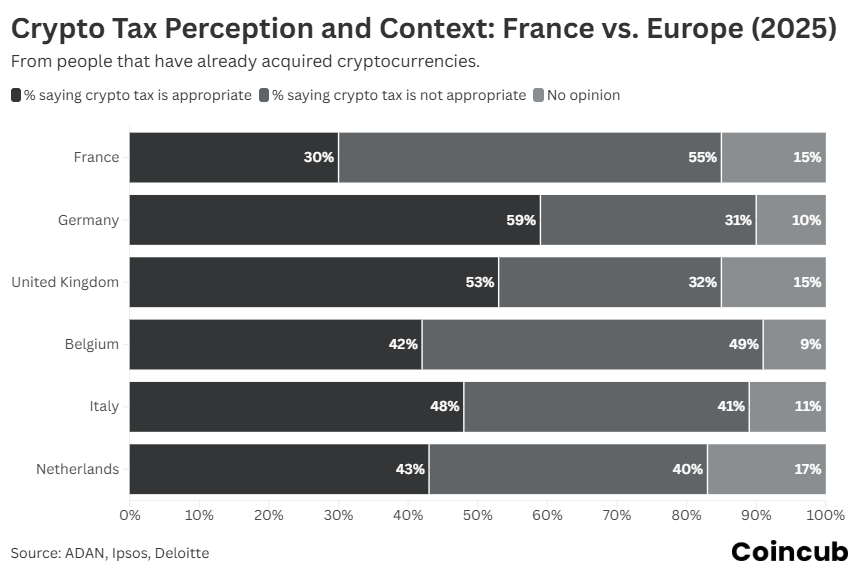
Numbers and laws may tell some of the story, but surveys and real-world friction can show us how taxes feel on the ground. A study looking at European crypto adoption shows how people in different countries in Europe (i.e., France) perceive crypto taxes. The study focuses on France, though it currently has a simple 30% flat tax for most crypto investors, yet a large share of respondents feel overtaxed, confused, or both. The European average shows similar patterns but with slightly less intensity.
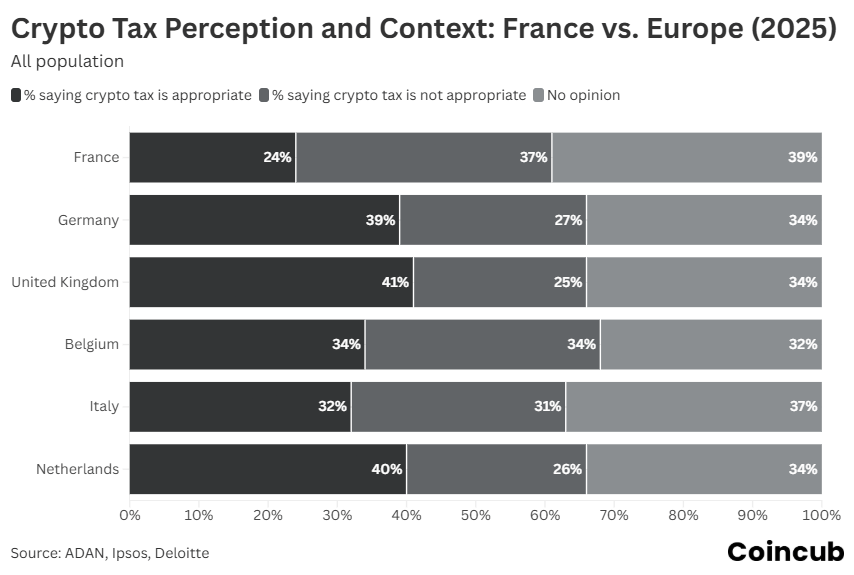
The interesting point here is the gap between legal clarity and user comfort. Even when a country has a clear flat regime, it may feel unfair if messaging focuses on enforcement and scandals instead of predictability.
Institutional Perception
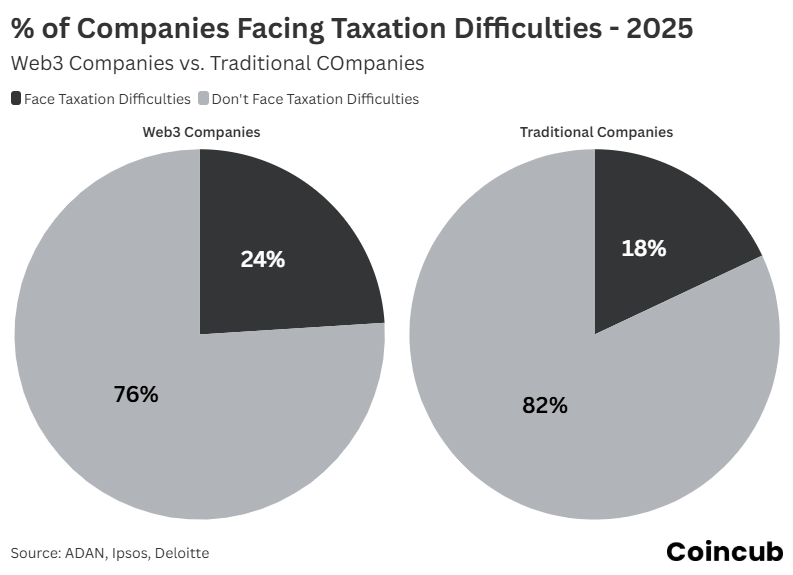
Looking through the lens of institutions may give more context. A significant share of companies report concrete problems such as the classification of crypto assets on the balance sheet; accounting for DeFi yields, staking rewards, DAOs, and liquidity provision; handling VAT, GST, or sales taxes when taking tokens as payment; reconciling transaction data across multiple chains and platforms; and so on.
These are not exotic use cases. Even simple cases like “buy and hold BTC on the balance sheet” or “pay a contractor in stablecoins” can create friction when auditors and tax authorities ask for documentation.
Firms with relatively higher tax rates or progressive models can feel this most because both the rates and the documentation expectations are high. Firms in 0% tax hubs may only feel it when they interact with clients, banks, or regulators in higher-tax countries.
Why Perception Matters
Perception can sometimes shape compliance more than rate tables.
If a regime feels arbitrary or targeted, users mentally place crypto in the same bucket as cash-in-hand work or offshore gambling. That raises the temptation to under-report, even at modest rates.
When a regime feels predictable and tools make reporting boring rather than painful, compliance goes up, even with higher percentages. Blockpit’s German data points in that direction. Many German users report crypto trades not because the state is kinder on rates than others, but because a mix of clear rules and available tools make the process more manageable.
The same logic will apply to CARF data. A jurisdiction that pairs incoming CARF feeds with simple guidance and decent amnesty mechanisms will probably collect more, and with less drama, than one that launches a few symbolic prosecutions and leaves everyone guessing.
Frequently Asked Questions (FAQ)
What does “crypto tax perception” mean?
It describes how investors and companies feel about a country’s crypto tax rules in practice, including fairness, clarity, and how painful reporting is.
Why do many retail investors in Europe feel overtaxed on crypto?
Many see headlines about enforcement and scandals, face complex reporting tools, and rarely hear a simple, consistent explanation of how the 30% style flat regimes work in real life.
How does confusion about crypto tax rules affect compliance?
Confused users often treat crypto like side cash, delay record-keeping, and under-report trades, even when rates are moderate and rules look clear on paper.
What are the biggest crypto tax pain points for companies?
Firms struggle with classifying tokens on the balance sheet, booking DeFi and staking income, handling VAT or sales tax on token payments, and reconciling data across chains and platforms.
Why does perception matter more than headline tax rates for behavior?
Predictable rules plus decent tools make reporting feel boring and routine, which pushes compliance up, while regimes that feel arbitrary or targeted push users toward avoidance.
How will new reporting frameworks like CARF change taxpayer behavior?
Automatic data sharing will raise the perceived risk of non-compliance, so countries that combine CARF feeds with clear guidance and realistic amnesty options will likely see better long-term reporting than those that rely on a few high-profile cases.