

 Buy a Licensed Company
 Explore VASP Data
 Talk to an Expert

 News Room
Admin Coincub
US Judge Dismisses TerraUSD Investor Lawsuit Against Coinbase
A California federal judge dismissed an investor’s TerraUSD lawsuit against Coinbase, finding the exchange adequately disclosed how the stablecoin worked and that securities claims failed.
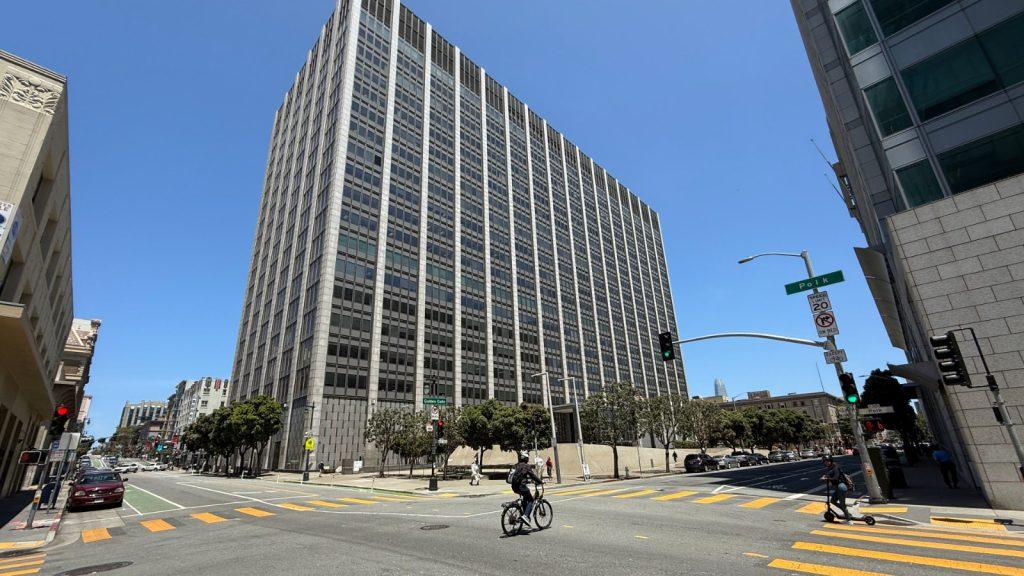
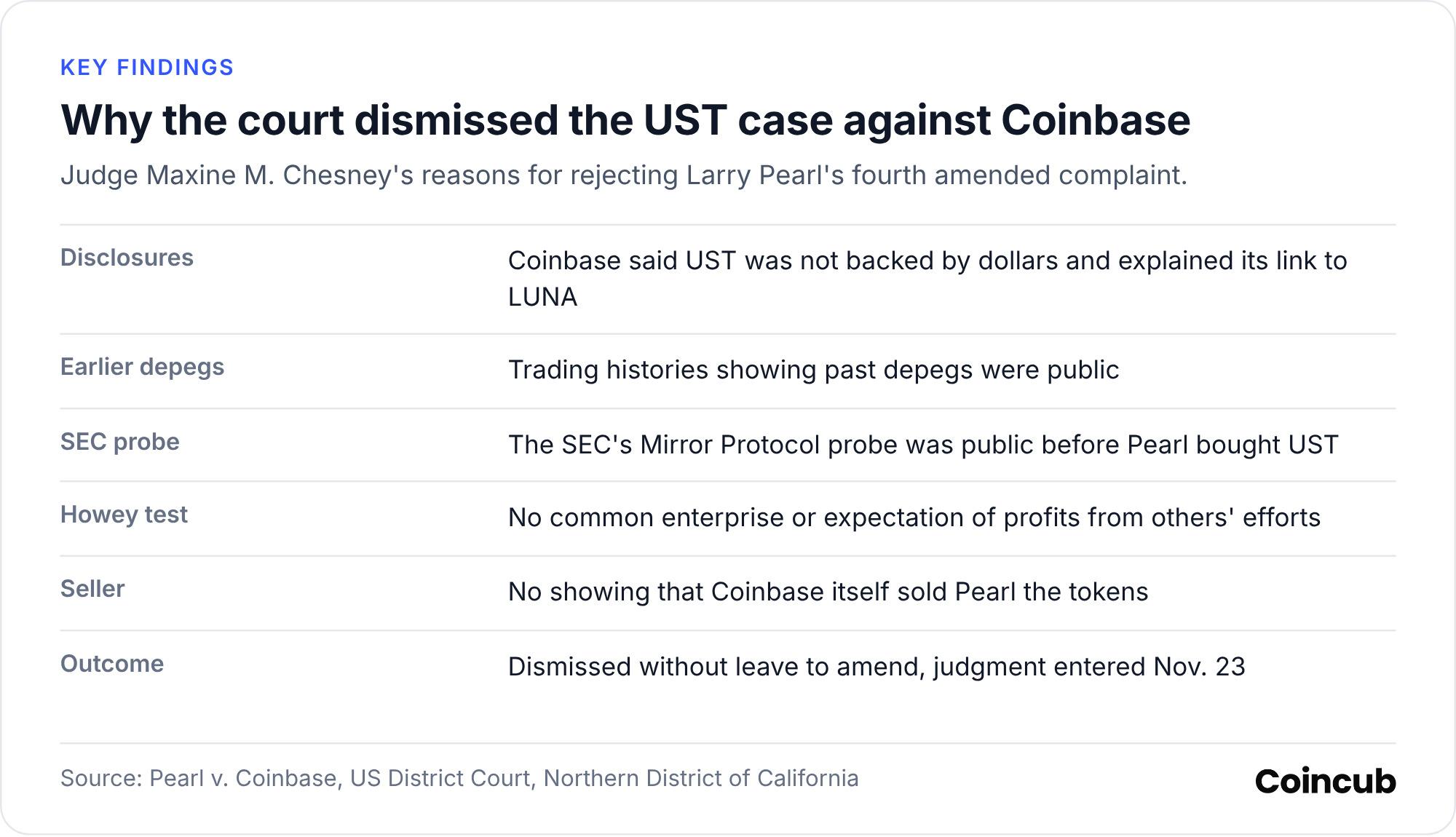
A federal judge in California dismissed an investor lawsuit against Coinbase over the 2022 collapse of the TerraUSD (UST) stablecoin. Judge Maxine M. Chesney ruled on Nov. 20 that the exchange had adequately disclosed how the token worked, and judgment was entered on Nov. 23.
- Chesney rejected investor Larry Pearl’s fourth amended complaint without further leave to amend.
- Pearl said he held about $13,000 of UST and lost more than 90% of it when the token collapsed in May 2022.
- The court found Pearl had not shown that UST was a security under the Howey test or that Coinbase itself sold him the tokens.
What Pearl claimed
Pearl sought to represent other buyers in a class action in the United States. He accused Coinbase of negligent misrepresentation, false advertising, unfair competition, and violations of California securities laws. He argued that calling UST a stablecoin hid the risks of its design.
A stablecoin is a crypto token designed to hold a steady value, usually $1. Many are backed by reserves such as cash. UST relied on an algorithm instead, and minting new UST required burning an equal value of its sister token, LUNA.
Why Coinbase’s disclosures held up
The court found that Coinbase’s website stated UST was not backed by US dollars held in a bank account. The exchange also explained the mint-and-burn link with LUNA and gave access to documents describing it.
Chesney found that trading histories showing earlier depegging episodes were public. The Securities and Exchange Commission (SEC) had also disclosed its probe into Terraform Labs’ Mirror Protocol before Pearl bought UST.
Why the securities claims failed
Under the Howey test, an asset is an investment contract when buyers put money into a common enterprise expecting profits from others’ efforts. Chesney found the complaint showed neither. Pearl said he bought UST expecting its value to stay at about $1.
The judge set this apart from Terraform’s Anchor Protocol, which offered a targeted annual return of about 20% on deposited UST. She also found Pearl had not shown that Coinbase sold him the tokens, and she separated Coinbase’s custody and operational control from ownership.
How the ruling fits with other Terra cases
In 2024, a jury found Terraform Labs and its founder, Do Kwon, liable for fraud in the SEC’s case against them. They later agreed to pay about $4.47 billion. That case concerned Terraform’s own statements and products, including Anchor. The Coinbase ruling deals only with Pearl’s claims against an exchange that listed UST.
What comes next
The judge denied a separate Coinbase motion on the class allegations as moot, since the complaint had already been dismissed. The ruling awards no damages, and it does not prevent an appeal.