



 Buy a Licensed Company
  Explore VASP Data
  Talk to an Expert


The Global Crypto Maturity Index: Measuring Infrastructure, Regulation, and Trust
The crypto market has a new weather vane: not just price charts and TV headlines, but a more disciplined way to measure how mature the industry actually is. As crypto market capitalizations continue to hover in the multi-trillion dollar range and adoption patterns change across regions, stakeholders, from policymakers to institutional investors, need a clear and repeatable framework through which they will be able to look at whether a market is ready for scaled financial activity. According to recent market trackers, the global crypto market cap is around $3–4 trillion, underscoring the economic heft of digital assets and the urgency of reliable maturity measures. Platforms such as XBO.com, a global crypto exchange offering advanced trading and secure asset management, are examples of how players in the industry are evolving within this growing financial landscape with a focus on transparency, compliance, and user trust.
This article proposes a defensible Global Crypto Maturity Index (GCMI) and explains how three pillars, Infrastructure, Regulation, and Trust, can be operationalized with measurable signals. Along the way, I’ll pull timely data points from leading analytics houses and show why a maturity score matters for exchanges, institutional treasuries, and regulators.
Timely Hook: Why Now?
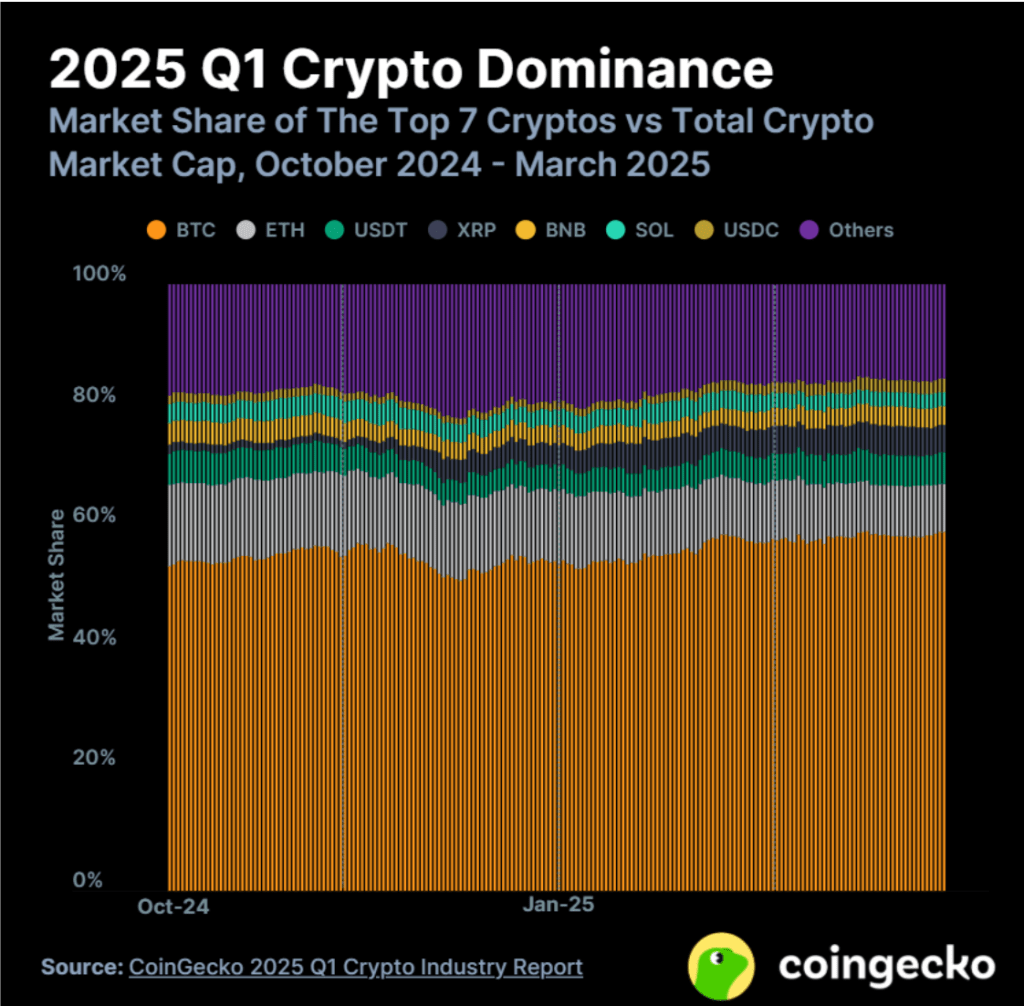
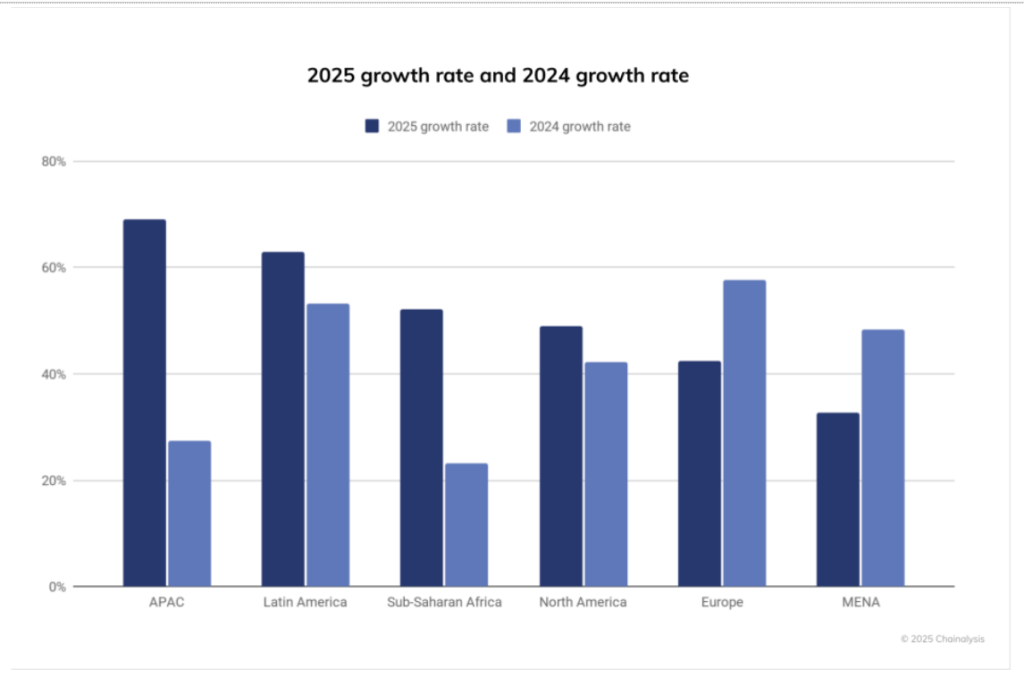
2025 has been a defining year in which political moves, ETF flows, and regulatory pushes have nudged crypto from fringe to mainstream conversation. Macro events and clearer policy direction have coincided with spikes in on-chain activity and renewed institutional interest. Market research in 2025 identified sizable regional adoption gains, particularly in APAC. While global market cap metrics show how fragile momentum can be when macro sentiment shifts. This confluence makes it an ideal moment to introduce a standardized maturity metric: markets and businesses are no longer experimenting, they’re scaling and that demands measurement.

What is the Global Crypto Maturity Index (GCMI)?
The GCMI is a composite score (0–100) that quantifies a country or region’s readiness for sustained, mainstream crypto economic activity. It’s intentionally multi-dimensional: a single metric can’t capture diversity in custodial infrastructure, smart-contract ecosystems, regulatory clarity, and public trust. The index weights three pillars:
- Infrastructure: 40%
- Regulation & Supervision: 35%
- Trust & Market Integrity: 25%
Pillar 1 – Infrastructure: The Plumbing of Crypto
Infrastructure covers the tangible rails: centralized exchanges, liquidity pools, custodians, blockchain nodes, and payments integrations. CoinGecko’s market metrics show that total capitalization and exchange volumes remain key systemic indicators. Large market caps with thin liquidity create fragility; conversely, a healthy mix of trading volume, diverse order books, and resilient custody options points to maturity.
Quantitative signals for the Infrastructure subscore:
- Total market cap and 30-day on-chain value transferred (signal of economic activity).
- Active addresses and transaction counts. Rising active addresses for key chains is an infrastructure green flag.
- Exchange health: number of licensed exchanges, daily liquidity depth for top pairs, and the presence of regulated custody providers.
Pillar 2 – Regulation & Supervision: The Rulebook
Maturity demands predictable rules. The presence of clear licensing, coherent taxation policies, and an enforceable anti-money-laundering regime converts speculative interest into longer-term capital allocation. Chainalysis’s 2025 Geography of Crypto Report shows shifting regional leadership in adoption and how regulation interacts with grassroots usage and countries that couple adoption with legal clarity score higher on maturity.
Source: Chainanalysis
Quantitative signals for the Regulation subscore:
- Existence of a licensing framework.
- Regulatory clarity on token treatment.
- Enforcement record & regulatory cooperation.
- Institutional product approvals.
Pillar 3 – Trust & Market Integrity: The Social Contract
Trust is the soft metric that turns rules into usable policy. It includes consumer protection mechanisms, prevalence of scams or rug pulls, stablecoin usage for commerce, and public sentiment. A region may have strong infrastructure and clear laws, but if users don’t trust exchanges or custodians, adoption will stall.
Signals for Trust:
- Stablecoin circulation and use cases (remittances, payroll, commerce). Chainalysis has highlighted stablecoins’ role in remittances and commerce in their 2025 analysis.
- Incidence of major exchange failures or hacks per capita (negative signal).
- Surveyed public sentiment and institutional adoption (surveys, on-chain behavior, net flows).
Data Points (Real Numbers to Anchor the Index)
In order to make it concrete, here are a few recent, trusted data points to feed into the formulas:
- Global market cap: According to CoinGecko, the total crypto market capitalization in November 2025 was in the low $3.6–3.8 trillion band with Bitcoin dominance above ~55–57% (useful when calculating systemic concentration risks).
- Adoption geography: Chainalysis’s 2025 Global Crypto Adoption Index shows APAC (including India, Pakistan, Vietnam) advancing in grassroots adoption while North America grows through institutional channels; a reminder that “maturity” takes different local shapes.
- On-chain activity signals: Glassnode’s suite of active address and liquidity metrics continues to be a leading source for measuring real network usage (for example, active address counts and transfer value trends). Where active addresses are growing steadily, Infrastructure sub-scores rise.
(Each of these figures should be re-queried before publishing to keep the GCMI up to date; aggregators refresh daily or weekly, depending on the metric. The citations above point to the original analytics providers.)
Why Crypto Exchanges Care?
Crypto exchanges are the axis where infrastructure, regulation, and trust meet. Their order books provide liquidity, their custody solutions hold user assets, and their compliance frameworks are the first line of regulatory interaction. For exchanges, a higher GCMI in their home jurisdiction lowers the cost of compliance, reduces counterparty risk for institutional clients, and unlocks product innovation (e.g., tokenized funds, ETF custody, institutional staking). Conversely, exchanges operating in low-maturity markets must over-invest in self-custody solutions, third-party audits, and insurance to compensate for environmental deficits. If you’re evaluating an exchange’s risk profile, overlay the exchange’s operational KPIs (reserves, proof-of-reserves audits, market-making depth) on top of the GCMI for a composite risk score.
Practical Use Cases
- Institutional onboarding: Treasuries can set a minimum threshold of GCMI before allocating capital or custodying assets onshore.
- Regulatory benchmarking: Policymakers can use the index to find out where the gaps are: is the custody infrastructure or legal clarity the main barrier?
- Exchange risk scoring: Combine GCMI with exchange-level proof-of-reserves and liquidity metrics to create a single exchange safety band.
How Industry Players Should Act
- Exchanges should publish clearer audits (proof-of-reserves, insurance links) and align with local regulators to improve both the R and T pillars. For public trust and discoverability, listing exchange operational KPIs alongside jurisdictional GCMI scores will help institutional clients make informed choices. For an example of how exchanges can surface compliance and liquidity data transparently, visit XBO.com.
- Regulators should put emphasis on predictable licensing and take a sandbox approach in order to boost infrastructure investment while protecting consumers.
- Investors should consider weighting GCMI with traditional country risk metrics, such as sovereign risk and FX controls, prior to large allocations.
Closing: The Next Step for Standardization
The Global Crypto Maturity Index provides a pragmatic, modular framework for judging whether markets are ready for scaled crypto activity. It forces the industry to move beyond price-centric narratives and to operationalize the building blocks of a financial system: reliable rails, enforceable rules, and public trust. Policymakers, exchanges, and institutional allocators can all benefit by adopting a shared maturity language, the one that is updated with the same frequency and rigor as market data. If you’re building an exchange, advising a regulator, or managing treasury exposure, measure first, act second.
For an example of how an exchange might present its jurisdictional maturity and operational metrics, see XBO.com its a straightforward place to start when comparing exchange disclosures.









