Buy a Licensed Company
  Explore VASP Data
  Talk to an Expert

 Atis Shala
Atis is a senior analyst and community lead with four years of experience in crypto. He has a bachelor from the Rochester Institute of Technology.
Atis Shala
Atis is a senior analyst and community lead with four years of experience in crypto. He has a bachelor from the Rochester Institute of Technology.
Top Web3 Games in 2025
Gaming has become crucial in global entertainment, surpassing movies and music combined in terms of revenue. Players across every demographic now spend hours each day playing in digital worlds. Nowadays, people spends huge amounts of money purchasing skins, unlocking features, and buying add-ons to their games. However, since publishers have authority over everything that happens inside the game, the players own nothing – and that’s where blockchain steps in.
Blockchain technology has reshaped how people think about ownership, finance, and community. At the intersection of these two movements lies Web3 gaming, a sector that boomed in 2021, and has matured from experimental projects into playable games since then.
The idea of Web3 gaming is straightforward. Players gain verifiable ownership of in-game items, characters, and currencies. These assets can move across platforms, be traded on open markets, and in some cases generate yield. Yet, for years, the industry struggled with one issue: most games were not fun. No one cares about ownership when the game in itself is terrible. Because of this, the Web3 gaming sector collapsed in 2021 as we entered the bear market.

Many early releases focused more on token launches than gameplay. The result was short-lived hype cycles that attracted “bounty hunters” rather than real gamers. This left real gamers with the impression that blockchain games had no real future.
By 2025, that perception has shifted. Developers understood that to succeed, they need a fun-first design. Accessibility improved with smoother onboarding, mobile integration, and free-to-play models that welcome both crypto natives and traditional gamers. At the same time, communities around leading projects evolved into powerful networks that sustain growth far beyond the life cycle of a single title. As IPs become crucial in the crypto industry, developers are more dedicated than ever to create something that outlasts themselves.
What Makes a Game “Web3”?
At its core, a Web3 game integrates blockchain technology into its mechanics or economy. Unlike traditional games where items remain locked inside restricted servers, Web3 titles grant players verifiable ownership of assets. Characters, skins, weapons, or even entire pieces of land exist as tokens or NFTs that players can freely transfer, sell, or use across platforms. This shift turns players from consumers into stakeholders and owners. This was the main reason behind the 2021 Web3 gaming boom, as traditional gamers were excited to try these games out for themselves. However, to their disappointment, they saw that Web3 gaming has a long, long way to go before it becomes enjoyable.
The key distinction from Web2 gaming lies in the nature of ownership. In Web2, purchasing a skin or expansion only gives a license to use that content within a single ecosystem. Once the servers shut down, the value vanishes. In Web3, ownership persists independently of the developer’s future. This model creates secondary markets and economies that operate outside the publisher’s control.
In theory, this concept opens a floodgate of opportunities for developers. With blockchain technology, specific games can outlive their creators and studios and exist fully autonomously. Through in-game economies, smart contracts, soulbound tokens, NFTs, and DAOs, this vision is well within reach. The CEO of Star Atlas, Michael Wagner, stated that this is the ultimate goal for Star Atlas.
“We were progressive with the idea of a DAO for Star Atlas as this is ultimately a way that we can transfer the value of the Star Atlas IP into this community DAO and give Star Atlas the opportunity to persist indefinitely.” – Michael Wagner, CEO of Star Atlas
gaming can succeed without web3, but web3 adds an economic layer and real ownership@staratlas gets this and they are building something that lasts forever through the DAO
they’re building, anon – wbu? pic.twitter.com/4Q0YGBupW8
— hodl up (@hodluppod) August 28, 2025
How the Landscape Evolved by 2025
The early years of blockchain gaming were not the best. Most titles prioritized token sales and volume over gameplay, which resulted in unsustainable ecosystems. The “play-to-earn” narrative promised players income but collapsed when economies could not balance supply and demand. Axie Infinity, the leading web3 game last cycle, is living proof of that. By 2023, skepticism was at its peak.
The rebound came from a new design philosophy. Developers recognized that games must be enjoyable before they can sustain economies. Studios began building around accessible mechanics, free-to-play entry points, and familiar genres. Wallets became easier to integrate, with many games allowing social logins and custodial solutions for beginners. Onchain activity shifted to the background, invisible to players who simply wanted to play.
Through account abstraction, onboarding became easier. Today, you can play and enjoy a Web3 game without ever knowing it is a web3 game to begin with. This is the case for most sectors in crypto, by the way, not just gaming.
Current Challenges of Web3 Gaming
Despite progress, there are many challenges that remain. Scalability continues to test blockchain infrastructure, especially for massively multiplayer games. Even Solana, the most tested and scalable blockchain today, can get congested. When a blockchain gets congested, the games running on that chain cannot function properly – commands that normally would take seconds to be executed take minutes.
Regulations also play a critical role, as governments determine how in-game tokens and assets fit into financial frameworks. We still don’t have a unified framework around crypto regulations, let alone one that dictates how onchain, in-game economies are allowed to operate.
Finally, public perception remains a huge barrier. Many traditional gamers still view Web3 projects as unplayable, scams, or simply pyramid schemes, recalling the token-driven collapses of earlier years.
What Are the Best Web3 Games?
Pudgy Party: Web3’s Blue Chip Battle Royale
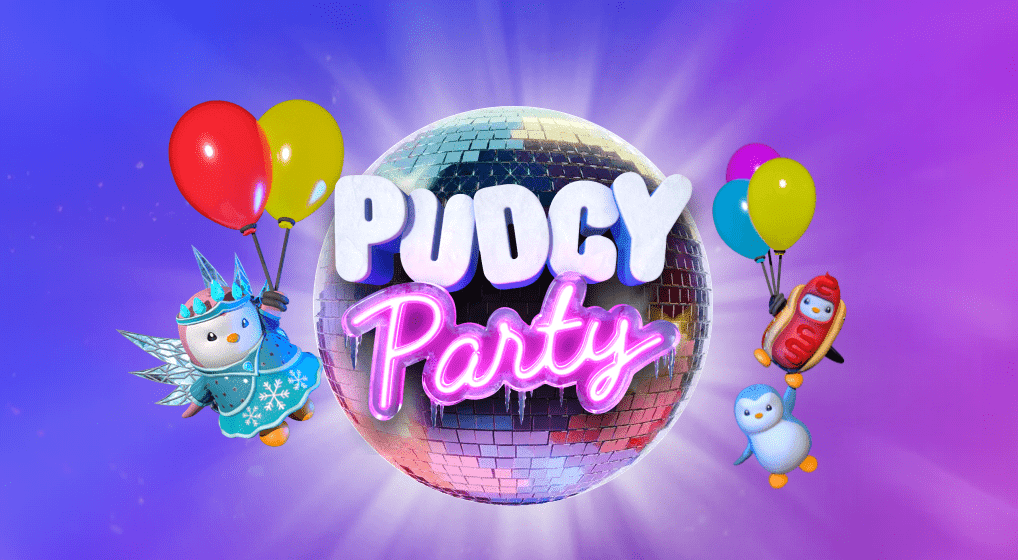
Pudgy Party is a globally launched Web3-powered mobile party-royale game from Pudgy Penguins and Mythical Games, available on iOS and Android. FYI, Pudgy Penguins is de-facto the most recognizable NFT brand to emerge from the last bull cycle. What began as a collection of digital penguins has expanded into toys, media, and now a game that bridges Web3 and mainstream entertainment. Most people in crypto call Pengu, the main character of the collection, the “face of crypto.”
Pudgy Party Gameplay
It throws up to 20 players into chaotic obstacle courses, elimination rounds, shrinking arenas, and timed races. Customizable penguin avatars, meme-inspired costumes, and optional NFT asset ownership add depth without forcing Web3 complexity on casual players. With seasonal events (first being Dopameme Rush) offering exclusive rewards, leaderboards, and fun-first gameplay, Pudgy Party aims to bridge the gap between Web2 accessibility and Web3 value.
The game is designed around accessibility. Pudgy Party runs smoothly on mobile devices, targeting a global audience beyond crypto-native users. The core loop is lighthearted, with players guiding Penguins through mini-games and competing to win the game. Collectibles, skins, and special in-game assets keep progression engaging. The mechanics focus on fun first, while blockchain features quietly support ownership and trading.
Web3 Integration: Pudgy Party NFTs
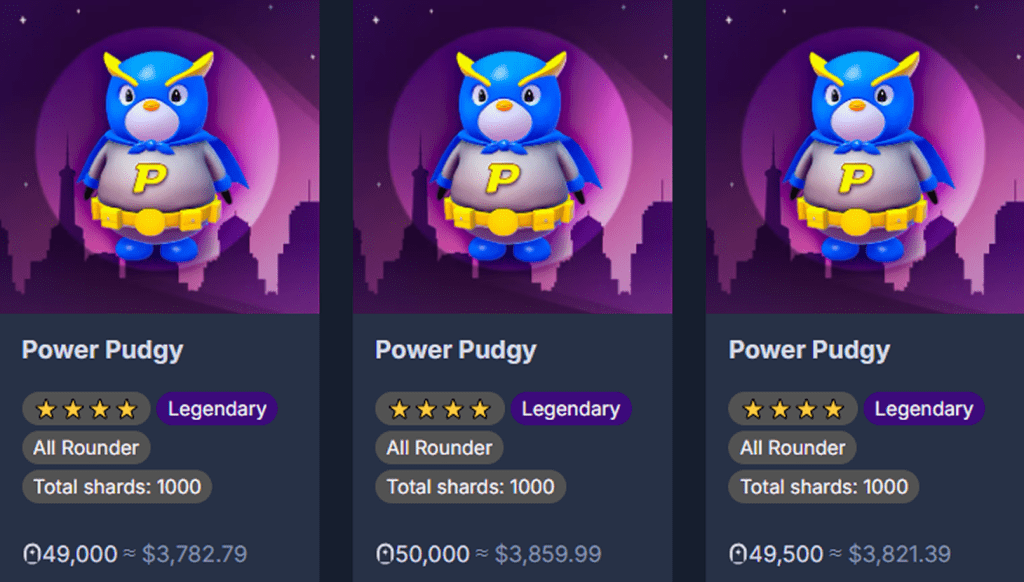
Until today, Legendary characters like Tim Cook, Ballerina Cappuccina, and Power Pudgy are NFTs that can be either earned or bought in the marketplace. While there’s not enough info around the supply of these specific characters, some are rarer than others. For example, Power Pudgy is a Comicon 2025 exclusive and only a few hundred people can own it. This NFT character has traded for up to $8,000 per piece on Mythical Markets. Tim Cook, on the other hand, can be earned by every player this season by completing missions, making the character less rare and expensive.
Pudgy Party Metrics
- Apple App Store (US): 4.9/5 rating from 962 reviews; category rank #47 in Racing.
- Google Play: 100,000+ installs, 4.6/5 rating from ~504 reviews.
- Global launch date: August 29, 2025, co-announced by Pudgy Penguins and Mythical Games.
The Influence of Pudgy Party on Web3 Gaming
Pudgy Party proves that Web3 gaming can scale beyond crypto-native circles. By prioritizing accessibility, leaning on a strong IP, and embedding ownership without overwhelming players, it has become one of the most important drops of the year. Pudgy Penguins have created the blueprint for future brands to use, and we’re talking about its whole IP, not just gaming.
Star Atlas: Web3’s No Man’s Sky
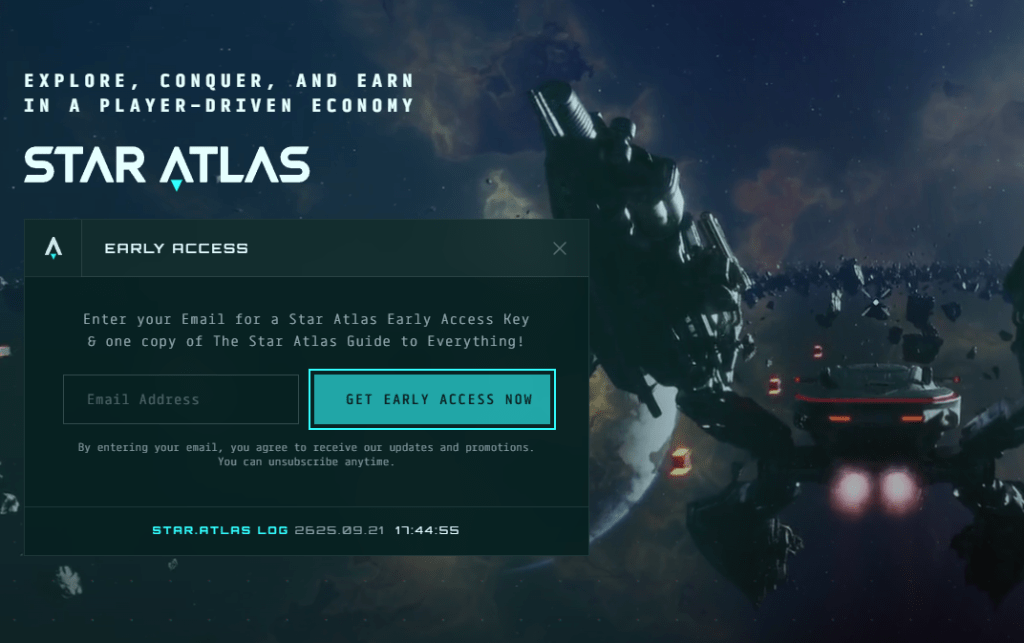
Star Atlas stands as one of the most ambitious projects in the history of Web3 gaming. Initially on the Solana blockchain, now migrating to their own SVM, z.ink, Star Atlas positions itself as a massive online metaverse where players explore space, form alliances, and compete for resources. Unlike casual Web3 games, Star Atlas aims for scale, depth, and persistence by combining high-end graphics with a decentralized economy and governance. By 2025, the game has matured into a functional MMO with an active community that blends gamers, investors, and builders.
Star Atlas Gameplay
Players can already spawn and fly their ships, including detailed interiors like the Pierce X6 or Fimble BYOS. In the early Galia build, you can pilot across open space with no loading screens and subwarp to planets. Fast-paced shooter modes such as Surge, team deathmatch, and gun game mix PvP with strategic “jetty boost” movement, while “dogfighting” mode pits pilots against waves of enemies solo or in co-op. Crew Packs act as in-game avatars, boost crafting speeds, and will eventually populate your ships as NPC crew.
Holosim, on the other hand, is Star Atlas’ browser-based gateway into its massive MMO RTS universe, designed to let players test and influence the game’s core economy before the full Epic Games Store release. Accessible at hollowosim.staratlas.com, Holosim offers free-to-play entry into SAGE Labs mechanics like mining, crafting, claim staking, and faction strategy.
Ships, crew cards, and resources held onchain can be deployed directly inside the simulation, giving pilots a taste of exploration and fleet management while earning items usable in future updates.
Star Atlas In-Game Economy
The in-game economy is entirely player-driven. Ships, land parcels, resources, and equipment exist as NFTs. $ATLAS, the native currency, powers transactions and rewards, while $POLIS functions as the governance token. Players who succeed in resource management or combat gain assets that can hold real value. This design transforms Star Atlas into an entertaining economic simulator where strategy translates directly into real ownership.
At the time of writing, $ATLAS is trading at $0.0009 with a market capitalization of ~$19 million. As for $POLIS, the token is trading at $0.08, with a market cap of ~$25 million.
DAO and Governance in Star Atlas
In Star Atlas, many major governance decisions, such as taxation, treasury use, and in-game policies, are handled via community voting through the $POLIS token DAO. While alliances and political mechanics are planned or emerging, not all gameplay rules or diplomatic actions are yet fully governed by decentralized voting. We must note that the game is still in Beta, so there’s still a long way to go.
Could Star Atlas Revive Web3 Gaming?
Star Atlas was one of the games that faced major backlash during the collapse of the Web3 gaming sector last cycle. However, they proved how resilient and dedicated they are to delivering a blue chip game within the crypto industry. Even now in its Beta version, it proves that Web3 games can aim for scale comparable to traditional MMOs.
It showcases how governance, player-owned economies, and blockchain infrastructure can create a universe that feels alive and community-driven. Star Atlas is trying to mix the best of both worlds, and we hope they achieve that goal.
Craft World: Web3’s Idle Mobile Game
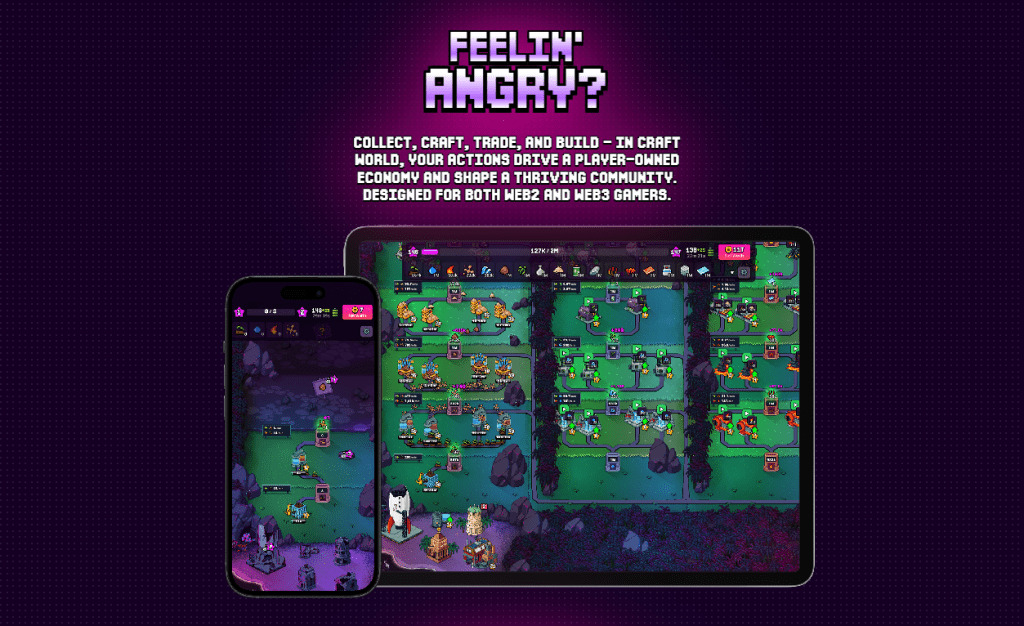
Craft World is a pixel-art web3 game set on a post-apocalyptic Earth. Players guide a tribe of dinosaur-like beings called Dynomites as they rebuild after an asteroid strike. Through casual mobile play with layered resource management, players gather and combine elemental resources such as Earth, Fire, Water and Air to construct buildings, complete communal projects called Masterpieces and work toward launching a rocket to leave the planet.
Officially known as Angry Dynomites Lab, Craft World gives players a seamless entry into blockchain gaming. Web2 players interact onchain through account abstraction without needing wallets or keys. Web3 users can connect directly with NFT-based Dyno characters and tokenized resources. The in-game economy supports real ownership, trading and onchain withdrawals, tying gameplay to tangible value.
Craft World Gameplay
The gameplay blends idle strategy, resource management, and collaborative construction into an engaging, mobile-first experience. Players take on the role of caretakers for the Dynomites as these elemental creatures must rebuild Earth after a global catastrophe. Gameplay revolves around collecting and refining resources across themed landplots: Earth, Water, Fire, and Air.
You begin with a basic Earth plot, where you mine raw materials like Earth and transform them into advanced resources like Mud, Clay, and Brick using upgradable factories. As you level up, you unlock new landplots and gain access to more complex resource chains, including Fire and Water elements (boosted by NFT ownership). The second landplot introduces strategic customization, letting you choose which resources to produce and where.
Energy acts as a soft gate, limiting how often you can start or restart production, encouraging check-ins without punishing idle players. The true heart of Craft World lies in Masterpieces: massive community-driven projects, such as building a rocket. Contributing resources earns rewards and fuels a shared sense of progression. At the end of the day, both gaming and crypto are all about community.
Web3 Integration: Angry Dynomites NFTs
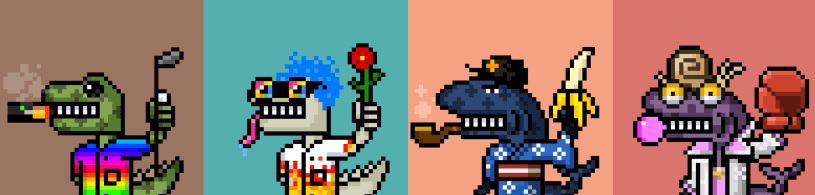
Angry Dynomites uses Dyno NFTs as a core Web3 integration in Craft World. Each Dyno NFT produces elemental‑tokens on a regular basis, which players can use in‑game to upgrade factories, craft materials, or contribute to the community’s Masterpieces. At the time of writing, only Fire and Water Dyno NFTs are live onchain. Earth and Air types are announced to come later. The NFTs’ element production contributes to the shared economy, enabling players who hold these NFTs to generate resources daily. The Fire Dyno collection has a total volume of 260 ETH with a floor price of 0.399 ETH, while the Water Dyno has a floor price of 0.149 ETH and a total volume of 170 ETH.
What is Craft World Doing Right?
Craft World has the potential to become one of the biggest Web3 games in the industry for several reasons. The way they blend traditional gaming and blockchain technology should serve as a blueprint for every game that wants to attract the global gamer population. Through account abstraction, Craft World hides the complexities of crypto. Although every in-game resource is tradable, the end user doesn’t have to understand DeFi to participate in the game as everything is built-in.
You can trade resources in an open market within the game, swap it for Dyno Coins, and so forth. The game has a long way to go, obviously, however, the foundation they set is stronger than most of its competitors.
Other Notable Web3 Games in 2025
Parallel
Parallel is a sci-fi trading card game built around NFTs and deck strategy. Players choose from one of several “Parallels” (factions), collect cards as NFTs or in-game rewards, and battle in custom decks of 40 cards. The artwork, sound design, and faction variety earn praise. The game supports real ownership of cards, has a competitive ranking system, and recently expanded onto platforms like the Epic Games Store to reach wider audiences.
On the downside, Parallel has a steep learning curve for new players. Some powerful cards or NFT-packs could give unfair advantage to users willing (or able) to spend more. RNG in card draws and deck matchups can lead to frustrating losses early in a match.
Pixels
Pixels brings a pixelated farming simulator format into Web3. Players cultivate crops, trade resources, and interact with a community-driven economy. It thrives as a social game, where users hang out in digital environments while completing casual tasks. In 2025, Pixels serves as a welcoming entry point for newcomers who prefer lighter gameplay over competitive formats.
The game is free to play and has several mini-games to explore within the game. It is also considered a play-to-earn game as players can earn $PIXELS while playing.
Blocklords
Blocklords introduces a strategy-driven experience set in a medieval world. Players assume roles as farmers, warriors, or rulers, shaping kingdoms through diplomacy, conquest, and resource management. Every character is an NFT with unique traits, creating a dynamic ecosystem where decisions ripple across the entire game world.
The focus on long-term progression and emergent storytelling sets Blocklords apart. By 2025, it has grown into one of the most sophisticated strategy games in Web3, appealing to players who enjoy grand narratives and political intrigue. While still in Beta, Blocklords is a game worth trying. They are currently focused on strengthening the fundamentals, including the in-game economy and gameplay.
Why Do Web3 Games Matter?
Together, these titles showcase the diversity of Web3 gaming. They span multiple genres and prove that blockchain integration does not lock developers into one format. Each of these games contributes to a growing ecosystem where players expect both quality gameplay and verifiable ownership. The variety signals that Web3 gaming is not a niche experiment but a sector capable of supporting multiple audiences at once.
We must note that gaming does not need the blockchain element to exist as it has existed for decades without it. However, blockchain and crypto add an economic and ownership layer that traditional games cannot achieve otherwise. In crypto, after all the hype, speculation, and noise, real builders emerge, and that is what’s happening to web3 gaming right now.
Challenges Ahead for Web3 Games in 2025
Even as Web3 games gain traction, regulation remains one of the hardest challenges to overcome. Authorities are still debating if in-game tokens count as securities, utilities or collectibles. In the U.S., the SEC is still not fully clear on whether NFTs generally qualify as securities. Some groups are pushing for guidance so that NFTs with utility or consumptive value might avoid securities classification if certain conditions are met. Meanwhile Europe’s MiCA framework is clarifying when crypto assets are financial instruments under EU law.
Because rules differ by country, developers trying to build global economies must navigate overlapping jurisdictions, licensing, tax and consumer protection laws. Uncertainty scares off some investors and complicates publishing deals.
Moving on, monetization and play to earn mechanisms can easily overshadow gameplay. Players want fun first, but games need revenue to sustain development. When blockchain mechanics are too visible or seem like ways to squeeze money, players push back as they did in 2021. On the other hand, games that embed the economy naturally or make blockchain less obvious tend to be better received. That said, finding that balance is hard, but those teams who find it are likely going to succeed.
Blockchains like Ethereum, Solana, and even Ronin still have limits: transaction speed, latency, consensus delays and fees all matter. For big multiplayer or real-time games, even small delays or high gas fees degrade the experience by a lot.
Solutions like sidechains, layer 2s, hybrid models, and even layer 3s help, but those introduce trade-offs: security, complexity, sometimes centralization.
The Future of Web3 Gaming in 2025
In 2025, blockchain-based games are no longer side projects or based on speculation and hype. Titles like Pudgy Party, Star Atlas, Craft World, and Blocklords demonstrate that Web3 can support polished gameplay, thriving communities, and sustainable economies – the new gen, if we may. Each represents a different path forward: casual accessibility, immersive scale, and viral culture. For searchers looking up “best Web3 games to play in 2025,” these names consistently dominate.
What sets this new generation apart is their ability to blend entertainment with blockchain utility without overwhelming players. Pudgy Penguins turned cultural relevance into a gaming gateway. Star Atlas set the foundation to create a living, breathing universe governed by players themselves. Craft World proved that Web3 games can integrate crypto seamlessly while keeping the user experience top notch.
The next phase will test whether Web3-native IPs can rival traditional giants. With esports integration, retail crossovers, and mainstream media adoption, these projects are building brands that extend far beyond the blockchain. The line between gaming, ownership, and culture is fading. For those asking “will Web3 games replace traditional gaming,” the honest answer is probably not. We either have traditional games start integrating crypto in their products or we see both traditional and Web3 games co-exist and live in parallel.
Final Thoughts on Web3 Gaming
Today, Web3 gaming stands way better than at any time since the 2021 boom. Instead of rushing out token launches, most leading studios now treat blockchain as a background layer. This shift has produced playable, mobile-friendly titles with active communities. Players still debate which approach works best, but the conversation has moved from “are these games even worth my time?” to “which one should I try first?.”
Progress does not mean all problems are solved. Scalability remains a challenge for large multiplayer worlds. Regulatory clarity is still missing, which makes cross-border economies risky. Misaligned incentives or aggressive monetization can also undermine trust, especially among traditional gamers who still remember the collapse of early “play-to-earn” systems.
One clear lesson is that successful projects build around recognizable IP, clear game loops and smooth onboarding. Pudgy Penguins used its brand to launch a party game on mobile. Star Atlas is slowly delivering a massive online universe with a governance layer. Craft World hides crypto complexity while focusing on gameplay and collabs. Parallel and Blocklords experiment with collectible cards and grand strategy.
Looking ahead, Web3 titles will not replace conventional games but can complement them. Some traditional publishers are already experimenting with tokenized assets while Web3 studios aim to reach mainstream quality standards. The real opportunity lies in combining compelling gameplay, fair economies and inclusive access so that blockchain becomes a benefit rather than a pain. If developers keep prioritizing fun and transparency, Web3 gaming can mature into a credible part of the global industry sooner than we think.
Frequently Asked Questions (FAQs)
What is a Web3 game?
A Web3 game is a video game that integrates blockchain technology. Players own in-game assets such as characters, skins, or items through NFTs or tokens. Unlike traditional games where assets stay locked inside servers, Web3 games allow transfer, trade, or sale on open markets. This ownership model is what separates them from standard Web2 titles.
Can I play Web3 games without crypto?
Yes. Many leading games in 2025, such as Pudgy Party and Craft World, allow free-to-play entry. Players can sign up with social logins or fiat payments without touching wallets or tokens. Blockchain integration happens in the background, so players who want to stay casual can do so, while others can dive deeper into asset ownership.
Are Web3 games free-to-play?
Most successful Web3 games today follow a free-to-play model. Instead of requiring upfront NFT purchases, they let players start for free and offer optional assets for customization or advanced gameplay. This design helps onboard a broader audience and keeps adoption growing.
Which Web3 game is best for beginners?
The best Web3 game with the easiest entry point for beginners is Pudgy Party, with Craft World and Pixels just behind. They run smoothly on mobile and web browsers, offer clear mechanics, and require no blockchain expertise.
Will GTA 6 have cryptocurrency?
Probably not. There are rumors circulating that GTA 6 might integrate cryptocurrency within the game, especially the online game mode. However, despite it being the perfect game to integrate crypto into, it is highly unlikely that GTA 6 will have cryptocurrency in it before we have clear global regulations.
Are Web3 games a good investment?
It depends. Web3 games blur the line between entertainment and finance, but their tokens remain speculative. Assets can lose value quickly if demand falls. While some players profit from trading NFTs or tokens, the safer approach is to play for enjoyment and treat ownership as a bonus.
Will Web3 games replace traditional gaming?
Not in the near term. Traditional publishers like Sony, Microsoft, and Nintendo still dominate global gaming. However, Web3 games are carving out their own space by offering something new: digital ownership and community-driven economies. Instead of replacing traditional titles, they complement them.
What are the risks of Web3 gaming?
Risks include speculative economies, regulatory changes, and technical barriers such as network congestion. Players should also be aware of scams or poorly designed token models. The safest way to enter is through established titles with proven track records.
How do NFTs work in Web3 games?
NFTs act as digital certificates of ownership for in-game items. They prove scarcity and allow trading across platforms. In games like Illuvium or Blocklords, NFTs represent characters or land. In casual titles like Angry Dynomites, they serve as skins or collectibles. Their utility depends on the design, but the core idea is verifiable ownership that extends beyond a single game’s servers.