


 Buy a Licensed Company
 Explore VASP Data
 Talk to an Expert

 News Room
Admin Coincub
US Derivatives Regulator Tells Prediction Markets to Stop Blocking States
The CFTC says federally regulated prediction markets generally cannot block traders by state and gave exchanges 30 days to comply or explain. The guidance follows a court order against Kalshi.
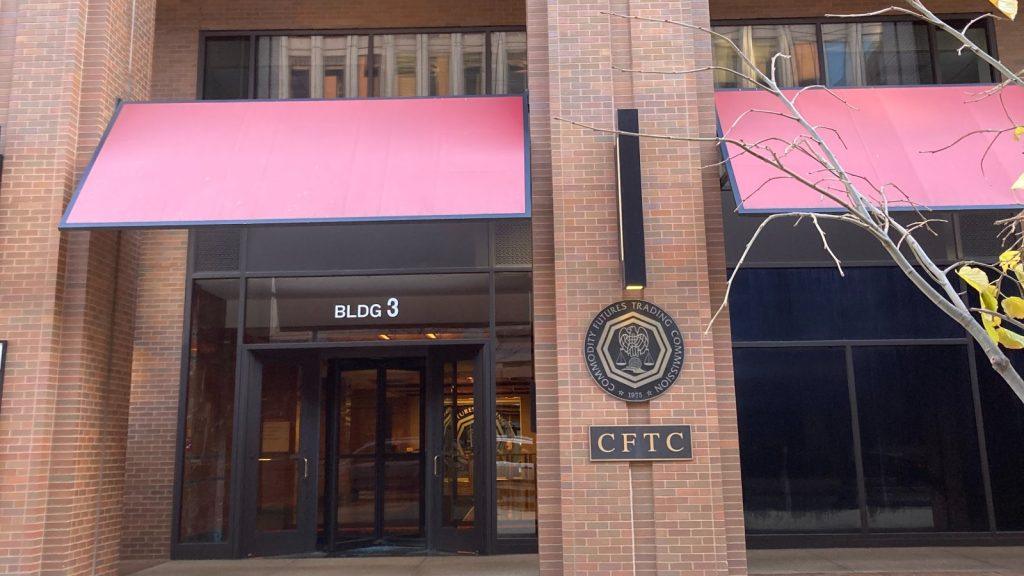
The Commodity Futures Trading Commission (CFTC), the US derivatives regulator, said federally regulated prediction markets generally cannot block traders by U.S. state, and gave exchanges 30 days to lift such limits or explain why they cannot.
- The CFTC gave exchanges 30 days to end state-by-state geographic restrictions or explain why compliance is not feasible.
- Exchanges must also make sure brokers and other intermediaries do not impose their own geoblocks.
- A federal judge ordered Kalshi on November 4 to block sports contracts on the lands of California tribes that sued it.
What the CFTC said about geographic restrictions
On Thursday, November 5, the CFTC issued an interpretation of its impartial access rule. The rule requires designated contract markets (DCMs), the exchanges the CFTC oversees, to give eligible traders “competitive, open, fair, and impartial access.”
DCMs “must cease domestic geographic restrictions that violate the Impartial Access Requirements within 30 days,” the agency said. Otherwise they must explain to the CFTC’s Division of Market Oversight why compliance is not feasible.

CFTC Chairman Michael Selig said derivatives markets must operate on a uniform basis at a national scale to meet the purposes of the Commodity Exchange Act. He said geographic access restrictions are inconsistent with those purposes.
Who is affected and why the agency objects
The same 30-day window applies to intermediaries, such as brokers that route customers to an exchange. DCMs should ensure those firms do not impede impartial access, or explain why they cannot. The CFTC said it will consider the facts and circumstances of any particular case in connection with any potential action.
The six-page interpretation says federal law and CFTC rules generally do not let a DCM limit access based on where an eligible participant is in the United States. It takes effect when published in the Federal Register.
The agency listed harms. A trader who opens a position in an allowed state and travels to a blocked one could be unable to manage it or meet margin calls. Blocking states can also fragment liquidity and widen spreads.
The CFTC said a contract on whether a home team advances to its playoffs could lose liquidity if that team’s region were excluded. It also said the most informed election trading may come from a state or local basis. The interpretation does not mention court orders, state regulators or tribes.
Court orders and state actions against Kalshi
On November 4, U.S. District Judge Jacqueline Scott Corley granted a preliminary injunction in a suit by California tribes including Blue Lake Rancheria. It bars Kalshi, a US prediction market, from offering “any sports contracts” on the tribes’ Indian lands. The tribes must send Kalshi maps of those lands by November 13, and Kalshi must report on compliance within 21 days.
In Michigan, a state-court injunction already requires Kalshi to geofence Michigan users, with violations carrying a $500,000 daily fine. Courts have split on the question. The Ninth Circuit, in Kalshi’s Nevada case, rejected the argument that state blocks and the federal access rule must conflict, calling it a “false, all-or-nothing proposition.”
The CFTC sued Utah in October to stop it from enforcing gambling laws against federally regulated prediction markets.
Why states and tribes are fighting prediction markets
Kalshi and other prediction markets say their sports contracts are federally regulated derivatives, so only the CFTC can police them. States and tribes see the same contracts as sports betting, which they license and tax under their own laws. Kalshi’s sports contracts are blocked by court orders in Michigan, Nevada and Washington, and Kalshi pulled them from Utah after the state filed criminal charges.
The new guidance backs the platforms’ reading of federal law and reaches beyond Kalshi. Sportsbook operators such as DraftKings, FanDuel and Fanatics also keep their event contracts out of some states after state gaming commissions threatened their licenses, and the rule covers firms that act as brokers to other exchanges. Kalshi said it is evaluating the guidance.
What is still unclear
The guidance lets exchanges explain why compliance is not feasible within 30 days. It does not say how the CFTC would treat such an explanation, including from an exchange under a court-ordered geoblock.