


 Buy a Licensed Company
  Explore VASP Data
  Talk to an Expert

 Bonniey Josef
Bonniey is a Psychologist and Crypto Copywriter with extensive experience in writing content that educates and entertains.
Bonniey Josef
Bonniey is a Psychologist and Crypto Copywriter with extensive experience in writing content that educates and entertains.
Simple Ways to Sharpen Your Reflexes While Gaming
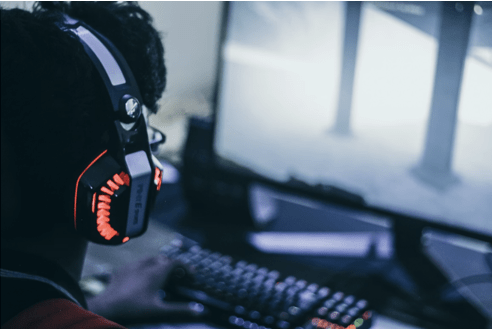
Your reaction time is probably costing you more kills than you think.
The average person reacts to visual stimuli in about 250 milliseconds. Professional gamers? They’re clocking in at 100 milliseconds or less. That 150ms gap is the difference between clutching a round and spectating your teammates.
But here’s the thing most players get wrong: they confuse reflexes with reaction time, and that confusion leads them down the wrong training path entirely.

What Gaming Reflexes Actually Are (And Why They Matter)
True reflexes are involuntary responses handled by your spinal cord. Think knee-jerk reactions. They happen in 50-100 milliseconds without your brain getting involved at all.
What matters in gaming is reaction time—the brain-mediated process from seeing an enemy peek to clicking their head. Your visual cortex processes the stimulus, your prefrontal cortex makes a decision, and your motor cortex executes the action.
Research shows action video game players respond 11% faster than non-gamers across various tasks, and they do it without sacrificing accuracy. Both groups maintain around 92.7% accuracy, but gamers are just quicker.
Different games demand different reaction types. Fast-paced shooters like Valorant and CS2 emphasize simple reaction time—one stimulus, one response. Tactical games like Tarkov or Siege add cognitive load with multiple decision points, which naturally slows your reaction time to 200-300ms even for experienced players.
The gap between casual and competitive players is massive. Non-gamers average 346ms visual reaction time. Regular gamers drop to 299-304ms. Competitive players can hit that 100ms range through consistent training.
Hardware Makes More Difference Than You Think
You can’t train your way around bad equipment.
A 60Hz monitor introduces motion blur and input lag that can add 10-20ms to your effective reaction time. Upgrading to 144Hz or 240Hz cuts that lag by half or more. It’s not about seeing smoother gameplay—it’s about reducing the time between your input and what appears on screen.
Your mouse matters too. High polling rates (1000Hz minimum, 8000Hz for serious competitors) minimize the delay between moving your hand and the cursor responding. Pair that with a DPI between 800-1600, and you’ve eliminated another 5-15ms of potential lag.
Network latency is the silent killer. Keep your ping under 50ms. A stable connection beats a VPN here—adding encryption can tack on another 20-50ms of roundtrip time, which is unacceptable in competitive scenarios.
Even your desk setup affects performance. Proper wrist alignment and arm positioning reduce fatigue, which can slow your reactions by 10-20% over long sessions.
Training Methods That Actually Work
Playing action games is training in itself. Studies confirm that 20 hours of action game play reduces reaction time by 13%, compared to just 6% for control groups. The improvement carries over to other tasks—motion discrimination, task-switching, visual search.
Aim trainers like Aim Lab and Kovaak’s work because they isolate specific reaction patterns. Visual and aim reaction time improve more than auditory reaction time with practice, which makes sense given how much visual processing dominates most shooters.
The key is consistency. Professional players dedicate 1-2 hours daily to deliberate practice. That’s not just playing ranked—it’s running specific drills, reviewing VODs, and identifying exactly where their reaction time bottlenecks.
Muscle memory requires serious repetition. Around 10,000 reps for a movement to become proceduralized. That’s why pros spend 10-15 minutes warming up on aim maps before matches. They’re not practicing—they’re activating neural pathways they’ve already built.
Training sessions should be focused. Forty-five to ninety minutes of concentrated practice beats three hours of unfocused grinding. Your brain needs breaks to consolidate what it’s learning.
The Physical Side of Fast Reactions
Sleep deprivation can add 50-100ms to your reaction time. Seven to nine hours isn’t optional if you’re trying to compete at a high level.
Caffeine helps, but there’s a sweet spot. 100-200mg (about one strong coffee) can boost alertness and shave 5-10ms off your reactions. More than that and you’re just adding jitters without additional benefit.
Hydration matters more than most players realize. Even mild dehydration can slow reactions by 20ms. Keep water nearby during long sessions.
Regular exercise, particularly cardio and hand-eye coordination drills, improves cognitive processing speed. You don’t need to be an athlete, but moving your body helps your brain process information faster.
Stress management is underrated. Elevated cortisol from pressure situations can slow reaction time by 10-15%. Learning to maintain composure under pressure isn’t just mental—it’s physiological.
Game-Specific Applications
In Call of Duty’s close-quarters battles, time-to-kill can be under 100ms. That demands 144Hz+ refresh rates and practicing flick shots religiously. The Warzone meta changes, but reaction fundamentals don’t.
Tarkov requires threat assessment before speed. Visual reaction time improvements help most here—identifying if that shadow is a player or environment before committing to a peek.
Siege X rewards predictive play. Pre-aiming common angles can reduce your effective reaction time need by 50-100ms because you’re already positioned correctly.
CS2 professionals maintain 150ms average reaction times, but they combine that with economy knowledge and positioning that minimizes pure reaction scenarios. The pistol rounds are where raw speed matters most.
Valorant’s ability meta adds complexity, but the fundamental gunplay still requires sub-200ms reactions at higher ranks. Sound cues help, and auditory reaction time stays relatively stable regardless of practice.
Protect Your Progress
All this training means nothing if you lose your account.
As anti-cheat systems evolve—Ricochet’s latest updates in early 2026 have been particularly aggressive—competitive players need to think about account security. Hardware bans can wipe out months of skill development in an instant.
For players investing serious time into improving their reflexes and climbing ranks, protection tools have become standard practice. The best HWID spoofer and changer for PC games offers peace of mind for uninterrupted practice sessions, letting you focus on what matters: getting faster.
The competitive community increasingly views legitimate advantage tools—from aim trainers to account security—as necessary infrastructure for serious improvement.
Common Mistakes to Avoid
Overtraining kills progress. More than two hours of intensive practice in one session spikes fatigue and can slow your reaction time by 20%. Diminishing returns hit hard and fast.
Constantly changing mouse sensitivity disrupts muscle memory. Pick settings and stick with them for at least a month before adjusting.
The myth that higher sensitivity equals faster reactions has probably cost more players more kills than anything else. Accuracy matters. Pro players in CS2 and Valorant typically use effective DPI between 200-400 because precision beats raw speed.
Neglecting recovery is the fastest way to burnout. Weekly rest days aren’t lazy—they’re strategic.
Measuring Progress
Tools like Human Benchmark and Aim Lab’s built-in testing give you baseline numbers. Professional-level performance sits around 150-200ms for most visual tasks.
Track weekly averages, not daily fluctuations. Sleep, stress, and a dozen other factors create natural variance. The trend line matters, not individual sessions.
Your rank serves as a proxy metric. Consistent reaction time improvement should correlate with climbing the ladder, assuming you’re also working on game sense and positioning.
Expect 10-13% improvement over your first 20 hours of dedicated training. After that, gains come slower but compound over months of consistent work.
The data is clear: reaction time is trainable, hardware matters, and the players putting in deliberate practice separate themselves from those just grinding ranked queues. Speed without accuracy is useless, but precision at 100ms beats precision at 250ms every single time.