Buy a Licensed Company
  Explore VASP Data
  Talk to an Expert
 Buy a registered Canadian MSB

Ellipal stands out for offering top-tier security, usability, and strong advantages over competitors, with some limitations on transparency.
| Founded | 2018 |
| Headquarters | Hong Kong |
| Wallet Type | Cold wallet / Hardware |
| Models Available | Ellipal X Card, Ellipal Titan 2.0 |
| Chains Supported | Bitcoin, Ethereum, BNB, XRP, Litecoin, Dogecoin, Cardano, 10,000+ tokens |
| Connectivity | Fully air-gapped: QR code only; no USB, Bluetooth, Wi-Fi |
| Backup & Recovery | BIP39/44 seed phrase; supports up to 10 wallet duplicates |
| Companion App | Mobile app for iOS and Android |
| Customer Support | Yes; official support via app and website |
| Deposit/Receive Methods | On-chain crypto transfers, no fiat deposits |
| Price & Fees | $99-$169 |
As cryptocurrency adoption grows, so do the risks of theft, scams, and hacks. Storing digital assets securely has become one of the most pressing concerns for crypto enthusiasts. While hot wallets offer convenience, they are often connected to the internet, making them vulnerable to cyberattacks. Hardware wallets provide an alternative by keeping private keys offline, minimizing exposure to external threats.
Hardware wallets are physical devices designed to store your crypto private keys in cold storage securely. They act as a digital vault, allowing users to authorize transactions without exposing sensitive data to the online environment. For serious crypto holders, a hardware wallet is not just a luxury but a necessity.
Cold wallets provide peace of mind to users who seek maximum security. Unlike software wallets that live on potentially compromised devices, hardware wallets operate in isolation, ensuring critical operations occur offline. One such wallet is the Ellipal Titan wallet, a crypto hardware wallet known for being the first air-gapped cold wallet. Before we go more in-depth on Ellipal, its features, products, and vision, let’s discuss the key features of a hardware wallet. Its counterpart, X CARD, offers an offline Starter setup as an NFC cold wallet.
There are various models available in the market, each with its own set of features and security protocols. Some prioritize ease of use, others focus on open-source transparency, while a few aim to integrate biometric authentication or fully air-gapped systems.
Visit Ellipal
When evaluating hardware wallets, it’s essential to consider the following features:
Additional factors may include the frequency of firmware updates, community support, multi-sig compatibility, and integration with DeFi platforms or Web3 dApps. Some users may also prefer wallets that offer support for NFTs or allow direct token swapping.
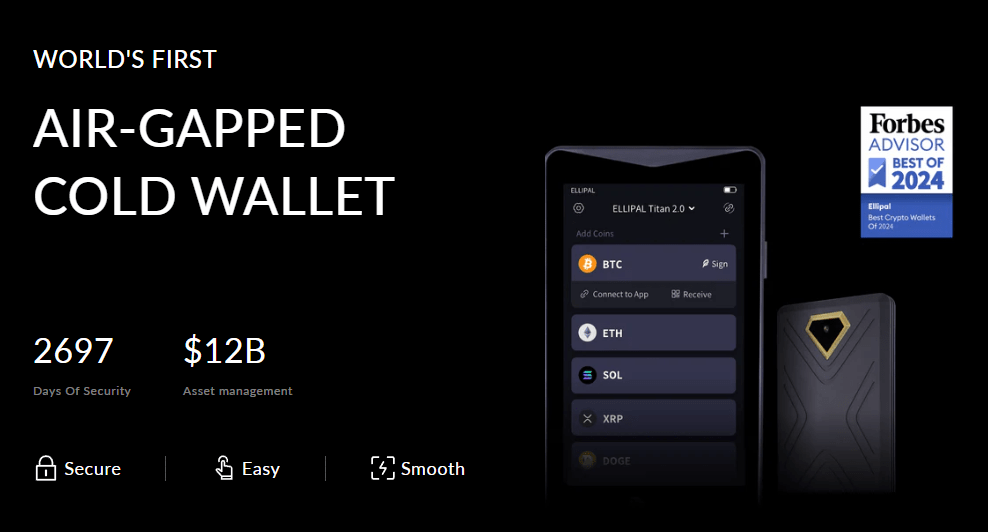
Ellipal has rapidly gained attention for its unique air-gapped design and mobile integration. Unlike traditional hardware wallets that rely on USB or Bluetooth connections, Ellipal embraces complete network isolation. This zero-connectivity model means your private keys are never exposed to the internet, making it one of the most secure options for cold storage available today.
The company’s focus on usability and portability makes Ellipal especially appealing for mobile-first users and those who value a blend of top-tier security with modern convenience. Let’s break down what makes Ellipal a top choice in the hardware wallet market.
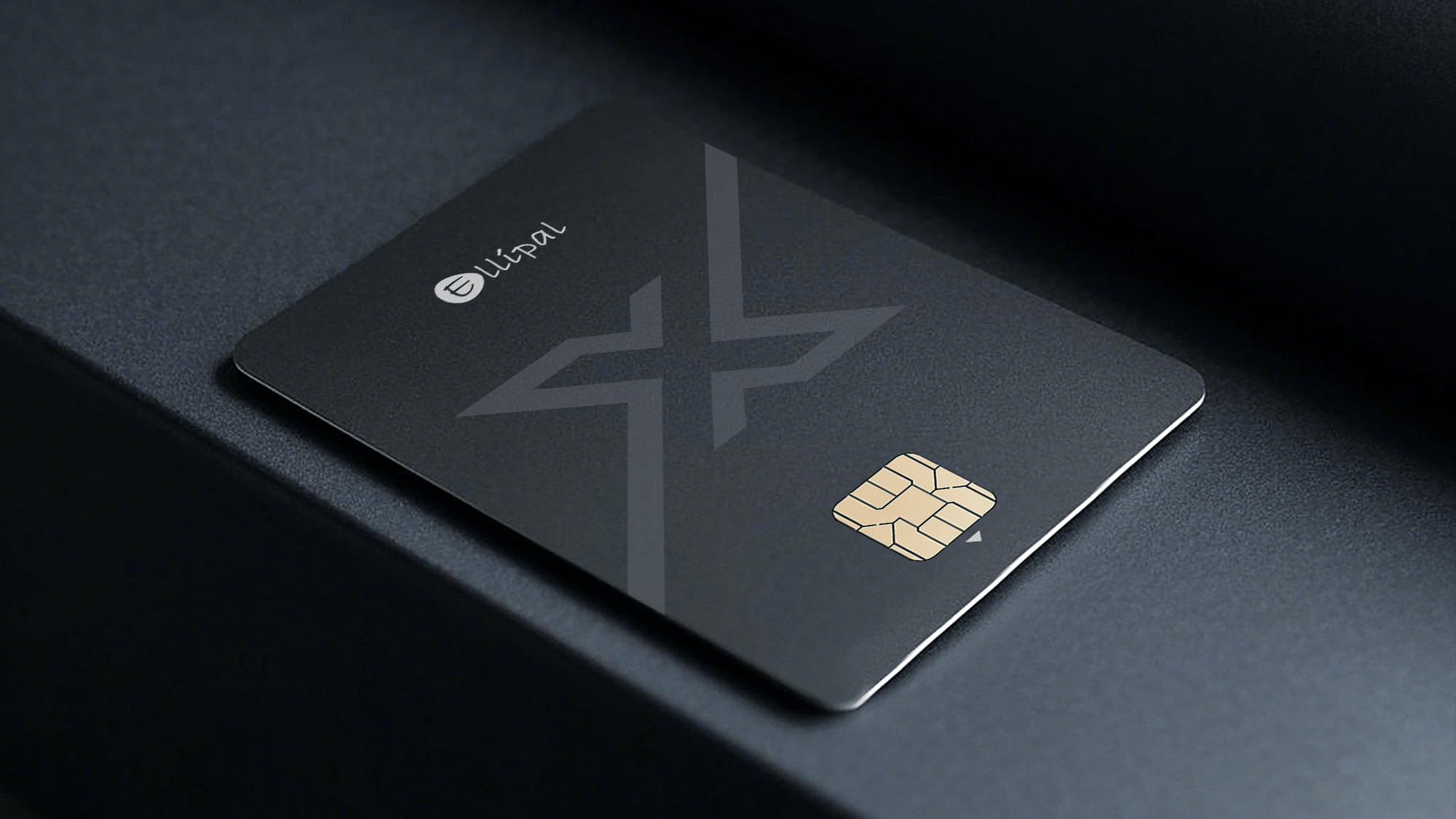
The ELLIPAL X Card introduces a new level of practicality in crypto cold storage. Its slim, card-sized form factor makes it convenient for everyday use while maintaining the highest standards of offline security. It allows users to manage, swap, and hold over 10,000 tokens, including significant assets like BTC, USDC, and SOL.
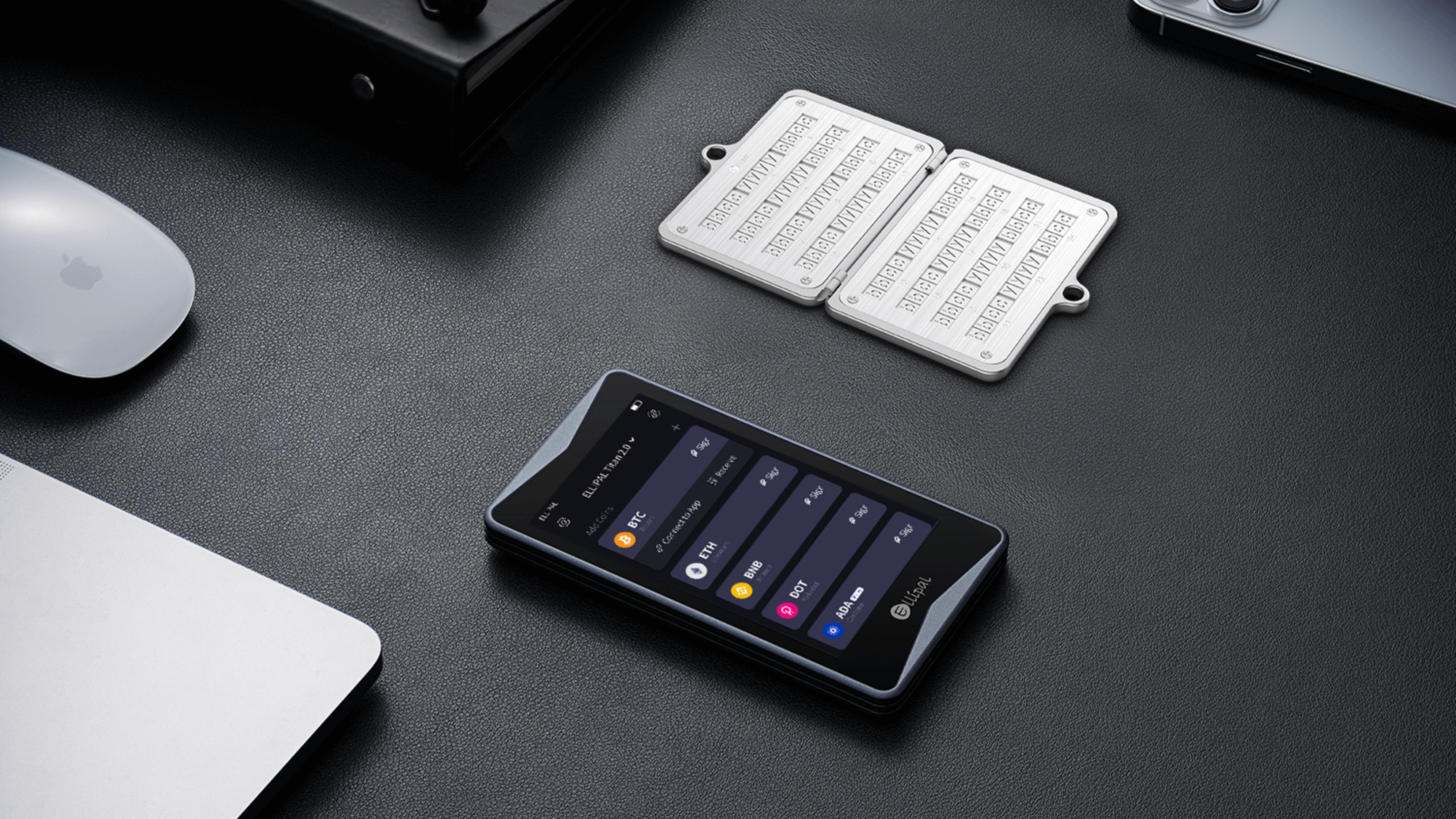
Built for users who demand maximum control and security, the ELLIPAL Titan 2.0 is a robust hardware wallet offering enterprise-grade protection for personal use. Its rugged design, large display, and advanced chip architecture is tailored for long-term holders, institutional users, and security-conscious individuals.
Like the X Card, the Titan 2.0 uses QR codes for signing transactions, eliminating the need for internet connections. The wallet remains completely offline at all times. This approach helps prevent attacks from malware, keyloggers, and network-level threats.
The device is built around a CC EAL5+ security chip and reinforced with a full metal sealed body. This protects against physical tampering, side-channel attacks, and supply chain compromise. If tampering is detected, the Titan 2.0 will automatically wipe all data.
Its large 4-inch touchscreen makes navigation intuitive, and users can clearly view every transaction before signing. This makes it easier to spot phishing attempts or false data.
Titan 2.0 supports multiple seed phrases and private key accounts, allowing you to manage several wallets on a single device. It even includes a hidden secondary wallet with separate passphrase protection for high-risk scenarios.
For users dealing with significant crypto holdings or who require multi-level defenses, the Titan 2.0 offers a comprehensive solution that’s hard to match.
Let’s examine how Ellipal stacks up against other popular wallets:
Ellipal and Ledger Nano X are both popular hardware wallets, but they differ in key areas, including security, usability, and features.
Ledger Nano X connects through USB and Bluetooth. These connections, while convenient, create possible remote attack vectors. Ellipal eliminates this risk by being fully air-gapped. It does not use USB, Wi-Fi, or Bluetooth. Communication is limited to QR codes, thereby reducing the surface area for remote threats. Ellipal also includes automatic self-destruction if tampered with. Ledger does not offer physical tamper protection.
Ledger uses two physical buttons and a small screen. This makes navigation slower and less intuitive. Ellipal features a full touchscreen. Users can navigate menus, sign transactions, and view details more easily and quickly.
Both devices support a wide range of cryptocurrencies. Ellipal tends to add support for new tokens more quickly. This is useful for users who invest in emerging projects and want fast access to their holdings.
Ledger Live is optimized for desktop. It does offer a mobile version, but its core experience is better suited to computers. Ellipal’s app is designed for mobile from the start. It works smoothly with the wallet and allows users to manage assets without switching devices.
Ellipal includes a system that wipes data if the device is opened or tampered with. This protects sensitive keys in case of physical theft. Ledger lacks this level of hardware protection.
Overall, while Ledger Nano X is a common hardware wallet, Ellipal offers stronger physical security and better usability for mobile users.
Ellipal and Trezor Model T are well-known hardware wallets, each offering distinct approaches to security, design, and usability.
Trezor Model T connects via USB and lacks native air-gap protection. This creates potential exposure to malware or network-based attacks. Ellipal operates fully air-gapped. It has no ports or wireless connectivity and communicates only through QR codes. This design sharply reduces remote attack surfaces.
Ellipal also includes automatic self-destruction if the device is physically tampered with. Trezor does not offer this feature. Both wallets support BIP39 for key recovery, but Ellipal’s focus on tamper resistance and isolation provides a stronger security layer for users storing high-value assets.
Both devices feature full-color touchscreens. Trezor has a compact plastic body. Ellipal’s metal, industrial-grade casing offers greater physical durability and resistance to forceful intrusion. This makes it more suitable for environments where physical security is a concern.
Firmware is another key difference. Trezor’s open-source firmware allows public code review and external auditing. This appeals to users who value transparency and community trust. Ellipal’s firmware is not fully open-source. Instead, it focuses on preventing any external access by keeping the system completely sealed and offline.
Trezor Suite is a desktop-first application. It offers robust functionality but is less optimized for mobile users. Ellipal’s app is mobile-native, allowing full wallet management from a smartphone with no desktop required.
Overall, while Trezor offers open-source transparency, Ellipal provides stronger physical isolation, tamper resistance, and mobile usability.
Ellipal and Keystone are both air-gapped hardware wallets that prioritize security through QR code communication. While they share some core features, they differ in execution, design, and usability.
Both wallets use QR codes for data transmission, avoiding USB, Wi-Fi, or Bluetooth. This air-gapped approach reduces the risk of remote attacks. However, Ellipal provides a smoother experience through tighter app integration and a more intuitive QR scanning process. Its mobile app connects seamlessly with the wallet, making transactions faster and easier for everyday users.
In terms of tamper protection, Ellipal uses an all-metal unibody design that resists physical force. It also includes a self-destruct mechanism that wipes all data if the device is physically opened. Keystone uses a modular plastic body and lacks hardware-based intrusion detection, which may leave it more vulnerable in case of theft or tampering.
Ellipal’s mobile app is more developed, offering built-in support for staking, trading, and portfolio management. Keystone supports third-party apps like MetaMask and Keystone Companion, but the setup and switching process is less streamlined.
Portability is another area where Ellipal holds an edge. Its design is more compact, especially with the Ellipal Titan Mini and X Card models, which are built for mobility. Keystone, particularly in its standard configuration, is bulkier and less convenient to carry daily.
Overall, while both wallets follow air-gap principles, Ellipal stands out with better physical protection, smoother app integration, and a more portable design.
Ellipal is well-suited for users who demand strong security and reliable performance without giving up ease of use. It is designed to serve a wide range of individuals and institutions who value both protection and convenience.
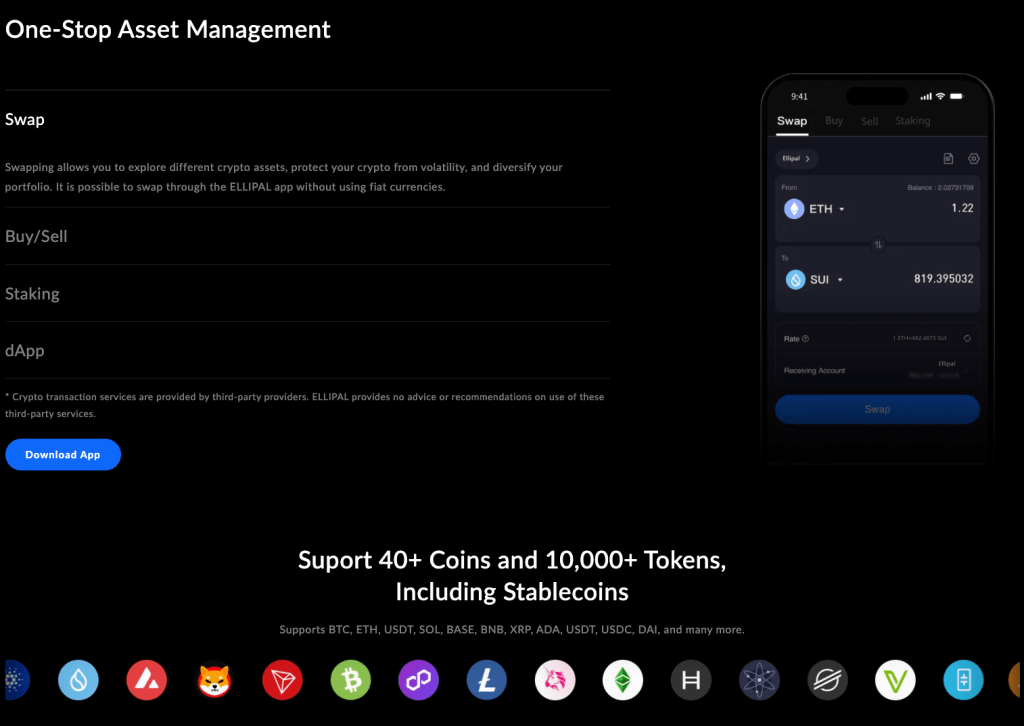
It is an ideal choice for users who prioritize maximum security, especially those who want to avoid any reliance on USB, Bluetooth, or Wi-Fi connections. Ellipal’s fully air-gapped system, which operates solely through QR code communication, provides a high level of isolation from network-based threats.
Crypto investors with large and diverse portfolios will benefit from Ellipal’s broad token support and frequent firmware updates. The device is built to handle a wide variety of altcoins, making it a good fit for users who actively engage with multiple blockchain ecosystems.
Ellipal also caters to mobile-first users. Its companion app offers a smooth and complete experience on smartphones, allowing users to manage their assets directly from their mobile device without needing a computer. For people who travel often or work in the field, Ellipal’s rugged build adds value. Its metal casing and portable size make it easy to carry while offering durability against physical damage. Institutional investors and long-term holders who seek layered protection will also appreciate Ellipal’s tamper detection and self-destruct features.
If your threat model includes concerns about attacks through physical connections or wireless protocols, Ellipal offers one of the most secure and accessible hardware wallet solutions currently available.
Setting up an Ellipal wallet is straightforward, whether you’re using the Titan 2.0 or the X Card. The process begins with downloading the Ellipal App from the App Store or Google Play. Once installed, follow the on-screen instructions to pair your device using a secure QR code scan. This ensures the Titan 2.0 wallet remains fully air-gapped throughout the setup.
For the X Card, users will initialize the wallet by generating a new seed phrase directly within the secure chip. This phrase should be backed up immediately in a safe offline location. The accompanying Starter device walks you through PIN creation, device binding, and wallet duplication if you plan to maintain backups. Once paired, you can tap the X Card to your smartphone to sign transactions, view balances, and manage assets directly from the app.
With the Titan 2.0, setup also involves generating a seed phrase, but includes more advanced configurations such as multi-account management, secret passphrases, and hidden wallets. Its large touchscreen and QR-code scanning process make the interface both intuitive and secure.
Firmware updates are delivered via the app and require QR-code interaction, keeping the hardware offline at all times. Restoring a wallet on either device is done by inputting your recovery phrase, which re-creates access to your funds.
By design, the Ellipal onboarding experience removes technical hurdles while preserving top-tier security. New users can get started quickly, and advanced holders have options for deeper configuration.
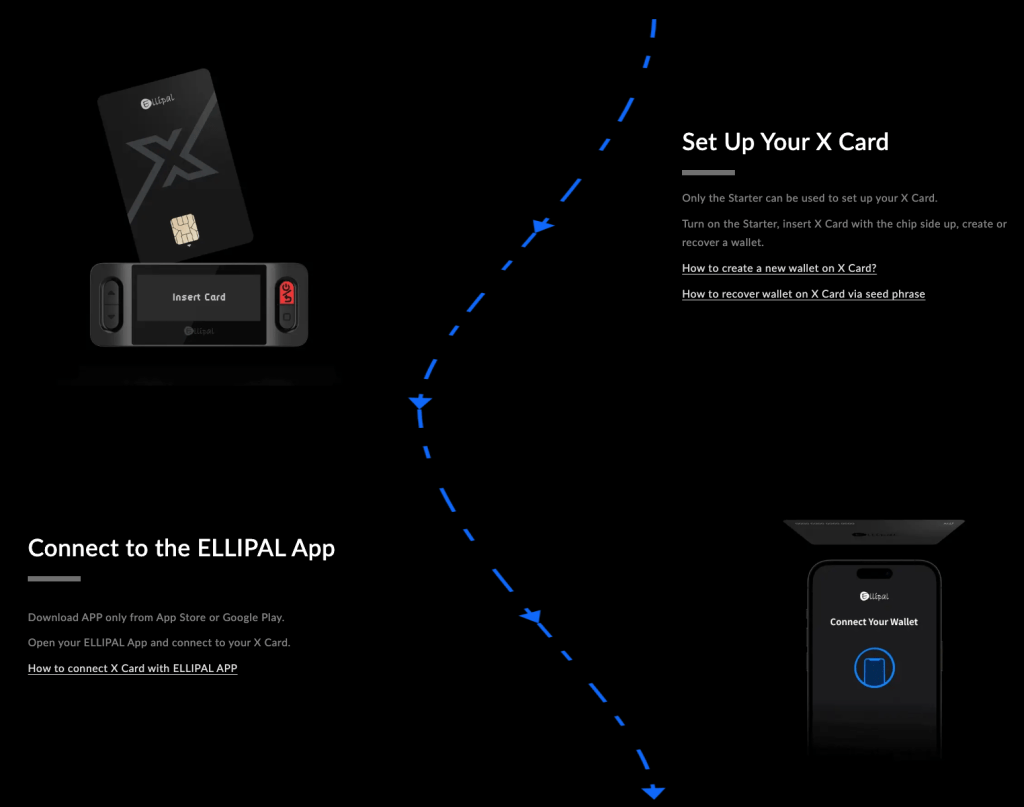
Here’s a quick, less detailed guide for your convenience:
Ellipal wallets are not just theoretical tools. They solve real-world problems for a wide range of users across different environments and use cases.
A frequent traveler who needs to keep assets secure while crossing borders may find the Ellipal X Card ideal. Its slim design and complete offline operation allow users to manage and sign transactions using their smartphone without needing any internet connection. This offers convenience without compromising security.
Long-term holders with substantial portfolios can benefit from the Titan 2.0. Its secure backup system, durable metal body, and self-destruct mechanism make it well-suited for high-value storage. For example, someone using crypto for estate planning or inheritance might use the hidden wallet feature to separate sensitive funds from daily-use assets, keeping them protected even in case of theft or coercion.
In regions with high digital surveillance or limited financial freedom, Ellipal’s Titan 2.0 air-gapped design gives users control over their assets. Journalists, activists, and crypto investors who operate in sensitive or high-risk environments often choose Ellipal for the added peace of mind that comes from keeping private keys fully offline.
Developers and DeFi users also benefit from Ellipal’s wide token support. Its QR-based signing system allows interaction with smart contracts and DeFi applications across multiple chains, all while keeping sensitive operations isolated.
These examples show that Ellipal is not just a secure hardware wallet. It is a versatile tool that adapts to the needs of mobile users, travelers, privacy advocates, and long-term crypto holders alike.
With its tap-to-sign NFC capability, the X Card connects instantly with the ELLIPAL App on both iPhone and Android. Over 93% of users complete the setup and their first transaction within three minutes, with no technical experience required.
Private keys are generated inside a CC EAL6+ certified chip, the same security grade used in payment systems like Visa and Mastercard. These keys never leave the card or touch the internet, ensuring robust defense against tampering and attacks.
All critical actions, from setup, PIN creation, to recovery, take place completely offline using the Starter device. The Titan 2.0’s air-gapped nature, combined with tamper-proof hardware design, helps safeguard your crypto from both digital and physical intrusion.
For peace of mind, users can create up to 10 duplicates of their wallet across separate X Cards. If a card is lost or stolen, recovery is as simple as switching to a backup or using the seed phrase. This setup offers everyday flexibility without ever compromising security.
With its credit-card design and ease of use, the X Card appeals to both newcomers and experienced users. It’s particularly valuable for those who travel frequently or want to store crypto in a form factor that fits into a standard wallet.
Ellipal delivers a strong mix of security, portability, and user accessibility, making it one of the most distinctive hardware wallets on the market. Titan 2.0’s air-gapped architecture is its greatest strength. By avoiding USB, Bluetooth, and Wi-Fi entirely, it minimizes the risk of remote attacks. This makes it well-suited for users with high threat models or those who prioritize full isolation from online systems.
The physical build of Ellipal devices, especially the Titan 2.0 and X Card, is durable and tamper-resistant. Features like self-destruct mechanisms and sealed enclosures add another layer of physical defense that many competitors lack. The companion app is well-developed and user-friendly, especially for those managing crypto on a smartphone.
However, Ellipal is not perfect. Its firmware is not fully open-source, which may be a drawback for users who value code transparency and community auditability. Advanced users or developers may prefer wallets that allow more customization and full access to the device’s internal workings. Integration with third-party apps is limited compared to devices like Trezor or Ledger. Also, Ellipal’s QR-based workflow, while secure, can feel slow or repetitive during high-frequency transactions.
In short, Ellipal is an excellent choice for mobile-first users, frequent travelers, and long-term holders seeking high-level protection without relying on computers. It is less ideal for users who want open-source firmware, seamless desktop integration, or deep compatibility with third-party tools.
If your top priority is strong physical and network isolation, Ellipal is one of the most secure options available. For others, its limitations should be weighed carefully.
Visit Ellipal
Yes. While Ellipal devices themselves do not connect to the internet, you can interact with DeFi platforms through the Ellipal App. Transactions are generated within the app and then signed offline via QR code by your Ellipal device. This allows secure use of DeFi without exposing private keys.
Ellipal releases firmware updates periodically to support new assets and improve security. Users should check the app for notifications and follow the QR code-based update process whenever a new version is released.
Because Ellipal wallets use industry-standard BIP39/44 recovery phrases, your assets are not locked into the Ellipal ecosystem. You can recover your funds using the seed phrase with any compatible wallet.
Yes. Ellipal supports NFTs on blockchains such as Ethereum and BNB Chain. You can view and manage your NFTs securely through the Ellipal App while your wallet stays offline.
A hardware wallet is a physical device that stores your cryptocurrency private keys offline. It is designed to protect your assets from hacks, phishing attacks, and malware.
Yes. Ellipal Titan 2.0 is completely air-gapped, meaning it never connects to any network or device via USB, Bluetooth, Wi-Fi, or NFC. It only communicates through QR code scanning.
Ellipal supports over 10,000 coins and tokens across multiple blockchains including Bitcoin, Ethereum, BNB, XRP, Litecoin, Dogecoin, Cardano, and all ERC-20 tokens.
Unlike Ledger and Trezor, which connect to other devices using USB or Bluetooth, Ellipal never connects electronically. This removes potential points of entry for attackers.
You can recover your assets using your 12 or 24-word recovery phrase. Ellipal follows the BIP39/44 recovery standards, which makes it compatible with other wallets.
Yes. The user interface is simple and intuitive, especially with the large touchscreen. The mobile app guides you through setup, backup, and asset management.
Visit EllipalSubscribe to our newsletter, you are in very good company












 Canada
  Australia