Buy a Licensed Company
  Explore VASP Data
  Talk to an Expert
 Buy a registered Canadian MSB
Lune.fi is a no-KYC platform that combines aggregated crypto swaps with a simple Earn interface. Pool terms, rates, and a return calculator help holders compare yield plans. This review explains the product, its third-party execution model, and the conditions that matter when choosing a plan.

Explore Lune.fi’s Earn pools, term choices, daily income model and the aggregator ecosystem behind the product.
| Founded | |
| Headquarters | Saint Vincent and The Grenadines |
| Website URL | lune.fi/investments |
| Daily volume trading | |
| Number of cryptocurrencies | 4 |
| Crypto licences | Aggregator software interface; regulatory context in review |
| Cryptocurrency Fees | |
| Minimum deposit | From $10 |
| Digital Wallet | No |
| Promotion | |
| Currency | USDT, USDC, ETH, BTC |
| Deposit Method | Crypto transfer |
Lune.fi puts a straightforward interface around two activities that crypto holders often want to combine: exchanging assets and earning a return on holdings they plan to keep. Its Earn offering is particularly approachable. Users choose an asset and a term, see the annual rate before committing, and follow income through a pool dashboard.
The appeal is practical, consisting of a low starting amount, short and long term options, and a clear way to compare plans without maintaining several separate DeFi positions yourself. This review focuses on the yield pools and explains how they fit into Lune.fi’s broader aggregator model.
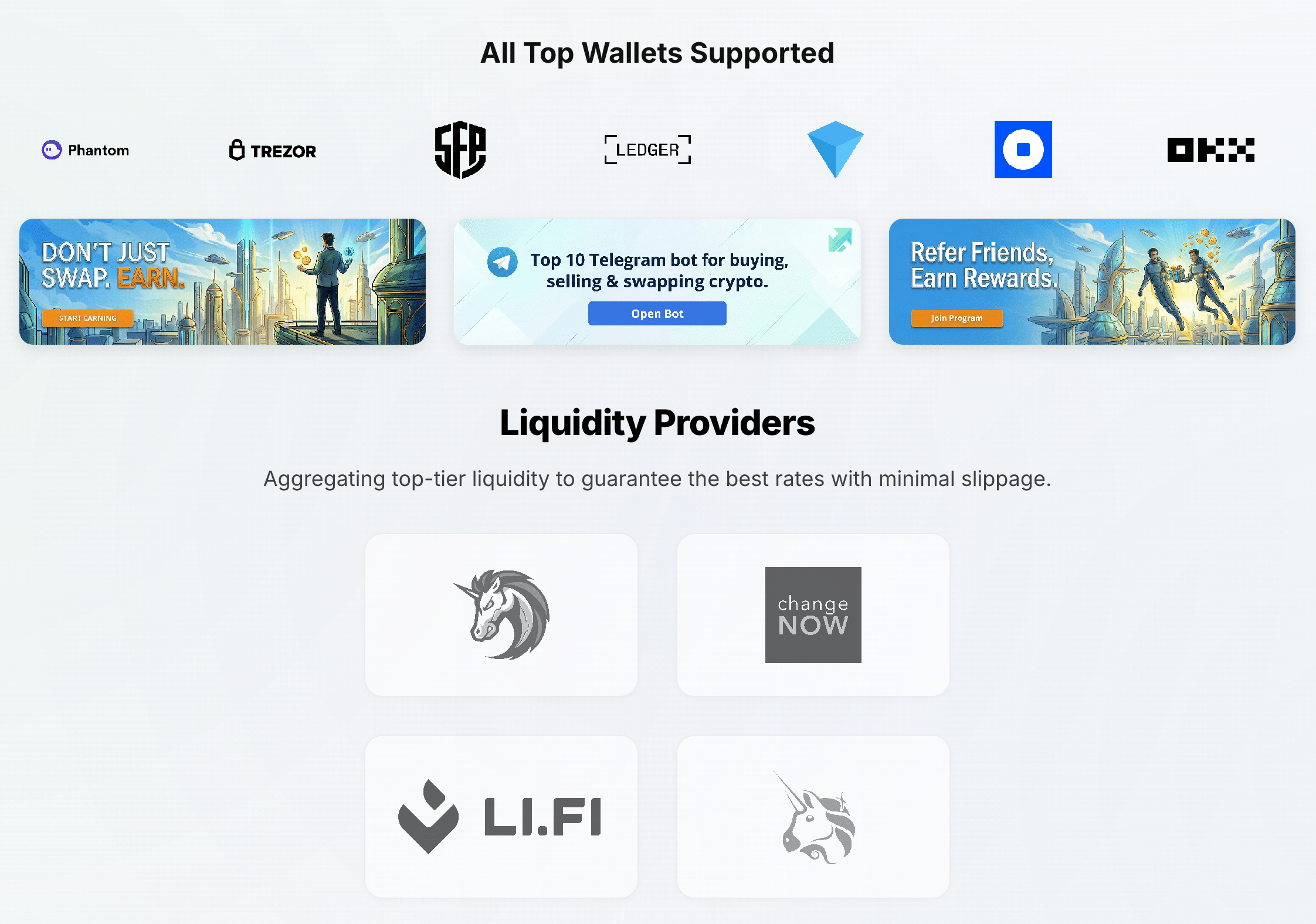
Lune.fi describes its swap service as a non-custodial software interface. It connects users with third-party liquidity providers and protocols rather than running a conventional exchange order book. Its published provider list includes ChangeNOW, 1inch, Uniswap and LI.FI. Swap processing takes place through the selected provider or protocol, whose transaction and compliance conditions apply.
For users, aggregation brings several possible execution routes into one interface. Earn is a separate product with its own participation and redemption terms; the swap interface’s non-custodial description should be understood in that context.
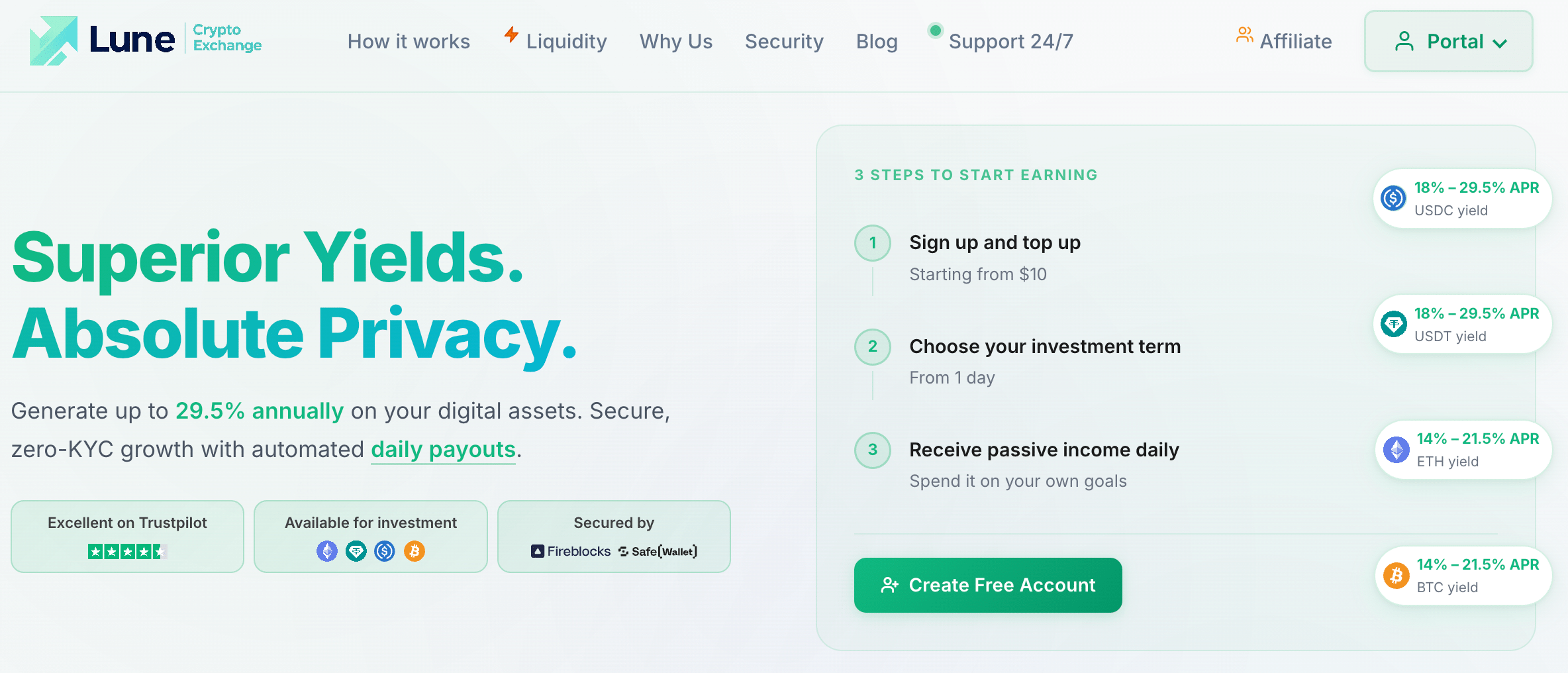
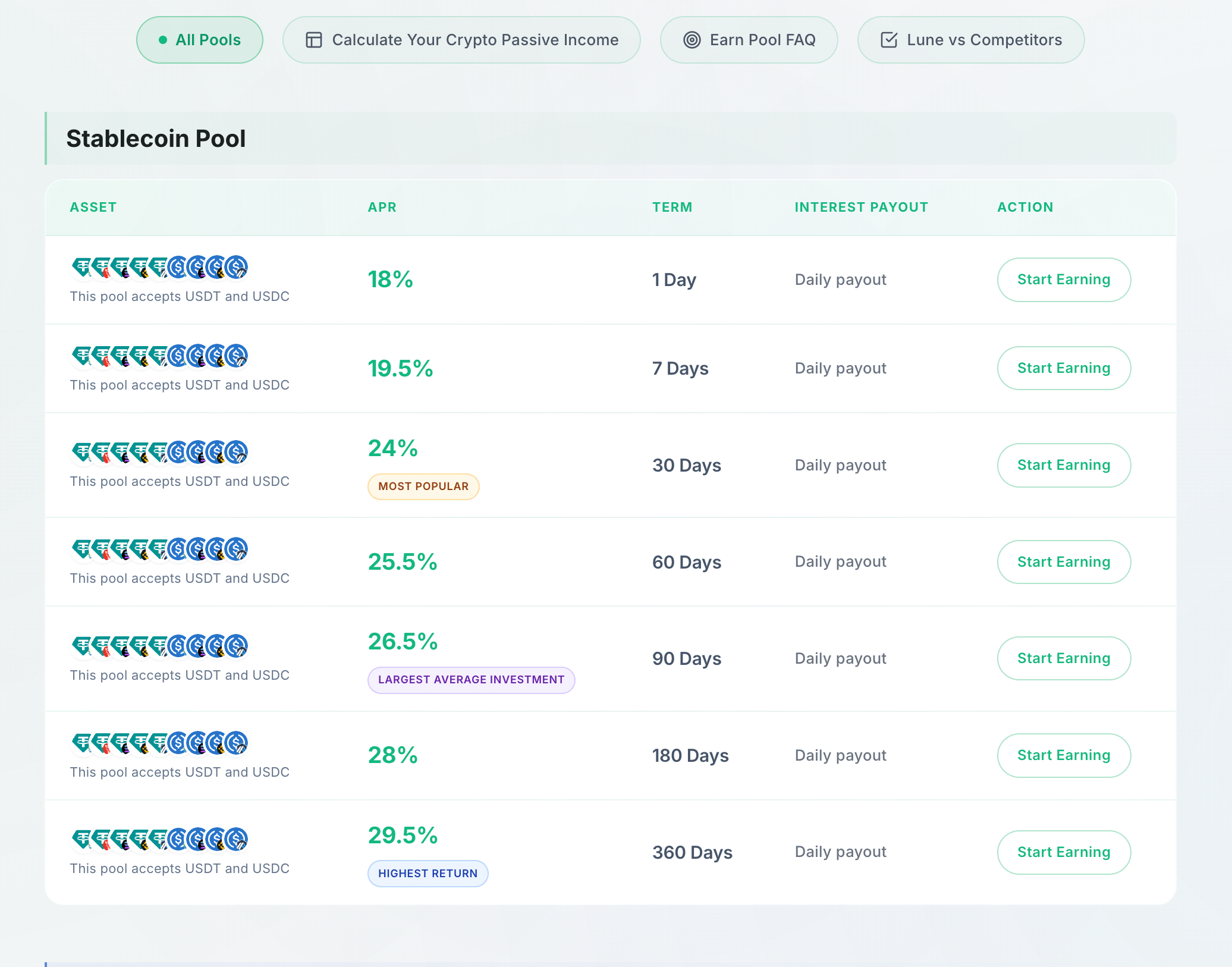
The public Earn page brings the main choices together: asset, duration and quoted return. A holder can compare a short commitment with a longer plan in the same table. This is a useful design for people who want a defined investment period rather than continually switching between yield opportunities.
| Term | USDT / USDC APR | ETH APR | BTC APR |
|---|---|---|---|
| 1 day | 18% | 14% | 14% |
| 7 days | 19.5% | 15% | 15% |
| 30 days | 24% | 16.5% | 16.5% |
| 60 days | 25.5% | 18% | 18% |
| 90 days | 26.5% | 19% | 19% |
| 180 days | 28% | 20% | 20% |
| 360 days | 29.5% | 21.5% | 21.5% |
Advertised rates on https://lune.fi/investments were checked on 5 October 2026.
Lune’s guided interface makes its plans easy to compare, but provider selection should also account for oversight and protections. Readers should compare the offer with alternatives whose legal entity and authorization can be checked on their local regulator’s register, and confirm whether that authorization covers the specific product. For money where capital preservation is the priority, eligible deposits with regulated banks and applicable deposit protection provide a useful comparison. A higher advertised APR should be weighed against withdrawal restrictions and the possibility of losing principal.
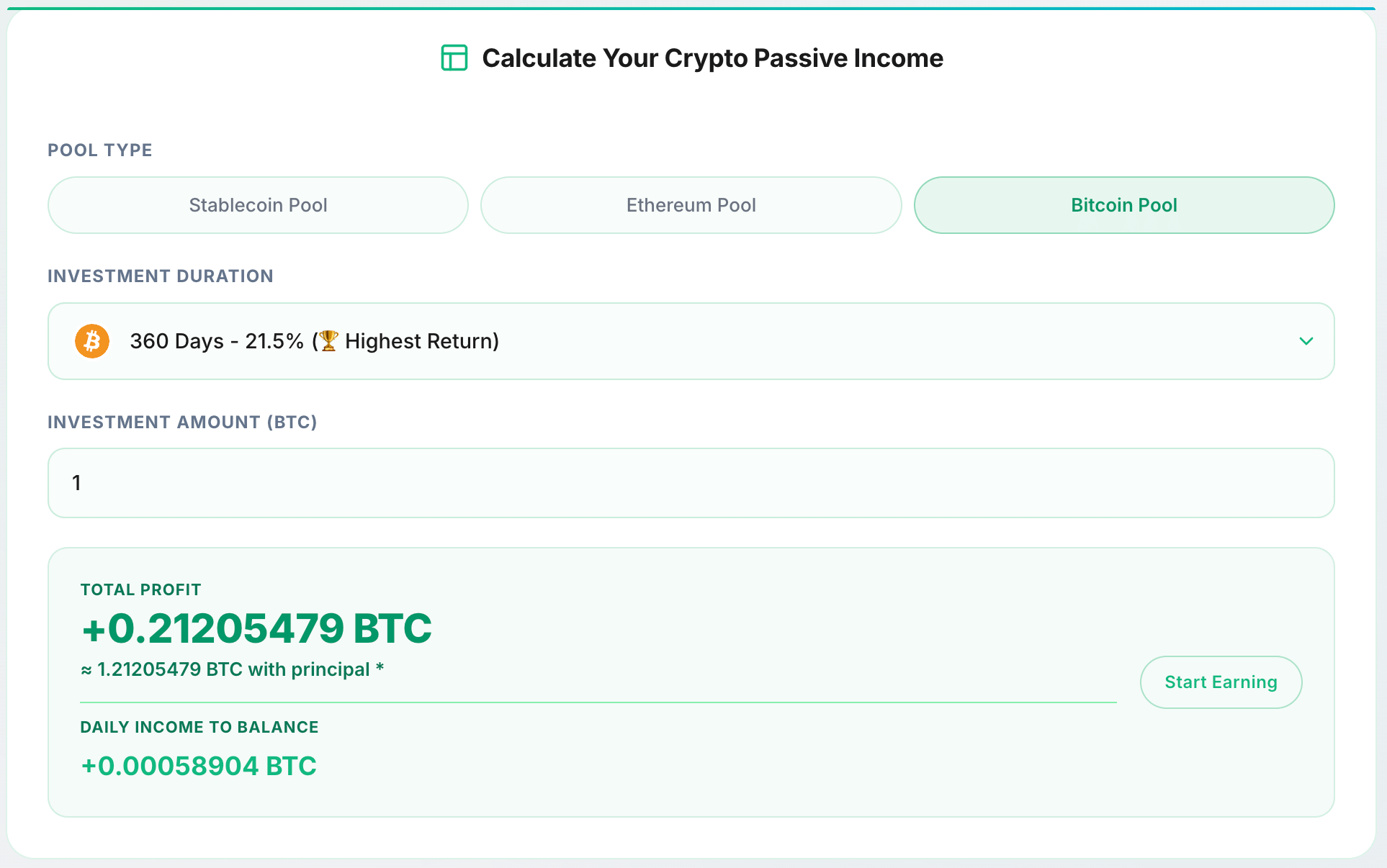
At 24% simple APR, 1,000 USDC held for 30 days produces approximately 19.73 USDC using a 365-day year. At 29.5% for 360 days, the calculation produces approximately 290.96 USDC. These are illustrative calculations, before any applicable transfer costs, assuming the stated rate is paid for the full term.
The calculator is a useful planning tool: it makes the difference between an annual percentage and the income for your chosen term easier to understand. A shorter plan may suit a scheduled expense or a near-term allocation decision; a longer plan makes more sense when the intended holding period already matches the commitment.
Lune says Earn shares operational revenue from swap commissions and B2B activity, including liquidity routing, arbitrage, reserve staking, and partner rebates. Its Earn terms also describe deployment into third-party DeFi and institutional liquidity structures. This connects the product to activity across its ecosystem.
Lune describes several revenue sources, but these descriptions alone do not establish whether the advertised rates can be sustained. Its Earn terms explain that deposits are actively deployed into third-party DeFi protocols and institutional liquidity structures. Readers should assess the underlying strategies, independently verified performance, and potential losses alongside the quoted APR. The advertised rate should not be read as a guarantee of income or protection of principal.
The Earn terms set out a principal-return model with no administrative deduction on early exit. Exiting a position before maturity forfeits its interest. Standard deposits and maturity withdrawals typically process within minutes to 24 hours; early exits are best effort, may be paid in installments and can take up to 90 business days.
The useful distinction is between requesting an exit and receiving funds in your own wallet. Matching the chosen term to your actual holding period helps preserve the value of the plan. Check any network or transfer charge shown for the selected asset before sending funds.
Lune.fi’s strongest design choice is keeping Earn focused. The site presents pool options, a return calculator, and explanations of the mechanics in one place. Users can make the initial comparison without navigating an order book, selecting leverage, or constructing a multi-protocol strategy.
The interface supports a simple decision sequence: choose the asset you already hold, decide how long you want to allocate it, then compare the corresponding rate. The advertised $10 starting amount lowers the entry threshold.
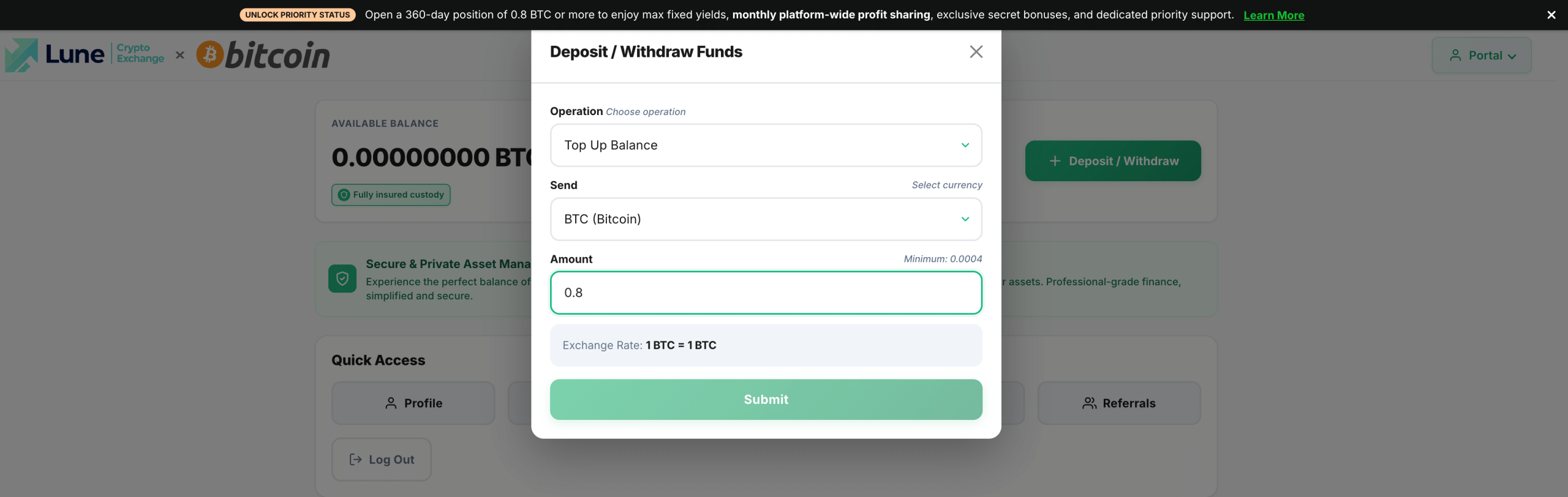
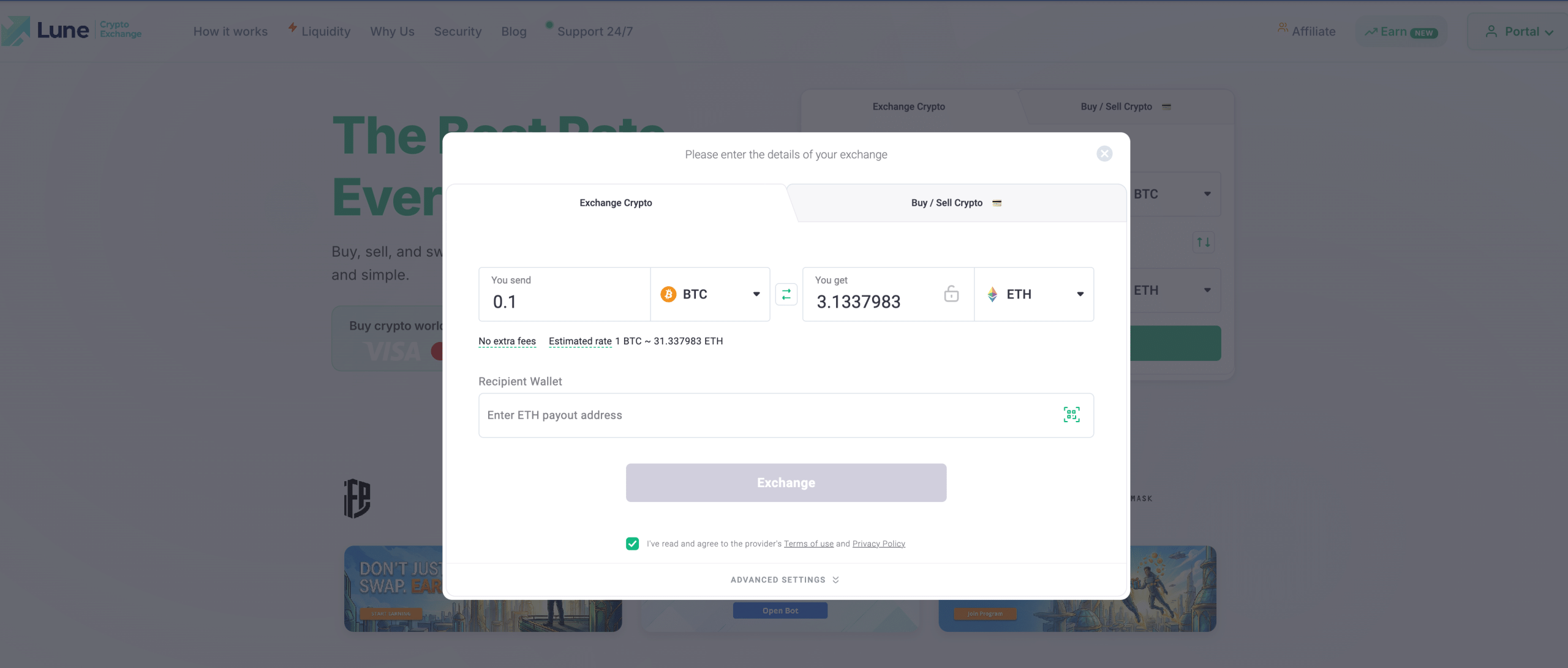
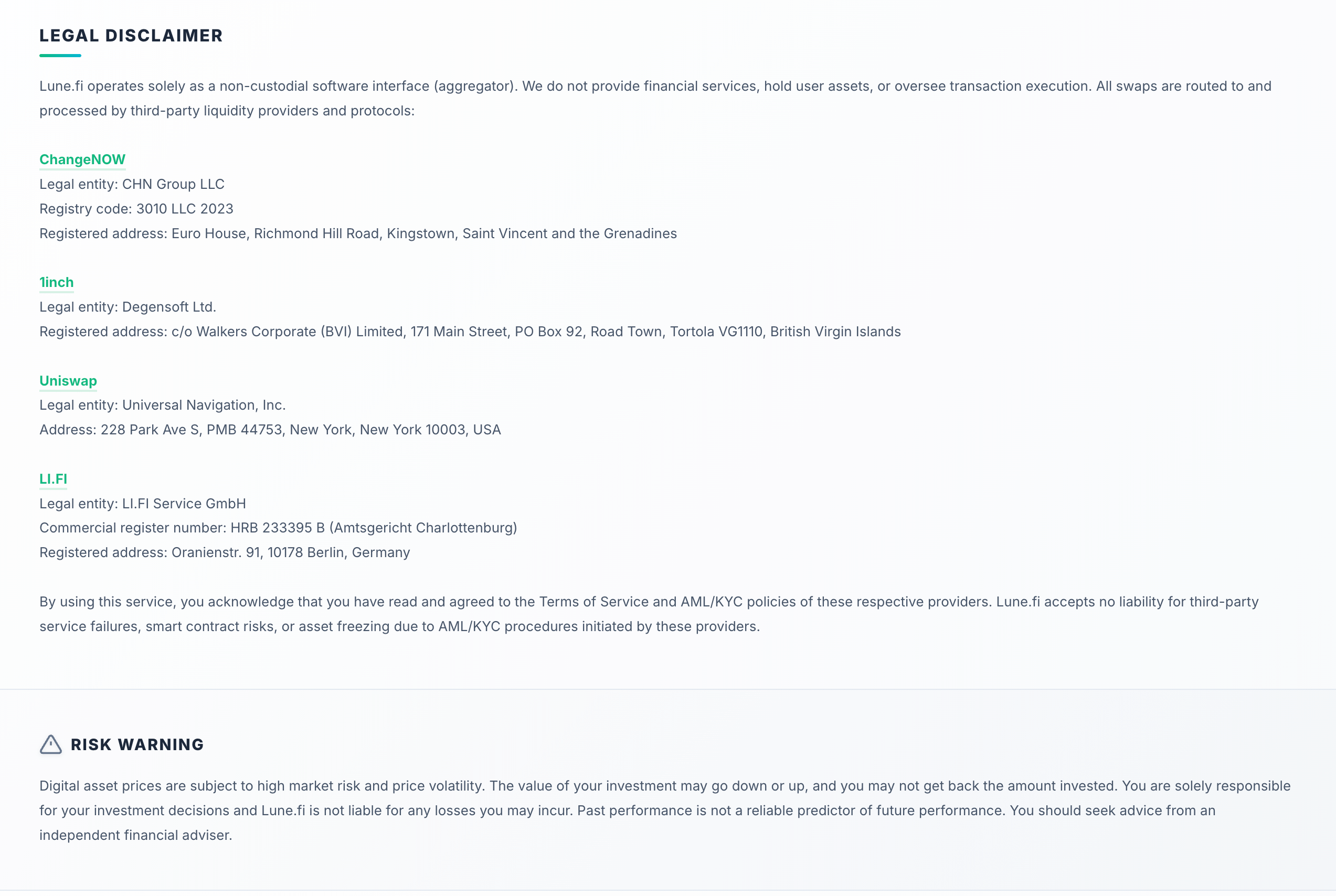
Lune’s software-interface description applies to its aggregator service. For regulatory context, the Seychelles FSA issued a notice dated 6 August 2026 stating that Lune International Holdings LTD, identified as the alleged operator of lune.fi, does not hold authorization under its virtual asset or securities legislation. This concerns the named Seychelles authorizations. The company operates as a technological aggregator and routes clients to its partners, depending on the user’s home country and activity, as highlighted in the list below.
Lune.fi’s published security approach combines controls over access, signing, and asset movement. It references Fireblocks and Safe and describes segregated wallets, multisignature approvals, hardware key storage, address whitelisting, and continuous monitoring.
The practical purpose of these measures is to reduce the chance that one compromised credential or one unauthorized person can initiate a critical movement of funds. Address controls and monitoring add further checks around transactions.
The swap interface routes requests through third-party providers and protocols. Their execution, wallet, and compliance arrangements apply to the selected route. Earn has separate terms covering deployment, income, and redemption. The service terms acknowledge third-party smart-contract risk and state that assets are not government-insured. Security controls are useful safeguards, but they do not make a crypto yield position risk-free.
Visit Lune.fi
Lune.fi account opening is really straightforward – register, fund the relevant asset account and choose a term. The user starts with a simple allocation decision.
The main-site AML policy states that Earn does not require identity documents. The ETH portal policy describes a $25,000 threshold instead. Follow the current policy of the portal you use. Third-party swap providers can apply their own checks to transactions routed through them.
Visit Lune.fi
The Earn selection focuses on four widely recognized assets. USDT, USDC, ETH and BTC. The stablecoin table lists USDT on Ethereum, Tron, Solana, BNB Smart Chain and Arbitrum, and USDC on Ethereum, Solana, BNB Smart Chain and Arbitrum.
A software interface for third-party crypto swaps and a separate Earn programme.
Crypto holders who want a simple way to compare term-based yield plans and can align their allocation with the plan’s maturity date.
The live investment page advertises a starting amount of $10.
The Earn selection is shown in the supported-currencies section above; the aggregator’s broader swap catalogue is separate.
Begin with the date you expect to need the funds. Compare the corresponding plan’s annual rate, estimated term income and exit conditions. A higher annual rate should be weighed against the longer commitment.
Lune says income is credited to the pool dashboard every 24 hours, with principal credited at maturity. A dashboard credit and an external wallet transfer are separate steps.
Daily crediting does not itself establish automatic reinvestment. Earnings are credited separately and compounding requires manual redeposit into an eligible position.
Yes, the Earn terms provide an early-exit process. Interest is forfeited, and the full process may take up to 90 business days. Choose the term with that liquidity condition in mind.
Lune brings third-party routes into one interface. The selected liquidity provider or protocol handles the swap. Its listed providers include ChangeNOW, 1inch, Uniswap and LI.FI.
The software-interface description covers swap routing. Earn is governed by separate terms for asset deployment, payouts and withdrawals; read those terms when evaluating a pool.
Lune advertises 24/7 support and links to its Freshdesk help portal. It also links to official social and Telegram channels.
The asset and network, annual rate, term income, maturity date and redemption conditions. The regulatory context and security sections cover the broader considerations.
Visit Lune.fiSubscribe to our newsletter, you are in very good company