


 Buy a licensed company
  VASPs live data and insights
  Learn about crypto safety
  Read the latest research


Deep Dive into Decentralized Finance (DeFi): Exploring the Opportunities and Risks
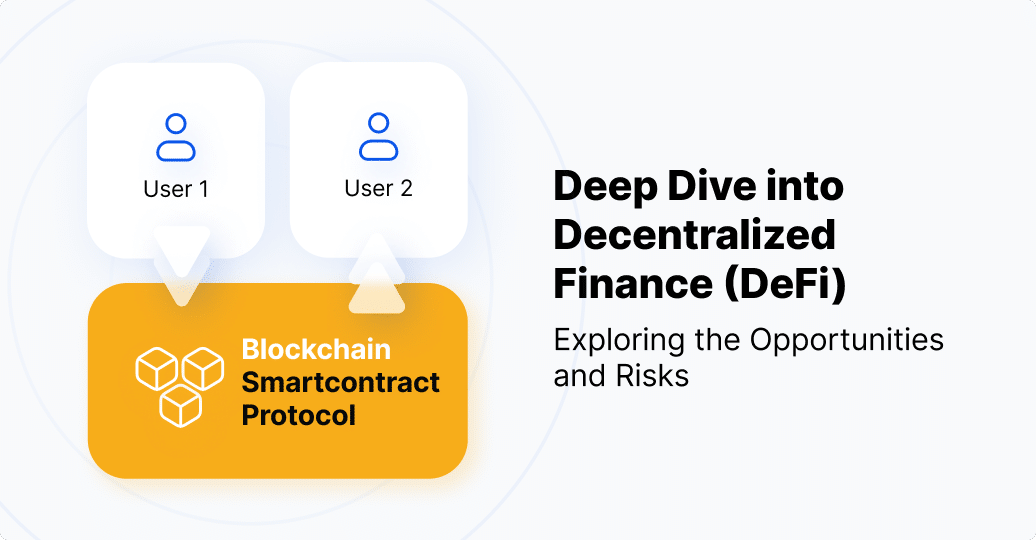
Decentralized Finance, also known as DeFi, has experienced rapid growth in recent years. This innovation combines the best of blockchain technology with financial services, but no third parties are involved.

DeFi platforms have been designed to facilitate multiple transactions and financial activities, such as trading, borrowing, lending, and investing. However, you don’t need help from banks or brokers. Instead, you use decentralized applications (dApps) within a blockchain network.
While DeFi has brought many opportunities to the financial sector, there are also a few related threats. Here are the main opportunities and risks of this financial technology.
Opportunities that Decentralized Finance Brings
As mentioned, DeFi can bring many opportunities for all parties within the financial world. Find a few of them below:
Financial Inclusion
Decentralized Finance offers access to financial services to different groups, including bank populations (people who opened a checking or saving account with FDIC-insured institutions) and underbanked households (people who have accounts with FDIC institutions but use alternative financial services or AFS).
This is increasingly popular in developing countries. Therefore, DeFi is a great alternative to improve financial inclusion.
Transparency and Efficiency
In addition, DeFi platforms offer more transparency and efficiency than traditional institutions’ services.
This innovative financial technology can make transactions easier while reducing costs, benefiting all parties.
Innovation
Decentralized Finance also offers many opportunities for innovation within the financial industry, as it supports and fosters the development of new services and products.
The open-source nature of this technology makes the development opportunities for financial innovations endless. Backed with trading SaaS such as Bitcoin Loophole, DeFi can be the next big thing replacing banks on the financial landscape in the near decade.
Risks Posed by Decentralized Finance
Although DeFi brings many benefits, there are also a few related risks that you should be aware of. These are:
Security
Vulnerability to cyberattacks is the biggest risk posed by DeFi platforms. Unfortunately, these are not the only security threats related to this technology.
Although the blockchain is nearly impenetrable, DeFi platforms are also susceptible to smart contract bugs that can result in major financial and data loss.
However, most potential risks are related to software systems targeted by hackers.
Systemic Risk
DeFi platforms rely on collateralized lending, which can pose systemic risks. This technology’s interconnectedness can also sharpen these threats.

As a result, the risk of failures across the ecosystem is high.
Regulatory Compliance
Since it’s decentralized, this technology can potentially lead to regulatory compliance issues, such as those related to investor protection and anti-money laundering (AML).
DeFi has also been linked to failure to meet know-your-customer (KYC) compliance.
Restrictions Due to Collateralization
While using collateral is also beneficial and is used to secure loans, most transactions require that it equal at least 100% or more of the amount borrowed. As a result, the eligibility criteria are stricter and more restrictive for most DeFi loans.
How Are People Using DeFi in 2023?
Despite the risks, this technology has made its way into the financial world, gaining prominence in many transactions with various levels of difficulty.
DeFi is powered by dApps but protocols, which handle transactions in Bitcoin and Ethereum, rely on Decentralized Finance too.
These are a few dApps and protocols that have gained popularity in recent years:
- Traditional financial transactions happening with DeFi – They include payments, lending, borrowing, trading securities, and more.
- Stablecoins – Cryptocurrencies are naturally volatile, but stablecoins were created to solve that issue. This type of cryptocurrency links its market value to government-backed assets to stabilize prices.
- e-Wallets – Many DeFi developers have started using this technology to create digital wallets that can operate independently from crypto exchanges. However, they still offer the best benefits of the blockchain.
- Non-fungible tokens (NFTs) – NFTs can convert non-tradable objects or items into digital assets.
- Yield harvesting – DeFi can also help speculative investors lend cryptocurrency and earn big rewards through proprietary coins that the platforms using this technology pay them for agreeing to the loans.
- Decentralized exchanges (DEXs) – These platforms facilitate peer-to-peer financial transactions by enabling users to retain control over their funds.
Final Thoughts
Whether this technology brings many opportunities or risks, DeFi has the potential to define future financial transactions.
Decentralized Finance removes middlemen, makes transactions easier, and gives investors more independence to deploy their assets in more innovative, creative, and fun ways.
However, it’s important to keep an eye on the risks to avoid monetary loss and data theft.