Buy a Licensed Company
  Explore VASP Data
  Talk to an Expert

 Bonniey Josef
Bonniey is a Psychologist and Crypto Copywriter with extensive experience in writing content that educates and entertains.
Bonniey Josef
Bonniey is a Psychologist and Crypto Copywriter with extensive experience in writing content that educates and entertains.
Crypto Gaming Wallet Experience Explained from Deposit to Game Session
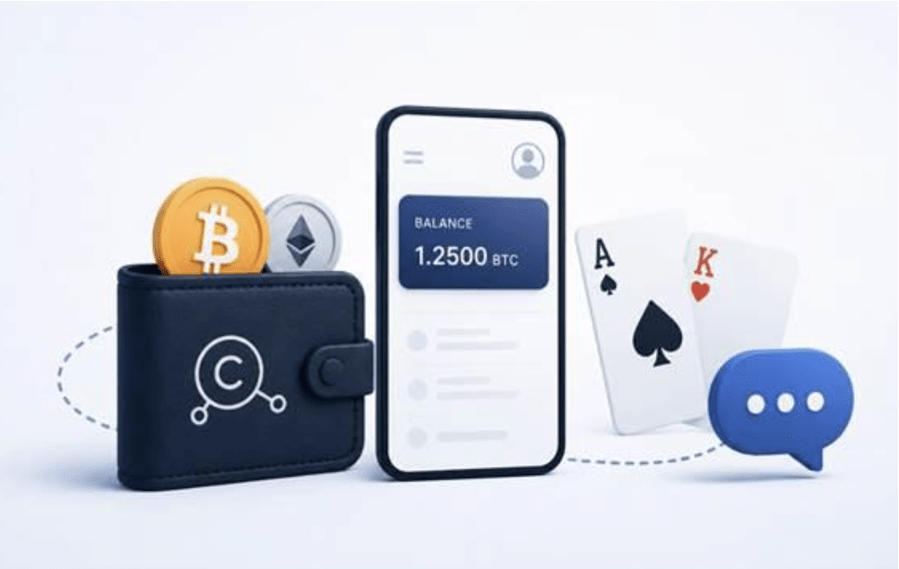
Crypto gaming makes the most sense when you follow the user’s actions, rather than the headline feature. The transaction begins with a wallet and choosing a particular coin, then progresses through the network to the gaming platform. That path is where crypto stops feeling abstract. It becomes a set of small, visible handoffs.
Mobile transactions make understanding those handoffs even more important because every step happens on a smaller screen. Research on progressive web app accessibility is useful here because it shows why responsive, reliable web experiences matter when people depend on quick, readable mobile journeys.
Where Wallet Access Meets Game Choice

A clear example is online poker, because the route from currency to table is easy to observe. Someone searching for crypto poker is usually trying to understand which digital currencies are accepted, how a deposit becomes an account balance, and how that balance connects to poker tables or tournaments.

For instance, this user-friendly poker crypto page is relevant because it presents crypto poker as a specific game format, not just a payment phrase. It discusses accepted coins, including Bitcoin, Ethereum, Litecoin, Bitcoin Cash, Bitcoin SV, and USDT, while also explaining the practical link between deposits, withdrawals, account balance language, and poker access.
For readers, the value is seeing the route in order: choose a supported currency, understand how the account handles it, then connect that funded account to the card game environment. That makes the payment layer easier to understand without turning the article into a sign-up guide.
It also helps to have a friendly and helpful community surrounding the payment system. If the platform has a social media page that users can find easily, then it becomes much simpler for anyone who is having difficulties to reach out for support.
That can take the form of asking the site staff for help or reaching out to other users to see if they can help. You may even get people posting solutions unprompted as “this confused me at first, but here’s what helped.” All around, a good social media page is a very useful feature for any platform that accepts crypto payments and might have users who aren’t as familiar with this as they could be.
View this post on Instagram
The Flow Is More Than Payment
The most useful way to read a crypto gaming page is to look at what each stage explains. Payment speed may get the most attention, but clarity is what lets the user understand the journey.
| Stage | What the reader needs to understand | Why it matters |
| Wallet | Which cryptocurrency they already hold or plan to use | Coin choice shapes the rest of the journey |
| Funding | How the selected coin is reflected in the account | Balance wording should feel plain and consistent |
| Game format | Which activity the balance connects to | Poker, tables, and tournaments create different contexts |
| Mobile access | How the session feels on a browser-based device | Small-screen movement makes clarity more important |
| Community updates | Where announcements or reward notices appear | Social channels can support repeat awareness |
This is why a wallet-to-table article should stay descriptive, rather than overly instructional. The average reader does not need a dense manual. They need a map of what is happening and why it matters. Crypto gaming becomes easier to understand when the article explains why each layer exists, how it connects to the next one, and where the reader should expect information to appear.
Why Mobile Makes the Journey More Visible
On desktops, extra tabs and page changes can feel manageable. On mobiles, each jump matters more. A user may check a wallet, return to a browser page, confirm a balance, and then move toward a game format. If the page language is vague, the journey feels slower than it needs to be. If the page language is direct, the same process feels understandable.
The most important detail is continuity. Wallet language, coin support, account balance wording, and game access should feel connected. That does not mean every page has to explain blockchain from the beginning. It means the page should give enough context for a reader to understand how digital currency becomes usable inside a session. Crypto gaming sites that present those handoffs clearly make the technology easier to follow for casual readers and regular crypto users alike. The smoother journey is not only visual. It is linguistic, practical, and contextual.
Clarity Is the Real User Experience
The wallet-to-table journey is not only about crypto payments. It is about confidence in the sequence. A reader wants to know how much of each coin they hold, where it is accepted, how it appears in an account, and what kind of gaming experience it supports.
That is also why the best explanation is not a checklist. It is a layered story about movement: wallet to account, account to table, table to updates. When those layers are visible, crypto gaming becomes easier to evaluate as a digital experience. The clearest pages help readers understand the route without adding unnecessary friction or technical fog. That is the practical reason usability, security perception, and awareness remain central to blockchain acceptance in financial applications.