


 Buy a Licensed Company
  Explore VASP Data
  Talk to an Expert

 Atis Shala
Atis is a senior analyst and community lead with four years of experience in crypto. He has a bachelor from the Rochester Institute of Technology.
Atis Shala
Atis is a senior analyst and community lead with four years of experience in crypto. He has a bachelor from the Rochester Institute of Technology.
The Best Crypto Apps to Use This Year
- The most useful crypto apps today solve everyday problems like browsing, travel booking, bill payments, and music streaming rather than focusing purely on trading or speculation.
- Brave Browser is the most accessible entry point into crypto for beginners, offering privacy benefits and optional token rewards with no financial risk or technical knowledge required.
- Travala allows users to book flights and hotels directly with cryptocurrency, removing the friction of converting digital assets to fiat currency before making travel purchases.
- Helium Mobile connects crypto rewards to a real monthly household expense, allowing users to passively earn MOBILE tokens simply by carrying their phone and using their existing cell service.
- Spritz Finance bridges the gap between onchain crypto holdings and real-world financial obligations, enabling users to pay bills like utilities, loans, and credit cards directly from a crypto wallet.
- Before using any crypto app, users should prioritize wallet security, understand regional restrictions, account for token volatility, and always test platforms with small amounts before committing significant funds.
For years, the loudest conversation in crypto revolved around price. People downloaded apps to trade, to speculate, and to watch charts move. The technology underneath those apps was often impressive, but the everyday usefulness for ordinary people was limited. That is starting to change.
Crypto Applications as Real World Problem Solvers
A growing number of crypto applications are now built around real problems: browsing the web privately, booking a flight, paying a phone bill, streaming music, or simply staying informed about world events. These apps use blockchain infrastructure, but they do not require users to care deeply about blockchain to get value from them. The crypto layer is either invisible or genuinely additive.
This shift matters because mainstream adoption has always depended on utility, not ideology. Most people do not want crypto for the sake of owning crypto. They want tools that make their lives easier, cheaper, or more private. When crypto happens to power those tools well, it earns a place in daily life.

What Makes a Crypto App Worth Using This Year?
Not every app that puts a token in front of you deserves your attention. The crypto space has a long history of products that looked useful on paper but delivered friction, confusion, or outright losses instead of value. So before reviewing specific apps, it helps to establish what separates genuinely useful crypto apps from the rest.
Utility comes first. The best crypto apps solve a problem that existed before the app did. They make something faster, cheaper, more private, or more accessible. If the crypto element exists only to create artificial demand for a token, that is a warning sign.
Onboarding should not require a finance degree. One of the biggest barriers to adoption is the complexity of setting up wallets, understanding gas fees, and managing private keys. Apps that simplify or abstract these steps serve a much broader audience. The learning curve should feel proportional to the benefit.
Real-world value is the benchmark. The strongest apps in this article can save you money on a phone bill, help you book a hotel without converting your crypto first, or let you earn small rewards just by browsing. These are tangible outcomes.
Crypto integration should feel natural, not forced. Some products bolt a token onto an otherwise ordinary service to attract investor attention. The apps worth recommending here use crypto because it genuinely improves the product, whether through decentralized identity, onchain payments, or token-based incentives that align with user behavior.
Mobile friendliness, security, and accessibility matter. A crypto app that works only on desktop, has poor security practices, or excludes users without significant technical knowledge is not yet ready for mainstream recommendation. The apps in this guide are all reasonably accessible and actively maintained.
Brave Browser: Best for Private Web Browsing and Passive Earning
What Brave Does Differently
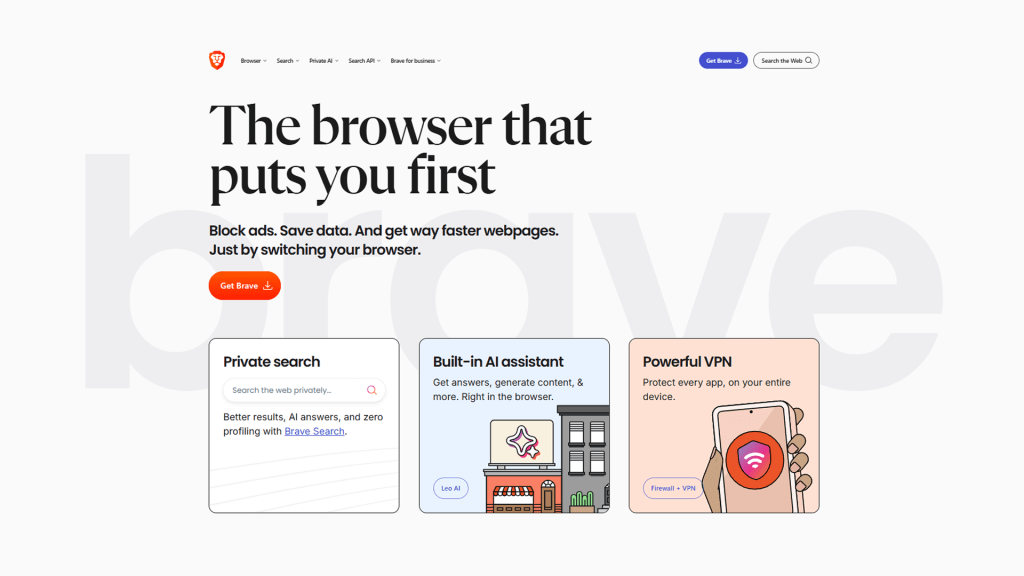
Brave is a free web browser built on the same Chromium foundation as Google Chrome. On the surface it looks and behaves like Chrome: you can use your existing extensions, sync your bookmarks, and visit all the same websites. The difference lies in what happens between you and those websites.
By default, Brave blocks third-party advertisements, tracking scripts, and cross-site data collection. This happens automatically, without requiring any configuration. For the average internet user who has never thought about browser privacy, this is already a significant upgrade over Chrome or Safari, where tracking is the norm.
The Optional Rewards System
Brave includes an opt-in feature called Brave Rewards, which allows users to view privacy-respecting advertisements and earn a small amount of Basic Attention Token (BAT) in return. The key word is optional. Users who do not want to interact with the rewards system never have to. The core privacy and speed benefits exist regardless.
For users who do opt in, BAT accumulates in a browser-integrated wallet. It can be used to tip content creators directly through the browser, converted to other currencies, or kept as a small passive reward for browsing time. The amounts are modest, but the model is genuinely novel: instead of advertisers buying your attention through surveillance, you choose which ads to see and receive direct compensation.
Built-In Wallet and Crypto Features
Brave also includes a self-custody crypto wallet built directly into the browser. This means users can interact with decentralized applications, hold tokens, and sign transactions without installing a separate wallet extension. For someone new to crypto, this lowers one meaningful barrier to entry.
Who Should Use It
Brave is arguably the most accessible crypto-adjacent app on this list. It requires no prior knowledge of crypto to use well, and its primary value proposition, faster, cleaner, more private browsing, stands entirely on its own. Anyone who uses the internet regularly and has not yet switched will likely notice an immediate improvement in page load speed and a reduction in intrusive advertisements.
The BAT rewards and wallet features make it interesting for users who want a gentle introduction to crypto without any financial risk. The limitation worth noting is that the earning potential is small. Brave Rewards supplements browsing; it does not replace income.
Travala: Best for Booking Travel and Vacations
A Web3 Alternative to Traditional Travel Platforms
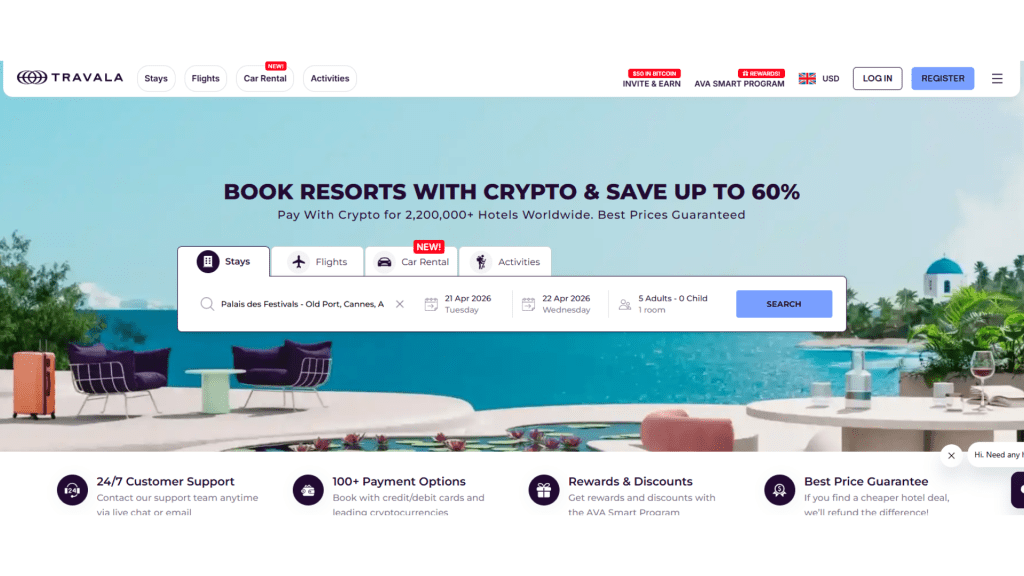
Travala operates as a travel booking platform where users can search for hotels, flights, and experiences, much like Expedia or Booking.com. What separates it is the payment layer. Travala accepts over 100 cryptocurrencies directly, which means users can pay for travel using assets they already hold rather than converting to fiat currency first.
For anyone who has tried to spend crypto on real-world purchases, the off-ramping process is often a significant obstacle. It involves finding an exchange, initiating a withdrawal, waiting for bank transfers, and often paying fees at multiple steps. Travala removes that friction for the specific category of travel.
What Can You Book on Travala?
The platform lists millions of hotels and properties worldwide, pulling inventory from established travel suppliers. Users can book accommodations across most major destinations, and the flight booking feature connects to mainstream airline inventory. The breadth of selection makes it a genuinely competitive option rather than a niche tool with limited listings.
Loyalty Rewards and Savings
Travala runs a loyalty program called Smart program, where users who hold a certain amount of AVA (the platform’s native token) unlock higher cashback percentages on bookings. Users who pay with AVA or Bitcoin receive additional savings on top of standard rates. Over multiple bookings, these discounts can produce meaningful savings compared with traditional booking platforms.
The cashback is paid in AVA, which introduces some token exposure. Users who prefer stability can hold stablecoins and still benefit from direct crypto payment without taking on AVA volatility specifically.
Why Travel Is a Natural Crypto Use Case
Travel is one of the clearest illustrations of why crypto payments make practical sense. International transactions often carry currency conversion fees and bank charges. Crypto payments are borderless by design, and for frequent travelers, especially remote workers and digital nomads, the ability to pay for a hotel in Japan or Portugal directly from a wallet is a real convenience.
Limitations to Keep in Mind
Price comparison still matters. Travala rates are competitive, but travelers accustomed to deal-hunting across multiple platforms may occasionally find lower rates elsewhere. It is worth checking before booking, particularly for high-value trips where the difference in base price might outweigh the crypto-specific benefits.
Polymarket: Best for Prediction Markets and Market-Based Forecasting
What Prediction Markets Are
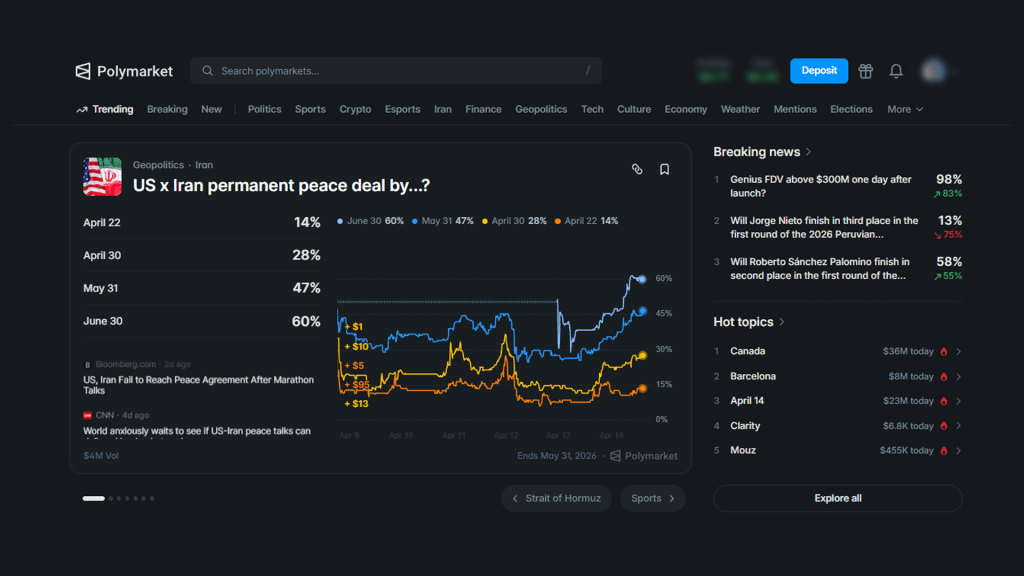
A prediction market is a platform where users can buy and sell shares in the outcome of a future event. If you believe a particular political candidate will win an election, you buy shares representing that outcome. If that outcome occurs, those shares pay out. However, if it does not, you lose your stake. The price of those shares at any moment reflects the collective probability estimate of the crowd.
Polymarket is the most prominent crypto-based prediction market operating today. It runs on the Polygon blockchain and settles in USDC, a dollar-pegged stablecoin. Users connect a crypto wallet, deposit funds, and can participate in markets covering elections, sports, economic data, geopolitical events, and a wide range of current news topics.
Why People Use It Instead of Polls
Traditional polls and pundit commentary offer opinions. Prediction markets offer something closer to aggregated probability, weighted by financial skin in the game. Someone who genuinely believes they know something that the market does not has an incentive to bet accordingly. Over large numbers of participants, this process tends to produce forecasts that are often more accurate than polling or expert analysis alone.
During major global events including elections, economic announcements, and geopolitical developments, Polymarket volumes have grown significantly. Journalists, analysts, and researchers increasingly reference Polymarket prices alongside traditional forecasting tools.
The Appeal for Different Types of Users
For people who follow news closely and enjoy evaluating probabilities, Polymarket offers a direct way to put that thinking to work. Moreover, for traders, it provides a different risk profile than traditional financial markets because outcomes are binary and time-limited. For liquidity providers, the platform allows market-making activity that generates fees.
Even for users who prefer not to stake money, Polymarket functions as a real-time sentiment tracker. Watching how market probabilities shift in response to breaking news can be genuinely informative.
Limitations to Consider
Access to Polymarket is restricted in certain jurisdictions, including the United States, due to regulatory considerations around prediction markets and gambling law. Prospective users should verify whether the platform is accessible and legal in their region before participating. Additionally, markets on specific events can experience sharp volatility as new information emerges, which adds a layer of risk beyond ordinary price movements.
Helium Mobile: Best for Cell Phone Service
A Different Kind of Phone Plan
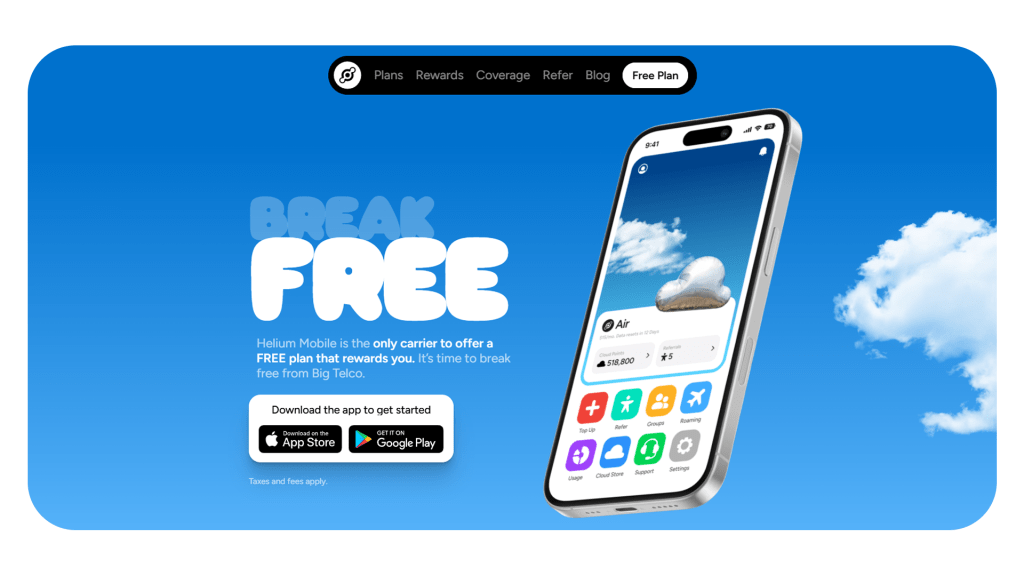
Helium Mobile is a cellular service provider that combines traditional carrier infrastructure with a decentralized network model. On the infrastructure side, it uses T-Mobile’s existing coverage to provide reliable connectivity across the United States. On top of that, it operates a network of community-deployed Wi-Fi hotspots that users can connect to in urban areas, supplementing standard cellular coverage.
The result is a functional phone plan, not a proof of concept. Users get data, calls, and texts through established T-Mobile towers, while the decentralized hotspot layer adds additional coverage in densely populated locations.
The Token Rewards System
Where Helium Mobile introduces its crypto element is through a rewards program called Discovery Mapping. Users who carry their phones and passively log network coverage data earn MOBILE tokens. Separately, people who deploy approved Wi-Fi hotspots in their homes or businesses earn rewards for providing coverage that other Helium Mobile subscribers can use.
The effect is that the network expands its coverage map through community participation, and contributors receive token compensation for their role in building it out.
Why This Category Is Particularly Compelling
Phone bills are among the most consistent monthly expenses for most households. Unlike many crypto rewards that require active engagement or financial risk, Helium Mobile ties token earning directly to something users are already paying for. If the rewards offset even a portion of a monthly phone bill, the value proposition is concrete and repeatable.
For users in cities with dense hotspot coverage, the combination of competitive plan pricing and passive token earning can make Helium Mobile one of the more financially rational crypto applications available.
Who It Works Best For
Helium Mobile is best suited for cost-conscious users in urban areas, people who are comfortable with some experimentation in their telecom setup, and anyone interested in the concept of earning tokens through participation in physical infrastructure networks. The main practical limitation is that coverage quality and hotspot density vary significantly by location. Users in rural areas or regions with sparse hotspot deployment may not experience the full benefits of the decentralized layer, though T-Mobile infrastructure provides a reliable baseline regardless.
Spritz Finance: Best for Paying Real-World Bills
The Off-Ramping Problem
One of the most persistent frustrations for people who hold crypto is the gap between their digital assets and their everyday financial obligations. Paying a mortgage, a student loan, a utility bill, or a credit card still requires traditional banking infrastructure in most cases. Converting crypto to fiat involves exchanges, withdrawal fees, and delays that make routine bill payment unnecessarily complex.
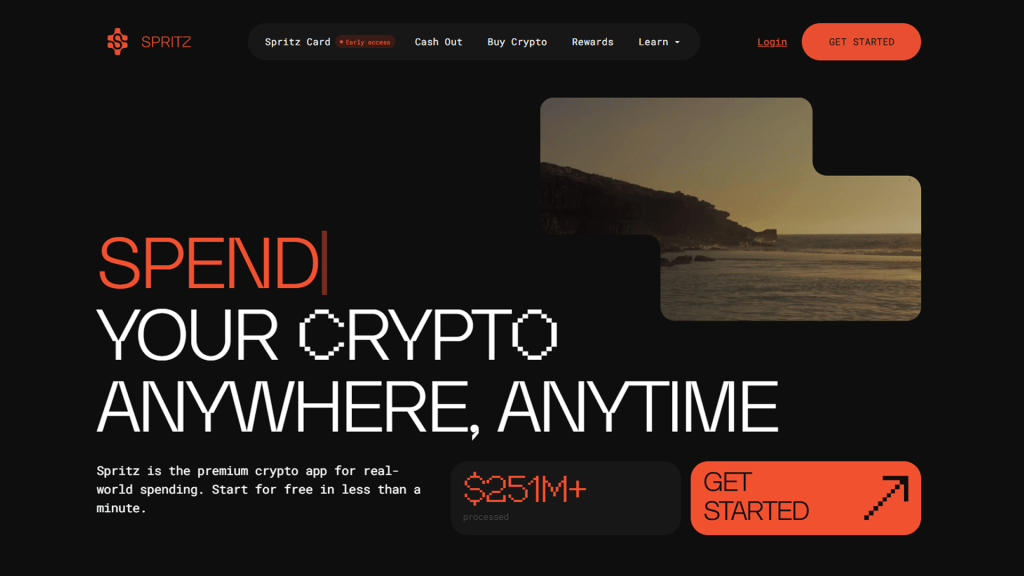
Spritz Finance is built specifically to close this gap. It connects a user’s crypto wallet to their real-world payment obligations, allowing bills and recurring expenses to be paid directly from onchain holdings without a full off-ramp to a bank account first.
How It Works
Users link their wallet to the Spritz platform and input the payment details for the bills they want to cover. Spritz handles the conversion and payment processing in the background, directing funds to payees through standard payment rails. The user interacts with their wallet; the recipient receives payment in the currency they expect.
The platform supports a range of bill types including utilities, loans, rent payments, and credit cards, with the list of supported payment categories expanding over time. Stablecoins are particularly practical here because they eliminate the additional variable of token price volatility. A user holding USDC knows exactly how much purchasing power they have and can budget accordingly.
Why This Matters for Everyday Crypto Holders
For people who have meaningful crypto holdings but still need to meet ordinary financial obligations, Spritz represents a direct bridge. Rather than maintaining parallel systems of crypto and traditional banking, users can manage more of their financial life from a single wallet interface.
This is especially relevant for freelancers and remote workers who receive crypto payments and want to use those earnings for living expenses without constantly cycling through exchanges.
Limitations Worth Noting
As with any financial tool involving wallet connections and third-party payment processing, trust and security are important considerations. Users should research the platform thoroughly before connecting wallets containing significant holdings. Regional availability, supported asset types, and compatible bill payment categories also vary, so verifying compatibility with specific payment obligations before relying on the platform is advisable.
Audius: Best for Music Streaming and Artist Support

A Decentralized Alternative to Mainstream Streaming
Audius is a music streaming platform that allows listeners to access a large library of tracks for free, without advertisements, while giving artists a direct channel to distribute and monetize their work. For listeners, the experience is broadly similar to SoundCloud or early Spotify: search for artists, follow them, play tracks, and build playlists.
The platform is particularly strong in electronic music, hip-hop, and independent artist communities, with a user base that skews toward creators and fans who are interested in alternatives to the major streaming platforms.
The Artist-Side Value Proposition
Where Audius becomes most interesting is on the artist side. Traditional music streaming services are frequently criticized for paying artists very small per-stream royalties while retaining significant platform leverage over distribution and data. Audius is structured differently. Artists upload directly to a decentralized network of nodes, retaining ownership of their content and receiving a larger share of platform-generated revenue through AUDIO tokens.
Artists can also offer exclusive content, early access, and direct fan engagement through token-gated features. For independent artists without label backing, this creates opportunities for monetization that do not depend on algorithmic placement or platform favor.
The Broader Creator Economy Context
Audius is one of several crypto-native platforms trying to shift the balance of power between platforms and creators. Music happens to be a clear and relatable use case, but the same logic applies to writing, video, and art. The question of who captures value in the creator economy is one of the more significant ongoing tensions in the media landscape, and blockchain infrastructure offers one structural answer.
Limitations to Keep in Mind
Audius is not yet a full replacement for Spotify or Apple Music. Major label content is largely absent, meaning listeners who follow mainstream pop or chart-driven music will find significant gaps in the library. The platform is best understood as a complement to existing streaming services rather than a substitute, particularly for users who want to discover independent artists and support creators more directly.
Farcaster: Best for Decentralized Social Media
What is Farcaster?
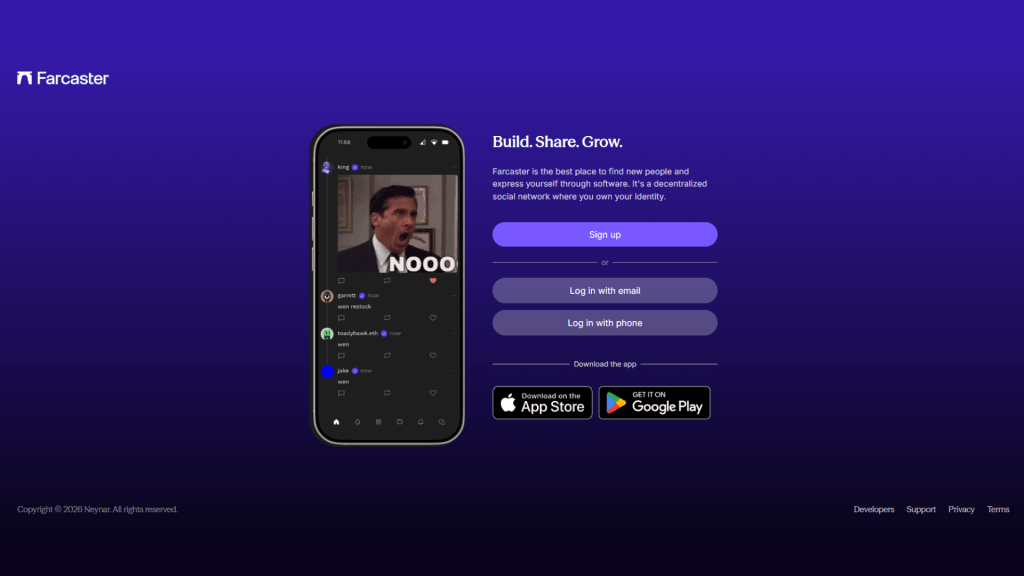
Farcaster is a social media application that has an ecosystem as a decentralized protocol for social networking. In everyday use, Farcaster feels familiar. There is a feed of posts, a way to follow people, the ability to reply and share, and a growing community of users who range from developers and investors to artists and journalists. If you have used X (Twitter), the basic experience will feel immediately recognizable.
How Does Farcaster Work?
Users create an account, pay a small one-time fee to register their identity on the Farcaster protocol, and begin posting. That registration step is what makes the experience different from centralized social media. Your account and your social graph do not belong to a platform. They belong to you, recorded on a blockchain. If this specific platform shuts down tomorrow, your followers, your posts, and your identity could all move to a different Farcaster client without starting over.
This concept is called account portability, and it is one of the most meaningful structural differences between decentralized and centralized social media.
Why Farcaster Matters Beyond the App
Censorship resistance and data ownership are not abstract concepts here. On traditional social platforms, accounts can be suspended, posts can be removed, and algorithms can suppress content without explanation. On Farcaster, the protocol itself is neutral. No single company controls what gets published or who gets to speak.
For creators, journalists, or anyone building an audience, this changes the risk profile of the platform entirely. You are not building on someone else’s land.
Frames and Mini-Apps
One of the more innovative features of the Farcaster ecosystem is mini-apps that developers can embed directly inside posts. Users can mint an NFT, respond to a poll, complete a transaction, or interact with a game without ever leaving their feed. This turns the social feed into something closer to a programmable surface, and it has attracted a wave of builders experimenting with new formats.
Who Should Use It
Farcaster is best suited for crypto-native users, developers, independent creators, and early adopters who are frustrated with the moderation policies or data practices of mainstream social platforms. It is not yet a replacement for platforms with billions of users. The audience is smaller and the network effects are still developing. But for those who value ownership and transparency in their online identity, it is one of the most thoughtfully designed applications in the crypto space today.
What to Watch Out For Before Using Crypto Apps
Even well-designed crypto apps carry risks that users should understand before committing real money or personal data. This section is not meant to discourage use, but to help users engage with these tools responsibly.
Wallet security is non-negotiable. Many of the apps in this guide involve connecting a self-custody crypto wallet. That wallet is protected by a seed phrase, a sequence of words that grants complete access to your funds. This phrase should be written down and stored securely offline. Anyone who has it has your funds. No app, no support team, and no blockchain can recover lost seed phrases.
Regional restrictions and compliance vary. Some apps, particularly Polymarket, are not available in all jurisdictions. Others may have limited functionality depending on your country of residence. Always verify before creating accounts or depositing funds.
Token rewards carry volatility risk. Rewards earned in BAT, MOBILE, AVA, or AUDIO tokens are not denominated in dollars. Their value can rise or fall significantly. Treating token rewards as stable income would be a mistake; treating them as a modest bonus on top of genuine utility is more realistic.
Fees and taxes add up. Onchain transactions carry gas fees that vary by network congestion. Many jurisdictions treat crypto transactions, including earning rewards or paying for services, as taxable events. Keeping records of transactions is important for tax compliance.
Start small. Regardless of how well an app is reviewed, testing with a small amount before committing significant holdings is sensible practice. This applies to wallets, payment platforms, and any app that handles financial transactions.
Conclusion: The Best Crypto Apps Are the Ones That Solve Normal Problems
The most persuasive case for crypto adoption has never been the technology itself. It has always been what the technology enables for people going about their ordinary lives.
The apps covered in this article address real needs: communicating without platform surveillance, browsing without being tracked, booking travel without conversion friction, forecasting events, managing a phone plan, paying regular bills, and supporting independent musicians. Some of these apps use crypto visibly; others keep it quietly in the background where it belongs.
Mainstream adoption, when it comes in full, will likely arrive through exactly this kind of application. People will use tools that happen to run on blockchains the same way they use apps that happen to run on cloud servers: without thinking much about the infrastructure at all. The apps that earn that kind of trust will be the ones that solved a real problem first.
Frequently Asked Questions (FAQs)
What is the best crypto app right now?
The best crypto app depends on your needs. Brave Browser leads for privacy, Travala for travel, Polymarket for forecasting, and Spritz Finance for bill payments. Each solves a specific real-world problem using blockchain technology effectively.
Which crypto app is the best for beginners?
Brave Browser is the best crypto app for beginners. It requires no prior crypto knowledge, blocks ads and trackers automatically, and offers an optional rewards system through BAT tokens with zero financial risk involved.
What are the top 5 crypto platforms?
The top five crypto platforms for everyday use are Brave Browser, Travala, Farcaster, Helium Mobile, and Polymarket. Each platform delivers genuine utility across browsing, travel, social media, telecom, and real-world event forecasting respectively.
Which platform is best for crypto?
The best platform for crypto depends on your goal. Travala is best for spending crypto on travel. Spritz Finance is best for paying bills. Brave Browser is best for earning crypto passively through everyday browsing.
What crypto app is the best to use?
Brave Browser is one of the most practical crypto app to use daily. It improves browsing speed, protects privacy, and introduces crypto rewards without requiring any technical knowledge or upfront financial commitment from users. However, the best crypto app depends on your goal.