


 Buy a Licensed Company
 Explore VASP Data
 Talk to an Expert

 News Room
Admin Coincub
92% of Central Banks Stay Out of Digital Assets, OMFIF Finds
An OMFIF survey of 74 central banks found 1% invest in digital assets and 7% are considering them, while none hold tokenized gold.
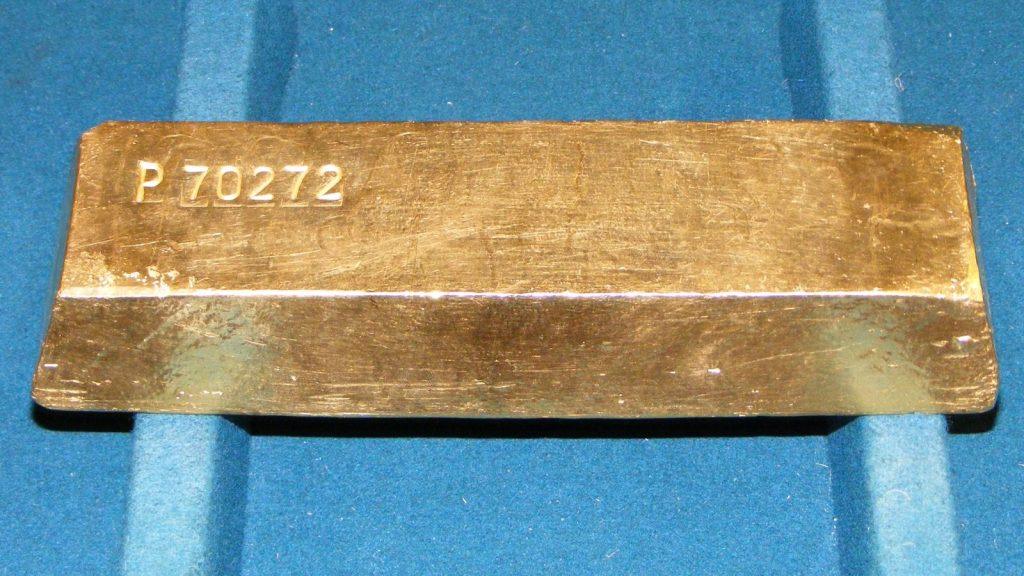
Most central banks are staying out of digital assets and want gold they can own and reach directly, a new report from OMFIF shows. The Official Monetary and Financial Institutions Forum, a London-based forum for central banks, launched the report on Nov. 19. It found that 92% of surveyed central banks are neither investing in nor considering digital assets.
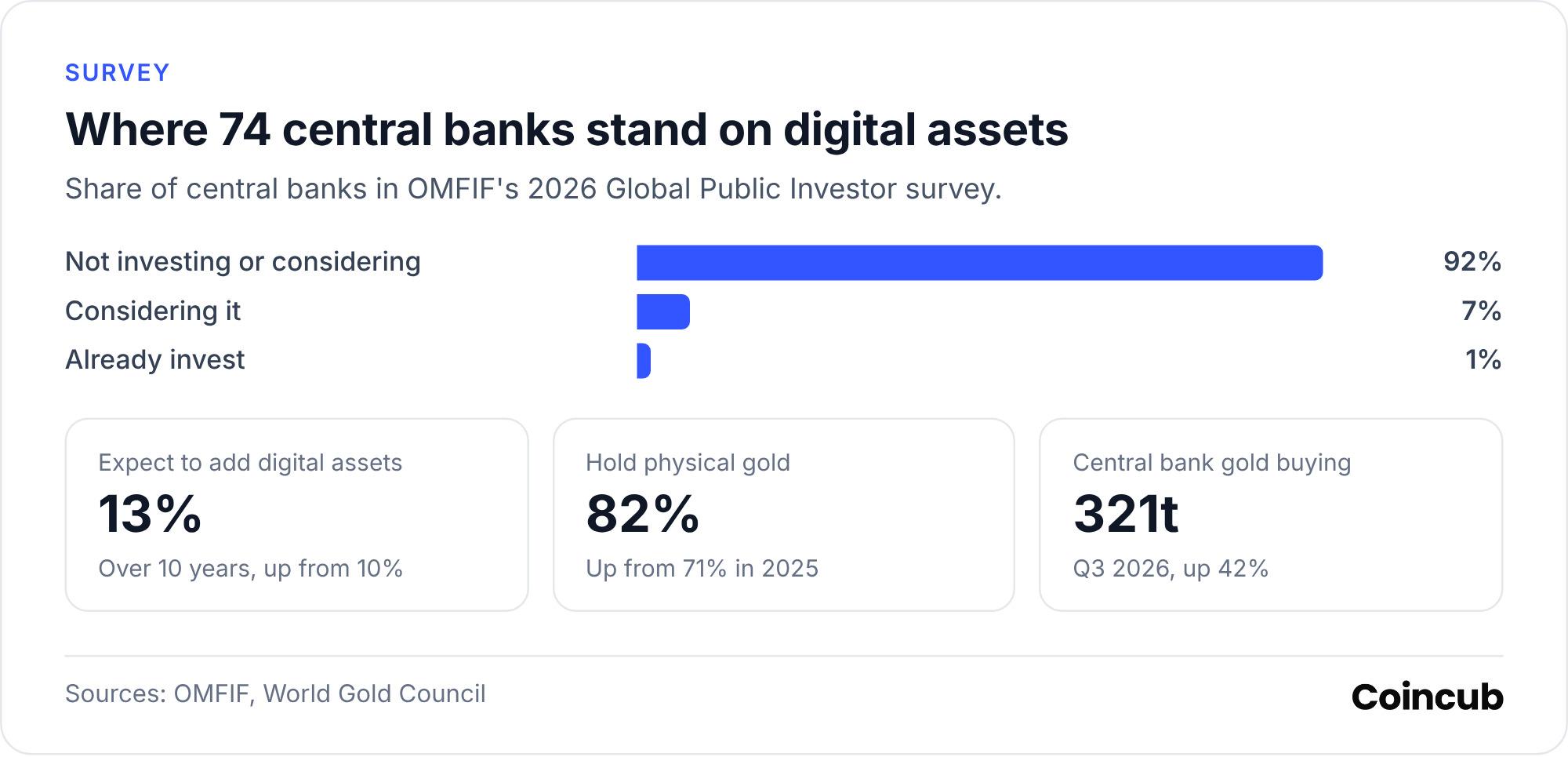
- 82% of the central banks surveyed hold physical gold, up from 71% in 2025, and 82% plan to add physical, allocated gold.
- In OMFIF’s June survey of 74 central banks, 1% invested in digital assets and 7% were considering it.
- Central banks bought 321 tonnes of gold in the third quarter, up 42% from a year earlier, the World Gold Council said.
What OMFIF’s gold working group found
The report, titled “Holding power,” comes from OMFIF’s Gold and Precious Metals Working Group, formed in 2026 with Gold Republic, Commodity Discovery Fund and Gold Bullion International. Reserve managers from eight central banks joined four confidential meetings during the year.
Diversification is still the main reason central banks give for holding gold. 47% said they hold gold to protect against geopolitical risk. 72% said the high entry price did not put them off buying more.
Tokenized gold and central bank reserves
The report says tokenization cannot automatically reproduce three things central banks value in physical gold. These are direct ownership, legal certainty and dependable access during a crisis.
OMFIF head of research Andrea Correa wrote that tokenisation “presents a stronger case as a mobilisation mechanism than as a substitute for physical reserves.” OMFIF sees tokens as a way to put existing gold to work more easily. Official adoption would need enforceable ownership rights, she added.
Where central banks stand on digital assets
OMFIF’s Global Public Investor survey, published on June 30, covered 74 central banks managing more than $10 trillion. 92% said they do not invest in digital assets, 7% are considering it and 1% already invest. The share expecting to raise digital asset holdings over the next 10 years rose to 13% from 10%.
None of the 75 central banks in the 2025 survey held digital assets. Since then, two have taken small steps.
The Czech National Bank bought a $1 million test portfolio in November 2025, made up of bitcoin, a US dollar stablecoin and a tokenized deposit. It holds the portfolio outside its official reserves. The National Bank of Kazakhstan said in March that it had formed a portfolio of up to $350 million from its gold and foreign exchange reserves. It plans to invest in crypto-related companies, funds and index products.
Central banks move gold toward London and home
The Netherlands’ central bank said on Sept. 2 that it had moved about 86 tonnes of gold from New York and Ottawa to London between March and August. It cited “increasing geopolitical unrest” and said gold in London is the quickest to deploy in a crisis.
The Banque de France replaced the last 129 tonnes it held in New York with bars stored in Paris between July 2025 and January 2026. The Bundesbank keeps more than 1,200 tonnes at the Federal Reserve Bank of New York. It told German broadcaster ARD in January that the New York Fed “is and remains an important storage site for our gold.”
Central banks also kept buying. The World Gold Council said on Nov. 3 that they added 321 tonnes in the third quarter, the most since late 2024. Purchases for the first nine months reached 675 tonnes, up 6% from the same period of 2025.