Buy a Licensed Company
  Explore VASP Data
  Talk to an Expert
 Buy a registered Canadian MSB
One of the first European banks to integrate blockchain into its core operations. Crypto friendly, much?
| Founded | 1998 |
| Headquarters | Balzers, Liechtenstein (HQ); London (branch); Dubai DIFC (branch) |
| Website | https://www.bankfrick.li/en |
| Target clients | |
| Employees | 239 |
| Market cap | Undisclosed |
| Daily volume trading | Undisclosed |
| Revenue | Undisclosed |
| Fiat supported | EUR, USD, CHF, GBP, and CAD. |
| Cryptocurrencies | AVAX, BTC, BCH, ADA, LINK, ATOM, DAI, ETH, LTC, NEAR, DOT, POL, SOL, XLM, XTZ, and USDC. |
| Pricing Plans | |
| Cryptocurrency Fees |
| Tokenization services | |
| Offers Bitcoin ETF | |
| Staking services | |
| Interest on savings | N/A |
| Crypto Custody | |
| Crypto Trading |
| Invoicing service | |
| Payments Services | |
| Cards | |
| API | |
| Insurance Coverage | |
| Interest on savings | N/A |
| Crypto licenses VASP | |
| Banking licenses | |
| Money Transmitter or E-Money Licences |
Founded in 1998 by Kuno Frick Sr. and a group of financial investors, Bank Frick has grown into an innovative, family-run bank based in Liechtenstein. Today, the bank is fully owned by the Kuno Frick Family Foundation. The bank emphasizes a long-term approach and entrepreneurial spirit. Over the years, it has advanced in both traditional and digital finance, positioning itself as a pioneer in blockchain and crypto banking in Europe. Bank Frick was among the first regulated European banks to offer digital asset trading and custody services, beginning in 2018. This early adoption solidified its reputation as a leader in regulated blockchain banking, especially among institutional and professional clients.
Throughout its growth, Bank Frick has focused on integrating blockchain with conventional banking. It prioritizes customer experience and secure solutions tailored for fintechs, asset managers, payment service providers, family offices, and institutional clients. The bank specializes in serving clients in Liechtenstein, Switzerland, and the broader European Economic Area. Its lean management structure, defined by flat hierarchies and efficient communication, allows it to make quick, reliable decisions. This structure enables Bank Frick to serve clients with agility in a fast-evolving financial landscape.
Although Bank Frick is highly digital, it values personal relationships – mainly because its a family-run bank. Each client receives individualized support and expert guidance, which remains a top priority. The bank’s offerings include both traditional banking services and advanced blockchain-based solutions. These encompass asset management, custody, and tokenization. With over 250 specialists based in Liechtenstein and a branch in London, Bank Frick combines strong local roots with growing international outreach. It provides services in over 16 cryptocurrencies and 5 fiat currencies, supporting a global base of institutional investors and crypto-focused enterprises.
Bank Frick has integrated blockchain technology into its core operations, aligned with its commitment to continuous innovation. This approach makes it a trusted partner in the digital asset space. As finance moves towards further digitalization, the bank’s proactive stance on regulation and secure digital services positions it well for the future. Bank Frick aims to bridge traditional finance (TradFi) with decentralized finance (DeFi), while maintaining full compliance with Liechtenstein’s stringent regulatory standards.
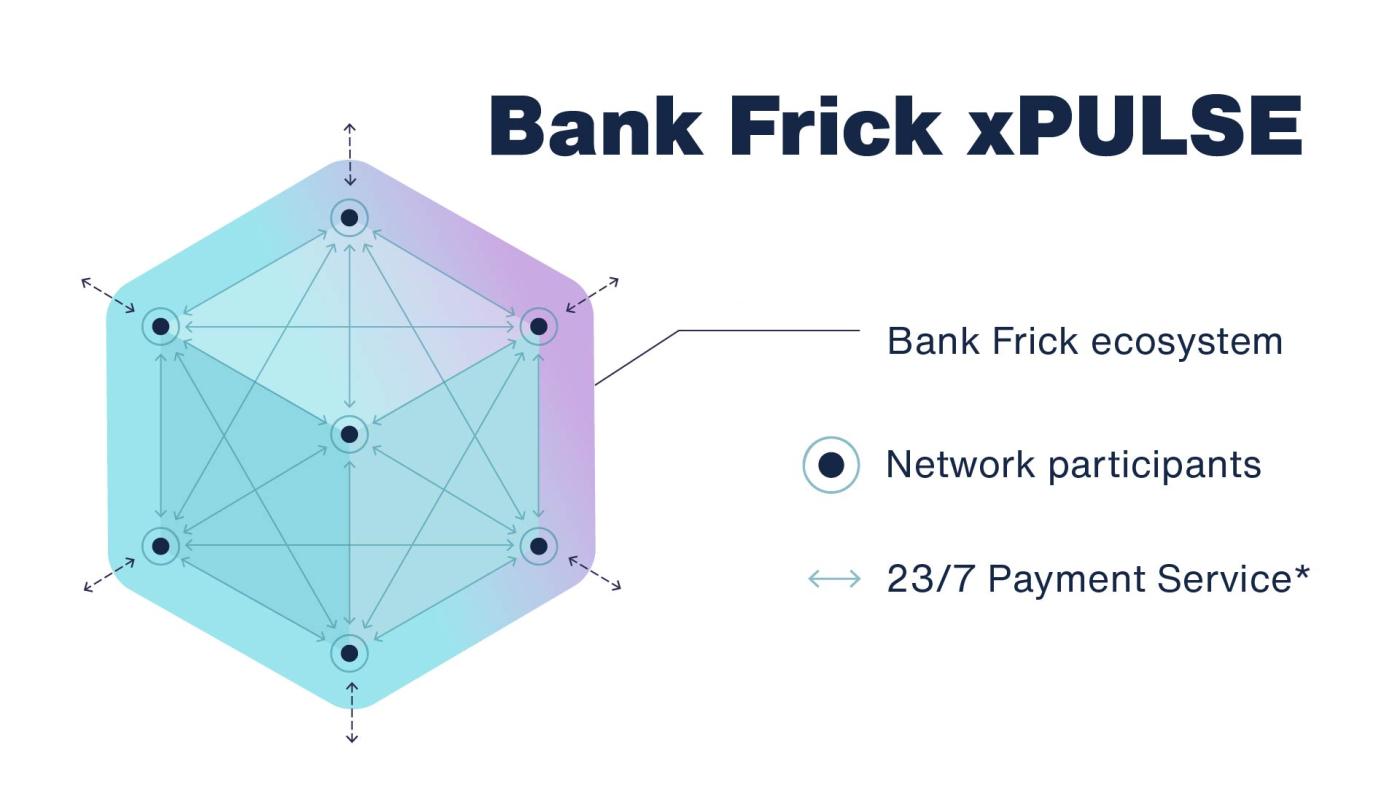
Bank Frick xPULSE is a payment service offered by Bank Frick that operates 23 hours a day, seven days a week. This service allows for quick transactions within the Bank Frick network, even beyond the usual business hours. Because of its partnerships with crypto exchanges like OKX, this service supports all major fiat currencies. Recently, the service expanded to include spot foreign exchange transactions available from early Monday to late Friday.
The key benefit of Bank Frick xPULSE is its ability to bypass common delays in fiat transactions such as operational hours and manual processing. This enhances the speed and efficiency of payments within their network. Additionally, Bank Frick xPULSE bridges the traditional financial system with the cryptocurrency world. It facilitates payments to crypto exchanges and purchasing of cryptocurrencies, leveraging Bank Frick’s role as a European leader in blockchain integration.
Bank Frick offers secure and regulated trading and custody services for digital assets, supporting a wide range of cryptocurrencies. The custody system uses multi-layered, bank-grade security protocols to safeguard clients’ assets. As one of Europe’s first banks to offer regulated crypto custody, Bank Frick remains a trusted choice for institutions needing secure digital asset management.
Bank Frick enables the tokenization of traditionally illiquid assets, including real estate, art, and commodities. This process digitizes ownership into secure tokens on the blockchain, allowing assets to become more liquid and accessible. By offering tokenization within a regulated framework, Bank Frick provides institutional clients innovative options for asset diversification and enhanced portfolio flexibility.
Bank Frick integrates both internal and third-party blockchain infrastructures, enabling the bank to offer flexible digital asset services without compromising on compliance or security. This adaptability lets Bank Frick streamline blockchain applications, like custody and settlement, into its legacy systems. The integration supports efficient transaction processing, bridging traditional banking with the evolving world of digital finance.
Bank Frick prioritizes quick and reliable settlement for digital asset transactions, leveraging blockchain’s near-instant capabilities. The bank’s systems allow for faster and more efficient settlement, reducing processing time and improving client service. This focus on transaction efficiency positions Bank Frick as a leader in providing high-speed digital finance services, catering to institutional clients’ time-sensitive needs.
To meet the growing demand for yield-bearing digital products, Bank Frick offers staking and DeFi solutions tailored for institutional clients. Through staking, clients earn rewards for participating in blockchain networks. Bank Frick’s DeFi offerings provide innovative, compliant options for accessing decentralized finance benefits, enhancing client opportunities in the regulated digital finance ecosystem.
Bank Frick’s evolution from a traditional bank into a crypto-centric institution reflects its commitment to innovation and adaptability. Initially established as a private bank with a focus on wealth management and intermediary services, the bank began pivoting toward blockchain in the late 2010s. Recognizing the transformative potential of digital assets, Bank Frick became one of the first European banks to integrate blockchain into its core operations. This early focus on blockchain banking established it as a trusted partner for institutional investors and crypto firms looking for regulated banking solutions.
Bank Frick’s approach to digital banking includes a comprehensive set of services tailored for institutional clients. Its offerings cover trading, custody, tokenization, and secure payment solutions for digital assets. Through specialized custodial services, the bank ensures digital asset security with a multi-layered approach, including secure wallet management and regulatory compliance. Additionally, Bank Frick has developed expertise in tokenizing assets, such as real estate, commodities, and other illiquid investments. This service provides clients with greater liquidity and diversification options while benefiting from the transparency and efficiency of blockchain technology.
A significant feature of Bank Frick’s digital banking approach is its flexibility in adopting third-party infrastructure. The bank uses both internal and external systems, which allows it to leverage blockchain’s benefits without compromising on security or regulatory compliance. By integrating these blockchain systems with traditional banking operations, Bank Frick supports a seamless experience for clients involved in both fiat and digital asset transactions. The bank also places emphasis on efficient settlement processes, enabling near-instant transactions for its clients.
Bank Frick, headquartered in Liechtenstein, has strategically expanded its reach to serve clients well beyond its local borders, establishing itself as a regulated digital banking leader across Europe and beyond. Its commitment to adhering to strict regulatory standards, combined with a global outlook, allows Bank Frick to meet the needs of institutional clients in multiple jurisdictions, including those in the European Union, the Americas, and parts of Asia. This expansive reach has positioned Bank Frick as a reliable partner for international clients who seek secure, compliant banking services in the digital asset space.
A critical aspect of Bank Frick’s international success lies in its adherence to regulatory standards like Anti-Money Laundering (AML) and Know Your Customer (KYC) requirements. These frameworks are essential to Bank Frick’s operations, allowing it to create a secure environment for handling both fiat and digital assets. By implementing comprehensive AML and KYC procedures, Bank Frick ensures that only verified clients gain access to its services, effectively reducing the risk of fraud or illegal activities. This strong compliance focus not only aligns with Liechtenstein’s stringent financial standards but also strengthens Bank Frick’s credibility across global markets, where trust in regulatory compliance is paramount.
Liechtenstein’s favorable regulatory climate has been instrumental in supporting Bank Frick’s expansion. As an active member of the European Economic Area (EEA), Liechtenstein allows Bank Frick to utilize the “passporting” principle. This principle enables Bank Frick to extend its services across EEA member states without the need for multiple licenses, significantly simplifying cross-border operations. Through passporting, Bank Frick’s clients in the EEA can access a unified and streamlined set of services, maintaining the same regulatory standards across countries. This regulatory advantage makes Bank Frick an appealing choice for businesses operating in the EU’s highly regulated financial markets.
To further address the evolving regulatory landscape, Bank Frick actively prepares for upcoming regulations, such as the EU’s Markets in Crypto-Assets (MiCA) regulation. This new framework will standardize crypto asset regulations across Europe, ensuring consistency and clarity for banks and clients alike. Bank Frick’s proactive stance in adopting MiCA requirements reflects its forward-thinking approach to regulation and its readiness to adapt its internal processes as necessary. For clients, this means they can rely on Bank Frick to navigate complex regulatory changes on their behalf, which is especially valuable in the rapidly evolving digital asset sector.
Moreover, Bank Frick’s international reach is supported by a strong network of strategic partnerships with leading blockchain platforms and financial institutions. These alliances allow the bank to enhance its service offerings, integrate secure digital solutions, and maintain compliance with global standards. For instance, partnerships with reputable blockchain networks ensure that Bank Frick’s digital asset services are secure, efficient, and compatible with the latest technological developments. By collaborating with financial institutions worldwide, Bank Frick strengthens its regulatory position and expands its capacity to serve clients across borders.
Bank Frick’s approach to regulatory compliance extends beyond meeting current standards. The bank is committed to continuous improvement, updating its compliance measures to align with new international guidelines, such as those from the Financial Action Task Force (FATF). This commitment to global regulatory standards demonstrates Bank Frick’s dedication to security and compliance, attracting institutional clients who value a stable and trustworthy banking partner in the digital finance space. To add to that, Bank Frick was added by SIX as an official custodian of SIX Exchange Regulation AG in February 2024.
Through its adherence to high regulatory standards, strategic use of passporting, and proactive stance on emerging regulations, Bank Frick has built a strong foundation for international growth. By combining a secure, compliant approach with an expanding geographical presence, Bank Frick positions itself as a trusted partner for clients navigating the global digital asset market.
During 2025-2026, Bank Frick scaled quite a lot, further positioning itself within the crypto finance space. These services emphasize both security and regulatory compliance, providing clients with more ways to engage in crypto management.
Bank Frick received its DFSA licence and opened a branch in the Dubai International Financial Centre (DIFC), operating from the 17th floor of the Emirates Financial Towers under the leadership of Stefan Rauti, Head of International Banking Solutions. The licence authorises the branch to arrange investment business, lending, custody services, and financial services on behalf of Bank Frick in Liechtenstein. In Dubai and the Middle East, Bank Frick serves crypto companies, asset managers, family offices, corporate service providers, fund administrators, and other professional clients. The Dubai opening represents Bank Frick’s first foray outside Europe and is part of a deliberate strategy to tap into the Gulf region’s rapidly growing digital finance ecosystem.
In January 2026, Bank Frick received MiCAR authorisation from the Financial Market Authority Liechtenstein (FMA), enabling it to manage and hold crypto assets in custody, execute orders, and offer transfer services to clients across all 30 EEA countries. Jonas Gantenbein, Head of Digital Assets, described this as a milestone: the standardised legal framework allows Bank Frick to offer regulated services in all EEA states and strengthen its position as product leader.
Bank Frick expanded its digital trading offering by providing institutional clients with sponsored access to RULEMATCH, one of the world’s fastest cryptocurrency trading platforms. This enables Bank Frick clients to execute high-speed crypto trades through a platform-grade infrastructure without leaving the bank’s regulated environment.
Bank Frick launched a virtual IBAN service enabling the automated allocation of incoming payments. Virtual IBANs link end clients directly to their payments, removing manual reconciliation. This is especially relevant for fintech and payment-service-provider clients with high transaction volumes.
In December 2025, Zodia Markets partnered with Bank Frick, joining the xPULSE fiat payment network. The partnership allows Zodia Markets to offer near-instant fiat settlement in major currencies to any other participant within the xPULSE ecosystem, including outside traditional banking hours.
Bank Frick’s partner RockawayX celebrated a milestone when their flagship credit fund product, domiciled in Liechtenstein and serviced by Bank Frick, surpassed $100 million USD in assets under management. This reflects Bank Frick’s growing role as a fund administration hub for digital-asset-focused investment vehicles.
As part of its strategic development defined at the beginning of 2025, Bank Frick’s management announced it is evaluating securing one or more long-term strategic partners or investors to support the next phase of growth, with a specific focus on scaling its digital B2B banking business. PwC is supporting the process, which involves evaluating minority shareholdings as well as potentially a majority interest with the right strategic fit. The bank has confirmed that any partnership must maintain Bank Frick’s Liechtenstein presence and existing staff.
In 2025, Bank Frick obtained internationally recognised ISO 27001 certification, demonstrating its commitment to the highest information security standards. This closes a notable gap flagged in the review’s cybersecurity section, which had not previously listed this certification.
Bank Frick has concluded the architectural competition for its new head office in Unterbendern, selecting a planning team led by Bernardo Bader Architekten, with construction scheduled to begin in early 2028.
At the proposal of Board Chair Dr Mario Frick, the Annual General Meeting of Bank Frick appointed Marzia Thüring-Menegon as an additional board member, bringing expertise particularly in payment transactions, IT, and transformation.
Bank Frick has developed a multi-layered approach to address both effective risk management and robust cybersecurity. The bank prioritizes the security of client assets and data, especially in the face of rising cyber threats and the inherent volatility of the cryptocurrency market. By adopting advanced encryption protocols, continuous monitoring, and a proactive approach to market risk, Bank Frick strives to provide a secure banking environment for its clients.
Bank Frick’s cybersecurity strategy involves a range of protective measures designed to safeguard digital and fiat assets. One cornerstone of this approach is the use of advanced encryption technologies, which ensure that all client information remains confidential and secure during storage and transmission. Bank Frick’s encryption standards align with global banking norms, adding a high level of security against unauthorized access and cyberattacks. This commitment to secure data handling is critical, as it helps prevent breaches that could compromise both client information and financial assets.
To further enhance cybersecurity, Bank Frick employs two-factor authentication (2FA) across its digital platforms. This additional verification layer requires clients to confirm their identity via a secondary device, such as a mobile phone, before gaining access to accounts. By requiring multi-factor authentication, the bank significantly reduces the risk of unauthorized access, which is particularly relevant in the crypto space where security concerns are heightened. 2FA also provides clients with an added sense of control and confidence in managing their accounts securely.
Real-time monitoring is another vital aspect of Bank Frick’s cybersecurity practices. The bank’s systems are designed to detect and respond to any unusual account activity or network anomalies, allowing for immediate action in the event of a security threat. Through constant monitoring, Bank Frick can identify potential vulnerabilities before they escalate, minimizing the risk of major breaches. This proactive approach to cybersecurity reflects the bank’s dedication to maintaining a secure and stable environment for its clients, even as cyber threats evolve.
In addition to cybersecurity, Bank Frick’s risk management strategy includes several measures to manage market volatility, particularly within the cryptocurrency sector. Recognizing that digital assets can experience rapid price fluctuations, Bank Frick provides its clients with in-depth market analysis and access to hedging options. These tools help clients make informed decisions and protect their portfolios against adverse market conditions, making Bank Frick stand out from its competitors like AMINA Bank. For clients who may need additional guidance, Bank Frick’s advisory services offer insights into effective risk management strategies, tailored to their specific asset holdings and financial goals.
In 2025, Bank Frick obtained ISO 27001 certification, the internationally recognised standard for information security management systems. This formal certification validates the bank’s existing security posture and strengthens its standing as a trusted infrastructure partner for institutional clients with stringent due diligence requirements.
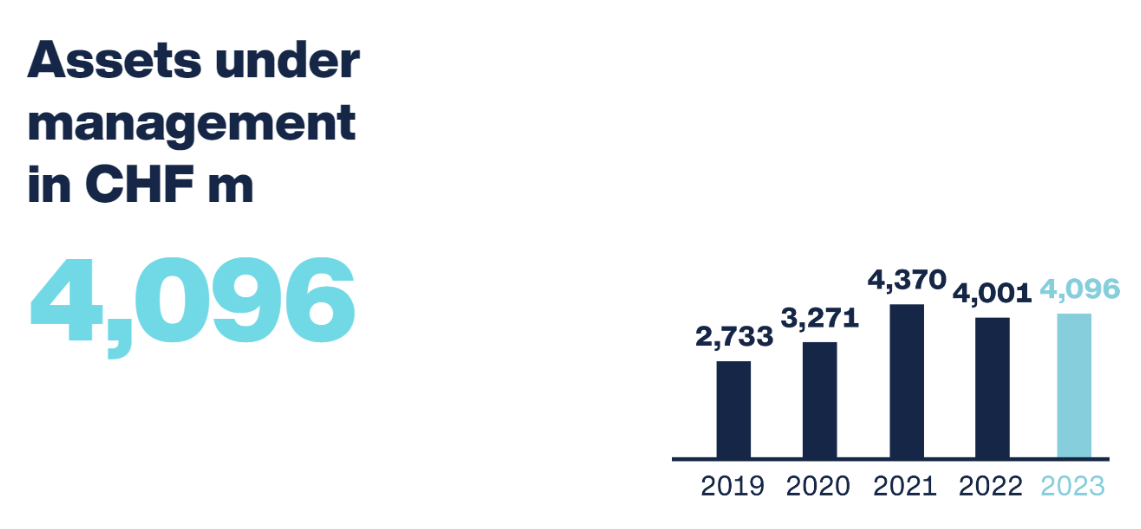
Bank Frick closed the 2024 financial year with a net profit of CHF 9.5 million, continuing its growth and investment strategy. Net new money for the year reached CHF 732 million, and client assets under management recorded strong growth of 37.62%. This marks a significant revision from the CHF 12 million forecast set at mid-year; while lower than projected, the full-year result still represents solid performance against a competitive backdrop.
In the first six months of 2025, Bank Frick posted a net profit of CHF 4.5 million, an 18% decrease compared with the same period in 2024. Net interest income declined slightly by 3.5% to CHF 20.2 million, and client assets under management stood at CHF 5.03 billion as of mid-year, down 11% compared with year-end 2024. The bank described the AUM decline as a normal dynamic in a highly competitive market. Despite the softer numbers, Bank Frick stated it was meeting its budget targets for the period.
The bank’s balance sheet total expanded from CHF 1.062 billion in 2018 to CHF 2.884 billion by year-end 2024, and equity capital has grown organically to CHF 115.1 million. These structural figures underpin the bank’s financial resilience despite the near-term earnings softening.
Year Founded: 1998
Company Status: Private
Employees: ~300
Investors: N/A
Website: www.bankfrick.li
Chief Executive Officer: Edi Wögerer
Head of Crypto Corporate Clients: David Picardi
Head of Innovation: Alexander Saile
Head of Digital Assets: Jonas Gantenbein
Head of Banking Solutions: Raphael Haldner
Market Capitalization: Undisclosed as it is a Privately-Owned company
Area2Invest; acquired on 7/4/2019; amount acquired for undisclosed.
Tradico; acquired on 6/05/2019; amount acquired for undisclosed.
Corporate Minority: Concluded on 1/24/2017; amount raised undisclosed.
Bank Frick has positioned itself as a leader in regulated blockchain and digital asset banking in Europe, combining traditional banking with an innovative approach to cryptocurrency services. Founded in 1998 and fully family-owned, the bank has maintained a focus on long-term growth, rapid adaptability, and client-centered service. Its offerings span from crypto custody, trading, and tokenization, to advanced risk management and cybersecurity—all aligned with stringent regulatory standards.
In full-year 2024, Bank Frick posted a net profit of CHF 9.5 million and grew client assets under management by 37.62%, driven by CHF 732 million in net new money. The first half of 2025 brought a more measured performance, with earnings softening against a competitive backdrop, but the bank confirmed it was on budget and continued investing in infrastructure and international expansion.
The strategic picture entering 2026 is more complex than in prior years. The Dubai branch opening, MiCAR authorisation, ISO 27001 certification, RULEMATCH access, virtual IBANs, and the xPULSE network expansion all point to a bank deepening its infrastructure rather than merely maintaining it. At the same time, Bank Frick’s announcement that it is evaluating strategic investors or partners with PwC’s support, including a possible majority stake, signals that the next phase of growth may require external capital to scale its digital B2B banking ambitions globally. How that process concludes will likely define the bank’s trajectory for the remainder of the decade.
Subscribe to our newsletter, you are in very good company









 Canada
  UAE
UAE